Hollywood Comes to Church: How a Mississippi Basilica Became the Set for ‘The Ritual’
The whole cast and crew of the new exorcism movie were attentive to getting the Catholic elements of the film correct.
NATCHEZ, Miss. — Perched atop picturesque bluffs along the banks of the Mississippi River sits the small town of Natchez, Mississippi. A constant influx of travelers descends upon the town, owing to its rich history and antebellum homes.
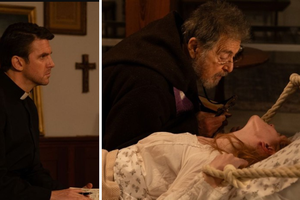
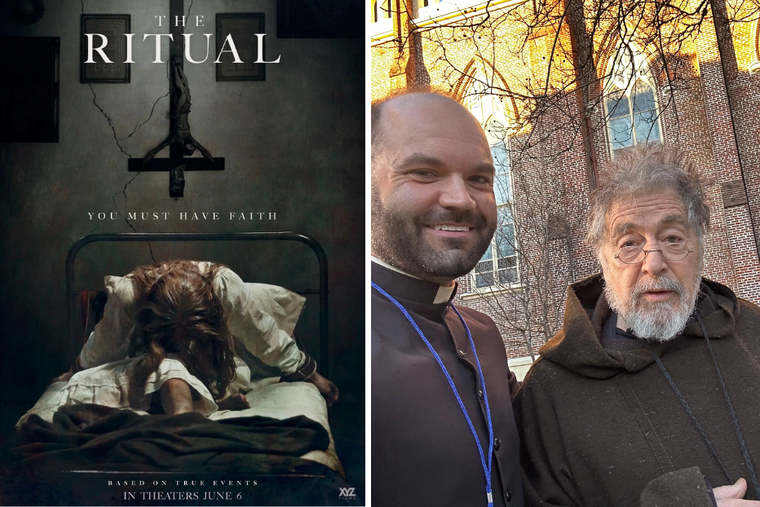
In early 2024, the familiar sounds of horse-drawn carriages or riverboats bringing tourists were overtaken by the bustling sounds of camera crews and the building of movie sets. Though no stranger to the presence of production crews, the sleepy river town was abuzz during the production of the major film The Ritual, which premieres June 6. The photogenic Basilica of St. Mary in the heart of town, along with its parish buildings, served as the backdrop of the film, which features Hollywood notables Al Pacino, Dan Stevens, Ashley Greene and Patricia Heaton.
The film depicts the most famous exorcism case in recent Catholic Church history, taking place in Iowa in 1928. It is a retelling of the true and harrowing story that inspired the 1971 novel and 1973 film The Exorcist. This adaptation chronicles the legendary possession of Emma Schmidt and the interior struggles of the priests and religious sisters involved; Academy Award-winner Pacino portrays real-life priest, Capuchin Father Theophilus Riesinger, with Stevens, who people may recognize from Downton Abbey, as Father Joseph Steiger; Greene, from the Twilight films, as Sister Rose; and Heaton, best known for Everybody Loves Raymond, as the mother superior.
Movies endeavor to tell a compelling story. What audiences often miss are the rich stories that unfold in the background as the movies are created, The Ritual being no exception. I was fortunate, however, to experience a small portion of the making of this film, as the Basilica of St. Mary is my parish.
It was a chilly winter morning when I received a message from my pastor, Father Aaron Williams. His message stated that, if my children and I arrived downtown in 1920s attire, we would have the opportunity to serve as extras in the film. Rally we did, and it was a pleasure to observe and participate in the Mass scenes. What I witnessed was a continual deference of the production crew and actors to the direction of Father Williams. From my perspective from the back pews, there was a concerted effort toward precision in the rubrics of the Mass in between and during takes. Thurible (metal incense burner suspended by chains that is swung at specific points of the liturgy) angles were demonstrated by Father Williams and then replicated by actor Stevens many times, for example. There was a great deal of “hurry up and wait” in the process, but it did permit a lot of time to observe. My children and I were not the only locals serving as extras in the film, as a handful of fellow parishioners and community members participated. The attention to detail did not stop with the rubrics of the Mass. Indeed, a great amount of effort went into the planning and acting.
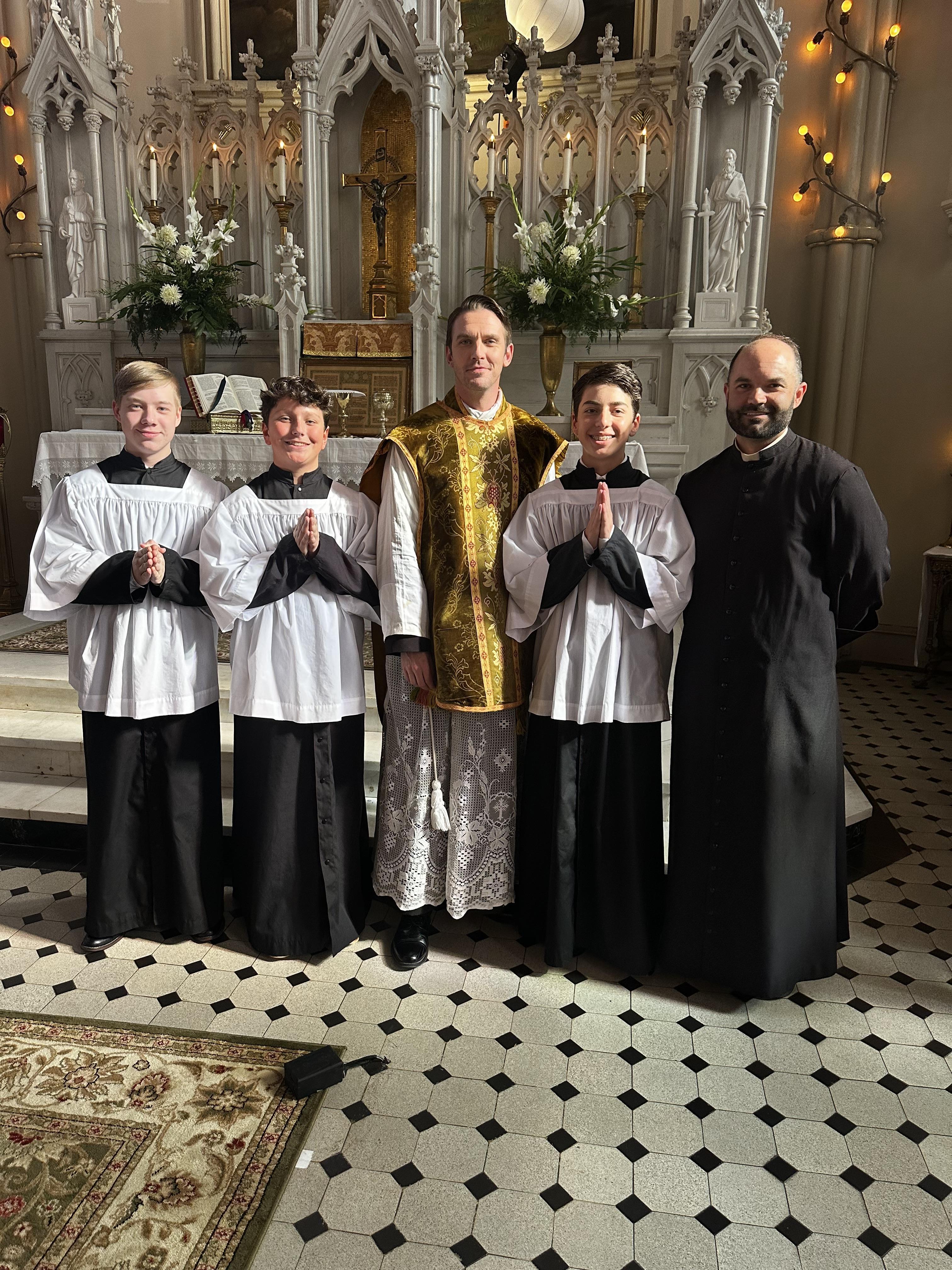
My recent conversation with Father Williams provided insight into how St. Mary’s was chosen as the filming location in a fashion that only a small town can provide. At a restaurant in town, a bartender (and parishioner of St. Mary’s) overheard a conversation between a movie producer and a friend regarding the difficulty securing a location for a film, given the recent Hollywood writers’ strike. The bartender interjected and suggested St. Mary’s, which stood only one block away, noting its beauty. After securing the approval from Bishop Joseph Kopacz of the Diocese of Jackson, the film crew descended upon the historic town, seemingly doubling the downtown population of Natchez. It was at this time that Father Williams began to fulfill his role as host, even rearranging the rectory to accommodate the newcomers.
Over the course of the filming, Father Williams’ participation in the process evolved. He was often consulted for accuracy in the portrayals of exorcism and ecclesiastical life. The most remarkable story behind the film revolved around the moments with the cast and crew that were “microcosms of mini-catechism classes,” Father Williams said.
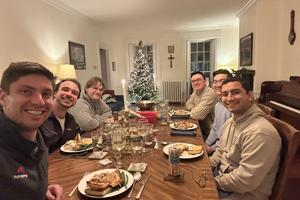
One lunch stood out in particular, hosted by Pacino and attended by the cast and some of the crew. “All of his questions were theological in nature,” my pastor recounted of the nine-time Academy Award nominee. One crew member has kept in contact with Father Williams, continuing these theological conversations and signaling an interest in the faith post-filming. The crew asked Father Williams to bless the set daily as they worked. For myself and the parishioners, it was wonderful to also see both cast and crew attending Sunday Masses throughout the course of the production.
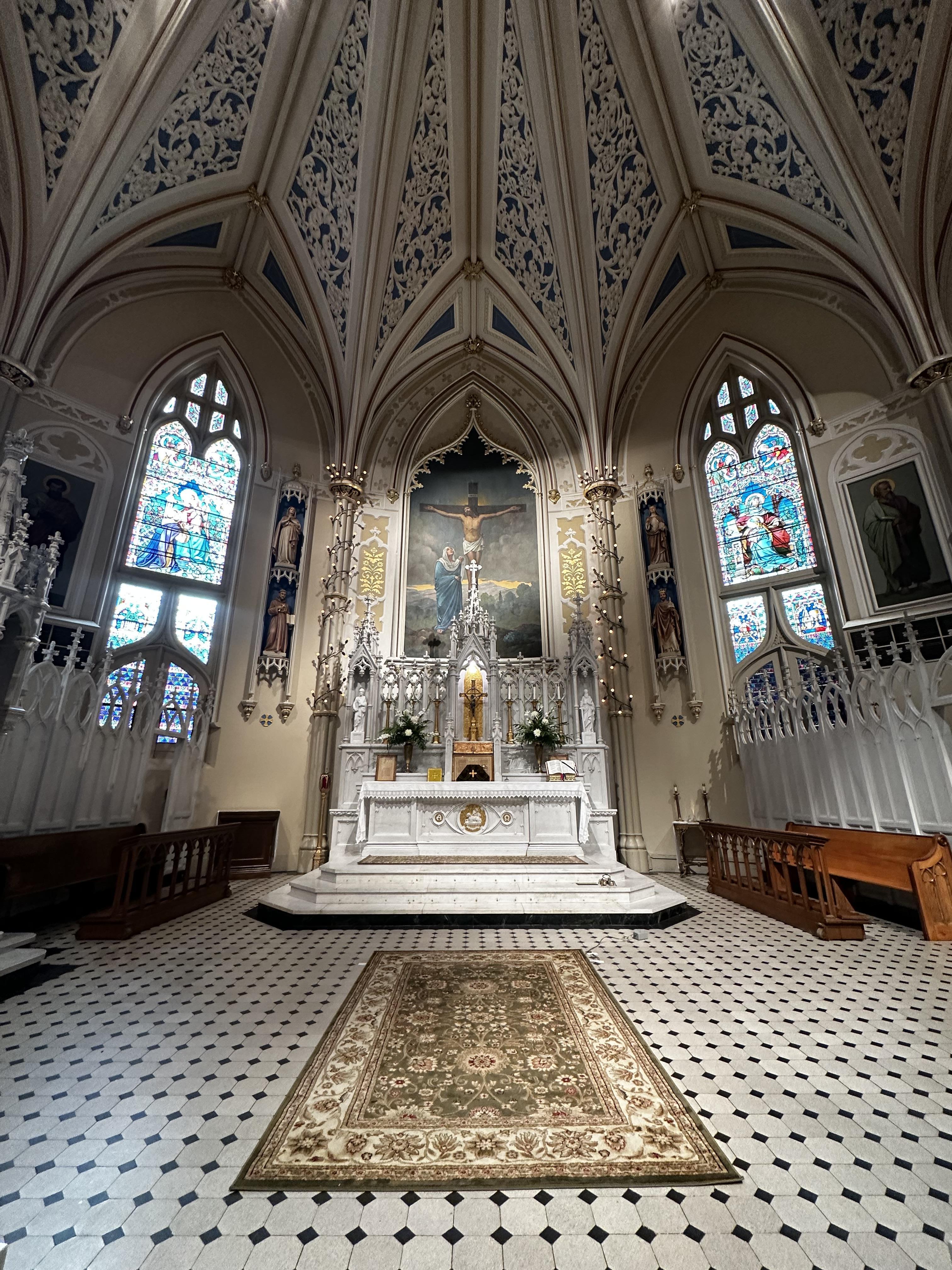
Anecdotally, a Mass took place at the Basilica of St. Mary’s, gathering all of the priests and the bishop of the diocese toward the end of the movie’s filming, for which I cantored and Father Williams played the organ. Every square inch of the parish was taken up by a set, crew member, or their necessary items. Even the music room in the church basement was converted into a waiting area for the cast in between takes.
As Father and I went through the music for the Mass, we serenaded some of the cast members, including Greene and Heaton, who hummed along to the hymns as we practiced. Needless to say, the filming was deeply interwoven into parish life.
The attention to detail that had struck me from the pews was also one of Father Williams’ greatest takeaways from the entirety of the production. The production team sought vestments and altar cloths from the 1920s and asked Father Williams to help them find liturgically appropriate readings for the period and liturgical calendar. Equally impressive to Father Williams was how the film serves as an incredible expression of the priesthood: of the interior struggles and the self-sacrificial elements of this life in service to Christ’s flock.
Despite Father Williams’ initial hesitations surrounding a film depicting such a famous exorcism in Church history being filmed at the Basilica of St. Mary, he was ultimately pleased with the process and the final product. The film ultimately points to those theological conversations held over lunch, regarding God’s permissive will of suffering and the demonstration of his power and mercy through the priesthood.
“The dynamic of the story,” Father Williams said, “is shown through the humanity of the characters striving for holiness.” He concluded that “it is an accurate portrayal [of the priesthood] that the faithful would expect from holy priests.”
- Keywords:
- catholic community
- exorcisms
- catholic movies