The Saving Grace of Siblings: What the ‘Only Child’ Syndrome Is Costing Our Kids
‘Life Is Better With Siblings,’ says Catholic economist.
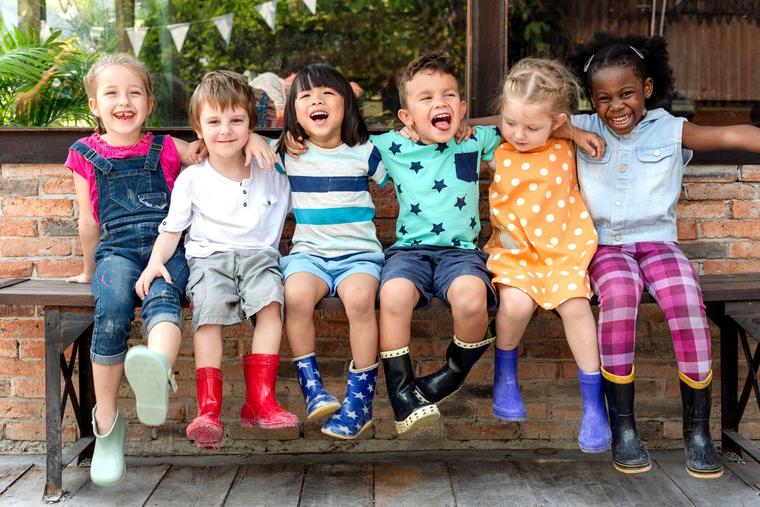
Catholic economist Catherine Ruth Pakaluk wrote an inspiring piece in The New York Times delving into the research behind her book Hannah’s Children. In interviewing countless matriarchs of large families, she found they all succinctly stated the vast fruits of children growing up with brothers and sisters.
“When it comes to raising children with good character, they told me, it is easier to raise five than one,” Pakaluk recalls.
As an economist, Pakaluk begins by breaking down some startling statistics:
“Over the past 50 years, the share of American mothers with only one child has nearly doubled, from 11 percent in 1976 to about 20 percent today. Meanwhile, large families have receded: In 1976, 40 percent of mothers at the end of their childbearing years had four or more children; by 2014, just 14 percent did. The total U.S. fertility rate hit a historic low of 1.6 births per woman in 2024 — well below the replacement rate of 2.1.”
Europe’s numbers are even lower, which begs the question: Language gives us words like “orphan” and “widow,” but what do we call this new era of the universal “only child,” and what are we losing along the way?
The ease of having many children begins with practical lessons, like siblings learning to share bedrooms and help around the house. Yet it was the hidden, emotional benefits of a full house that moved this mother of one (and praying for more!) to tears.
“Another mother of six told me about her parish priest’s enthusiasm after watching her eldest son carry his baby sister around the school parking lot. To the priest, the two kids’ close relationship was a revelation. To their mother, it was unremarkable. ‘He carries the baby all the time,’ she told me. ‘He changes her diapers. He puts her down for a nap. That’s just kind of a way of life,’” Pakaluk recounts.
At the core of the social fabric that children with siblings are born into is a built-in moral framework. As Pakaluk writes:
“I came to see that large families generate moral education the way an engine generates heat — as a byproduct. Parents in small families have to manufacture, through summer programs and sports leagues and carefully cultivated extracurriculars, the kind of character-forming experiences that large households once provided gratis.”
While a great deal of parental “manufacturing” can certainly build exceptional character, the organic ecosystem of a large family builds an invisible safety net for the cold, hard world of adolescence — a landscape that easily rocks any tween these days.
Reflecting on her own upbringing, Pakaluk shared:
“My mother had her last two children, my seventh and eighth siblings, when I was in high school. Their births were the happiest times of my teenage years. My social life could be up or down, but those kiddos always adored me. I wanted to live up to the role. My youngest siblings kept me closer to home and provided ballast through the inevitable difficulties of those years. They are still my closest friends, the first I turn to in hard times.”
This selfless love is highlighted in many of the conversations she had with mothers of large families. One mom of 14 shared that one son was saved from depression and anxiety because there was a “new baby sister to hold and care for,” adding that the newborn was “like a sunlamp” in the home. Another mother recalled her preteen son’s struggle with mental health and how healing it was for him to simply hold his baby sibling.
Another stunning moment Pakaluk recalls: the witness of a mother who had a baby with a rare medical condition requiring round-the-clock care.
“If the baby needed to be flipped to build upper-body strength, whoever passed by would flip him. Morning and night. Without anyone setting out to teach them, these children had become habituated to caring for one another.”
There is a unique grace that comes with navigating a full house, a dynamic that Catholic mother of 5 and former USCIRF commissioner Maureen Ferguson notes often produces a natural “peacemaker,” as the former EWTN radio host explained to the Register:
“It’s well-documented in psychological studies of birth order that the middle child in a family is often the peacemaker. Middle children tend to be natural mediators, consensus builders, and foster family harmony."
“To the extent parents are only having one or two children,” Ferguson continued, “our culture is losing out on these natural peacemakers. It follows that a society bereft of middle children may be a society that is less harmonious.”
Pakaluk’s observations also beautifully echo the work of author Tim Carney in his book Family Unfriendly. A father of six who advocates for “at least four” children as the sweet spot for a thriving family, Carney points directly to modern “overprogramming” as the root of the current adolescent anxiety epidemic. Discussing his research, Catholic dad Carney notes:
“The reason that there is more adolescent anxiety is because kids aren’t allowed to run around on their own anymore. They don’t have time to be bored, time to get into trouble and get out of it. The overprogramming ended up being detrimental to their mental health.”
While our culture frequently points to screens as the lone culprit in a system that cultivates less and less the virtues needed to sustain it, Pakaluk argues that the root cause goes deeper.
The treasure trove of wisdom she received from mothers across the country reveals a more fundamental truth:
“The problem isn’t freedom. It’s that we have lost the primary institution where virtues are formed — the household in which children form one another.”
Ultimately, Pakaluk’s research reminds us that human virtues are not manufactured in isolation; they are forged in the beautiful friction of living for others.
While we might not all underwrite a bustling household of six, and some might yearn for children but never find a spouse, we can all help build a culture that values the enriching tapestry of a shared life.
Whether by opening our doors to neighborhood kids, supporting a young mother at Mass, or fostering deep ties within our parishes — particularly among the elderly and infirm — we can actively combat the loneliness of our era while cultivating the qualities of sacrifice, patience, and peacemaking.
We may live in an era of the 'only child,' but through faith and fellowship, we can ensure that no one truly grows up alone.
- Keywords:
- siblings
- family life

Alyssa Murphy Alyssa Murphy is the Register's Managing Editor of Digital Assets. Starting her career on the airwaves in San Francisco, she has worked in all facets of media. Alyssa enjoys writing and covering stories that inspire and uplift. Register readers may be familiar with her voice from EWTN radio's Morning Glory. Alyssa currently lives in New Jersey just outside Manhattan with her husband Andrew and young daughter, Annabelle.