Cape Verde’s World Cup Success Puts Spotlight on Island-Nation and Its Catholic Faith
There is an American connection with the archipelagic nation — in Massachusetts.

The list of nations still competing in the knockout stage of the 2026 FIFA World Cup includes familiar soccer powerhouses like Argentina, Brazil, France and Spain. But among the last 20-or-so teams still standing is a tiny African island-nation that until recently many had never heard of.
Situated in the Atlantic Ocean about 350 miles west of the westernmost point of mainland Africa is Cape Verde, an independent country consisting of only 525,000 people across 10 volcanic islands.
The national team’s recent astonishing success — not only qualifying for its first World Cup finals tournament but also advancing to the knockout rounds — has caught the attention of ardent soccer fans as well as more casual observers who are caught up in World Cup mania.
It also puts a spotlight on Cape Verde’s culture, which is largely Catholic — about three-quarters of the approximately 525,000 people who currently live on the islands are members of the Church, according to the most recent government census, as reported by the U.S. Department of State.
And there is an American connection with the archipelagic nation. More people of Cape Verdean heritage live outside the country than in it — estimates range from 700,000 to 2 million or more, with the highest number in the United States (about 260,000). In the U.S., the biggest number of Cape Verdeans live in Massachusetts (about 65,000).
While cheering on their team, people of Cape Verdean descent are aware that this is a unique moment in their country’s history.
“There’s no word to describe the excitement — and the generous God, to give us this chance to do that,” said Filomena Brandao, 69, a Cape Verdean immigrant (and U.S. citizen) who now lives in Randolph, Massachusetts.
“To be known by the world, I’m grateful for that,” she said. “A lot of people don’t even know we exist.”
But soccer isn’t the only thing that Cape Verdeans in Massachusetts have had to celebrate in recent days. The National Eucharistic Procession stopped at America’s first Cape Verdean parish in the U.S., Our Lady of the Assumption, in New Bedford, on June 29.
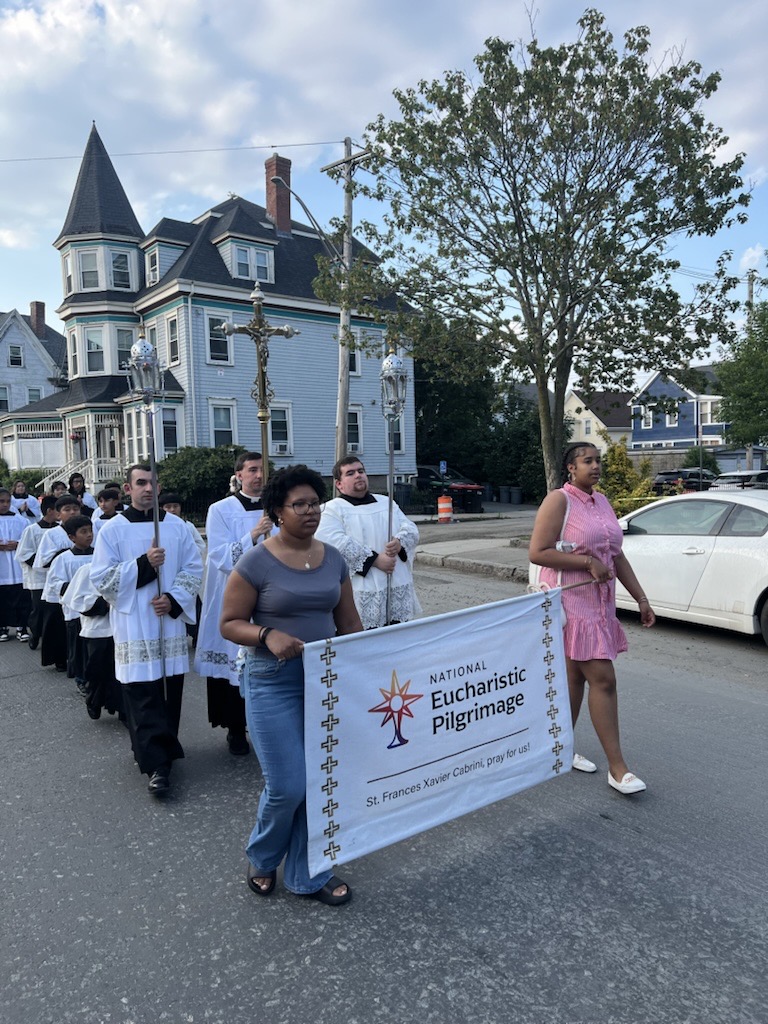
Coincidentally, this came right around the time the city of New Bedford raised the Cape Verdean flag at City Hall in honor of the island-nation’s forthcoming 51st anniversary of independence, which is Sunday, July 5.
In other words, it has been a busy couple of weeks for Cape Verdeans in the U.S., many of whom are looking forward to Cape Verde’s upcoming round-of-32 elimination game against top-ranked Argentina at 6 p.m. ET on Friday, July 3.
Cape Verde’s Story
Cape Verde (“green cape”) is an archipelago about 350 miles west of Cape Verde Peninsula in Senegal. No one lived there when European sailors came upon it in the 1450s. The Portuguese colonized it and used it as a slave-trading base, and most Cape Verdeans are a mix of Portuguese and West African.
In 1975, the country gained independence from Portugal, becoming the Republic of Cabo Verde.
Drought periodically hits the islands, which has led many to leave for other places, especially the United States.
Cape Verdeans have a heritage of seamanship, from the long ocean journeys by sailboat between the far-flung islands of the archipelago, and brought those skills to the U.S. Many men joined whaling ships from New Bedford, about 50 miles south of Boston, during the late 19th and early 20th centuries and stayed there after they arrived.
When whaling faltered, Cape Verdean immigrants found work on or near the South Coast of Massachusetts as longshoremen or in cranberry bogs or in cotton mills, among other places, according to Marilyn Halter’s book Between Race and Ethnicity: Cape Verdean American Immigrants, 1860-1965 (1993).
“The culture’s always been ‘Be proud to be Cape Verdean and work hard,’” said Tony Costa, a retired utility company lineman who came to New Bedford from the Cape Verdean island of Brava as a boy in 1957.
A Cape Verdean Parish
Costa is a longtime member of Our Lady of the Assumption, which was founded in 1905 on Water Street in New Bedford when the Diocese of Fall River purchased a former chapel for Cape Verdean Catholics.
The original building was destroyed by Hurricane Carol in August 1954. In the immediate aftermath, some young men of the parish went to the church in a rowboat to try to recover sacred vessels from the building.
“And when they went into the church, they couldn’t get out because the water had risen; and [due to] the pressure of the water, they couldn’t open the door,” said Dorothy Lopes, 91, a retired elementary schoolteacher and lifelong member of the parish. “They went up to the choir loft and jumped out the window.”
Our Lady of the Assumption’s current church building, on Sixth Street several blocks from the harbor, was built in 1957.
Nowadays, about 100 people typically attend the 9 a.m. Mass on Sunday in English, while about 125 typically attend the 11 a.m. Mass in Portuguese Creole, the major language of Cape Verde. At a recent daily Mass, attendance was eight.
“Small parish … almost like one big family,” said the pastor, Father David Lupo, a member of the Congregation of the Sacred Hearts of Jesus and Mary, in a text to the Register. “They can’t gossip about another person at another Mass, because someone at the 4 [p.m. Mass] might be related to someone at the 11 [a.m. Mass].”
The Little Country That Could
Close followers of African soccer say Cape Verde’s recent success is the product of incremental progress in recent years. But for most of the world, it’s as if the team just burst onto the scene from nowhere.
With a population of little more than half a million, Cape Verde is the third-smallest country ever to make the World Cup. (Only Iceland in 2018 and Curaçao in 2026 are smaller.)
It wasn’t a fluke. The team qualified for the 2026 tournament by winning outright a six-nation group that included Cameroon, which had previously qualified eight times for the World Cup finals tournament.
The Blue Sharks of Cape Verde (ranked No. 67 by FIFA, international soccer’s governing body) shocked Spain (ranked No. 2 by FIFA) on June 15 with a 0-0 tie, in what is still the biggest upset of the tournament so far. The team capitalized on opportunistic scoring to tie 16th-ranked Uruguay, 2-2 on June 21, and then used their stout defense to secure another 0-0 tie against Saudi Arabia.
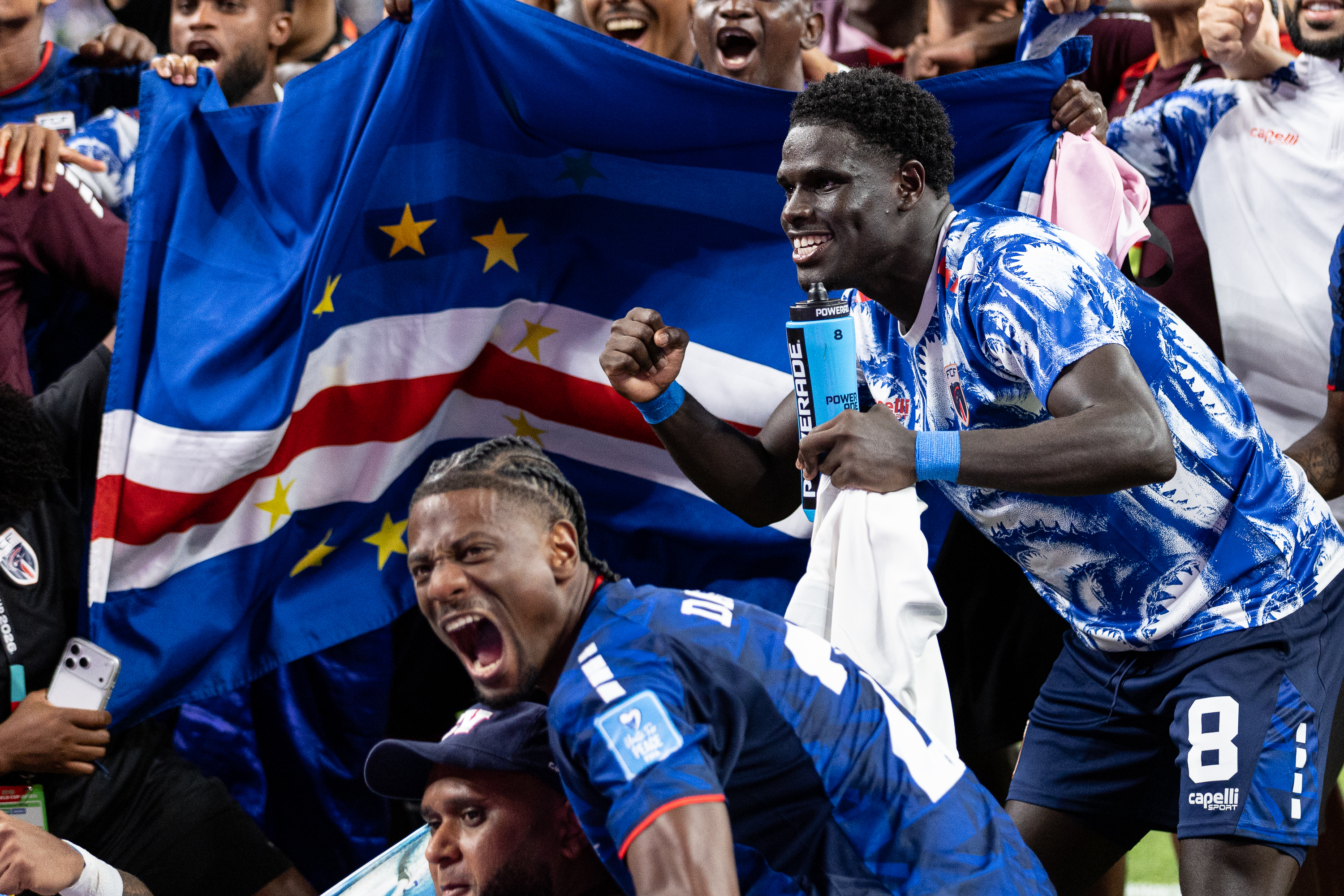
The three points from group stage (one point for each tie) was enough for second place in the group and a bid to the elimination rounds.
If you find the success of this small island-nation on the world’s biggest soccer stage surprising, you’re not alone; so do many Cape Verdeans.
Joaquim Livramento, 83, a retired chemist whose father worked the overnight shift in a cotton mill in New Bedford after coming to the city from Cape Verde during the 1930s, wasn’t expecting this.
“It was obviously an initial surprise, [given] the size of Cape Verde,” said Livramento, who goes by Jack and who shares a last name (but no known kinship) with one of Cape Verde’s starting forwards.
“That really is surprising to me … and I think it’s a surprise even to the community here,” he said.
What might come from the current attention on Cape Verde?
Livramento, who has visited Cape Verde several times, said he hopes the U.S. government offers more aid to the country, which struggles to provide enough water for its people in times of drought.
Hopes for Revival
The local Cape Verdean community is zealously celebrating their team’s World Cup success. But some members also hope that more Cape Verdeans experience renewed excitement about their Catholic faith.
Fellow parishioners Livramento and Lopes sat down with the Register in the basement of Our Lady of the Assumption after a recent daily Mass, where they shared that the religious devotion of the Cape Verdean community has faltered in recent decades.
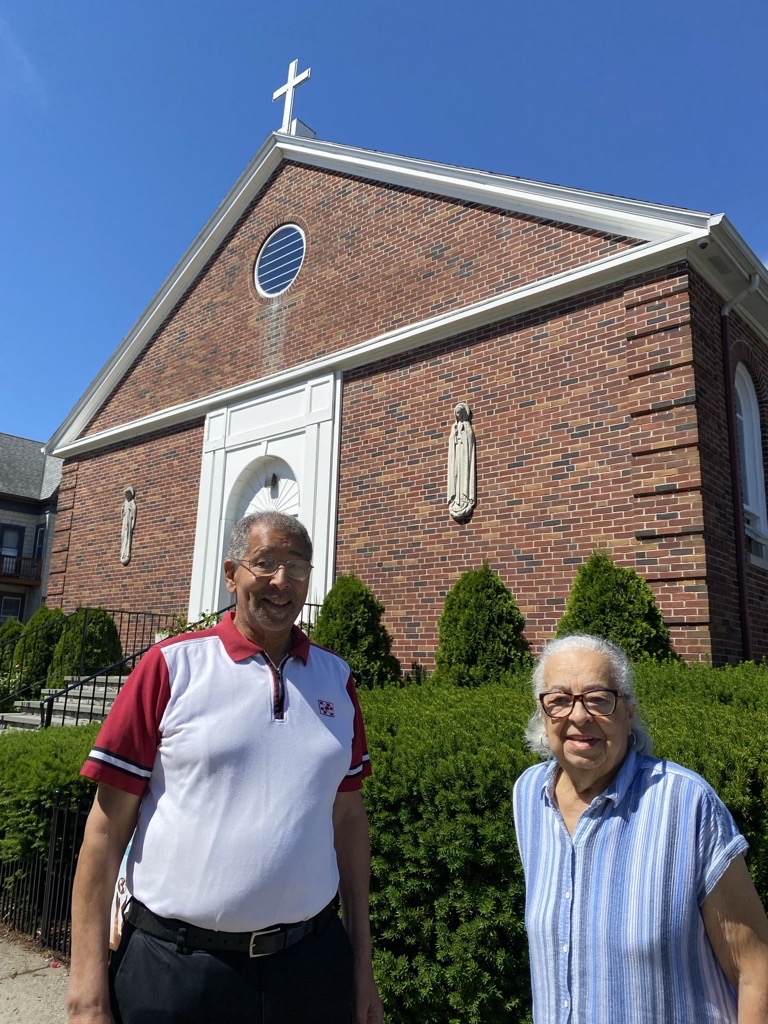
Both grew up in the parish and are active in the wider community, including the National Black Catholic Congress, which they first attended in 1987.
They remember a time when a large Cape Verdean marching band on Memorial Day accompanied parishioners from the church to a cemetery where many Cape Verdeans are buried.
As with many other Catholic churches in recent decades, good seats are available at Our Lady of the Assumption for Sunday Mass. First Communion classes at Our Lady of the Assumption used to be 40 to 50, Lopes said, while now they are about five or six.
“And it really makes me sad when I think about it because so many of the offspring of the people who were here in this church in the early 1900s, through the ’40s, through the ’50s, through the ’60s — who were the people on whose shoulders we stand as a parish — their children, their grandchildren are not here. They’re not coming,” Lopes said.
Yet she also sees hopeful signs. The Diocese of Fall River welcomed 108 converts to the faith this past Easter, a 71% increase from the previous year, as the Register reported this past spring.
Members of Our Lady of the Assumption told the Register they hope the National Eucharistic Procession will help rekindle interest in both the parish and in Catholicism.
“The reality is that you need God in your life. If you want to live properly, you need to have that discipline and follow his rules,” Costa said. “I’m hoping, the way things are, that maybe we could get back to following God, or at least be civil to our neighbors.”
The Cape Verdean parish was one of three parishes with large immigrant populations chosen at stops for the National Eucharistic Procession. (The others are Our Lady of Mount Carmel, a Portuguese parish; and Our Lady of Guadalupe at St. James, a Latino parish.)
Lopes said she hopes the public Eucharistic celebrations help bring people back to church, including members of the Cape Verdean community in Massachusetts.
“You know, the Eucharist is the source and summit of who we are,” Lopes said. “To recognize that and appreciate it and pass it on to your children, that would be a great hope.”