New Life, Old Spaces: ‘Petrine Properties’ Turns Unused Buildings into Communities
The nonprofit provides both the logistical support and community oversight to help more Catholic young adult communities take root in underused Church properties, like old rectories and convents.
When Father Drew Olson took on a new pastoral assignment in Madison, Wisconsin, a year and a half ago, he wondered if he could put some of the parish’s unused property to good use: specifically, a Catholic formation-house for young men.
The diocesan priest envisioned a community of prayer, service and Catholic culture for as many as 12 young-adult men. The plan was to build upon a less formal arrangement he had established in the past when he had invited several college-aged men to live with him at his rectory.
But with the plan came logistical problems. Our Lady of Gudalupe Parish — a grouping of several church buildings with plenty of unused space — didn’t have the funds, expertise or bandwidth to take on such a project on their own.
“I just don't have the time to start my own LLC, my own nonprofit to make it really happen and get organized, you know?” Father Olson told the Register.
So when Father Olson bumped into David Murphy, a Navy veteran who advises dioceses, religious orders, apostolates and Catholic universities on managing excess real estate, it seemed like a perfect match.
Murphy and his friends Conrad Kaminski and Deep Sinha had recently founded Petrine Properties, a startup nonprofit that aims to help create Catholic communities for young men aged 22-30, mainly using Church-owned properties that are vacant or otherwise underutilized. The houses also provide a Catholic formational environment where the men are encouraged to pray, take part in the sacraments, and get involved in the Church.
Founded earlier this year, Petrine has already built a network of roughly a dozen already-existing houses across the country — including St. Joseph’s Woodshop at Stanford University, which was founded by Sinha, and Don Bosco House in St. Paul, Minnesota.
The Madison community, dubbed the St. James House and located at a former rectory near the University of Wisconsin-Madison, will be Petrine’s first “original” property. It’s set to open in the next few months. There are plans to open another house in San Francisco this fall.
The organization’s quick expansion suggests that it may have a unique solution to two key problems currently facing the Church in the U.S.: an abundance of underutilized properties, such as former rectories and convents, and a need to provide greater formation to younger generations, many of whom experience isolation and have a hunger for community.
One-off efforts by parishes and dioceses to use old buildings for young adult communities are fairly common in the U.S. But, as Father Olson’s experience underscores, there’s a need for a model like the one Petrine provides to offer the logistical help, legal support, and oversight to make these models more feasible — and scalable.
“These buildings can serve lots of different purposes, and we can get creative,” Murphy told the Register. “And Petrine is an example of how to systematically navigate these different minefields that exist.”
The organization is already being recognized for its unique approach, recently winning a $10,000 “Catholic Mission Award” as part of the University of Notre Dame’s 2026 McCloskey New Venture Competition.
Kaminski, who has been living in the Madison house for the past several months as he gets the project officially off the ground, said they’ve seen an overwhelmingly positive response.
“I'm blessed with the problem now of having too many guys that want to live in the house, because I've only got so many spaces,” he said. “So I'm frantically praying for help from God and others to give us another place to house some of these guys, because they're such good men,”
Culture of Catholic Brotherhood
Kaminski, Sinha, and Murphy founded Petrine based on their own experiences of the positive effects of Catholic men living together: Kaminski lived at Hawthorn House at Harvard University, Sinha founded St. Joseph’s Woodshop, and Murphy founded several Catholic houses, named Quo Vadis, in South Bend, Indiana.
The idea for Petrine, the founders told the Register, was born from the founders’ recognition that amidst the well-documented modern epidemic of loneliness among young men, bringing young Catholics together under one roof is a powerful way to prepare those men for their future vocations, whether as husbands, parents, or priests.
Kaminski said the trio had learned a lot fromliving in these informal community houses, including how to balance personal freedom with a formative environment that provides accountability. Many of these young menhave left college and entered the workforce, and the need to maintain these kinds of positive human connections are harder to come by in the “real world.”
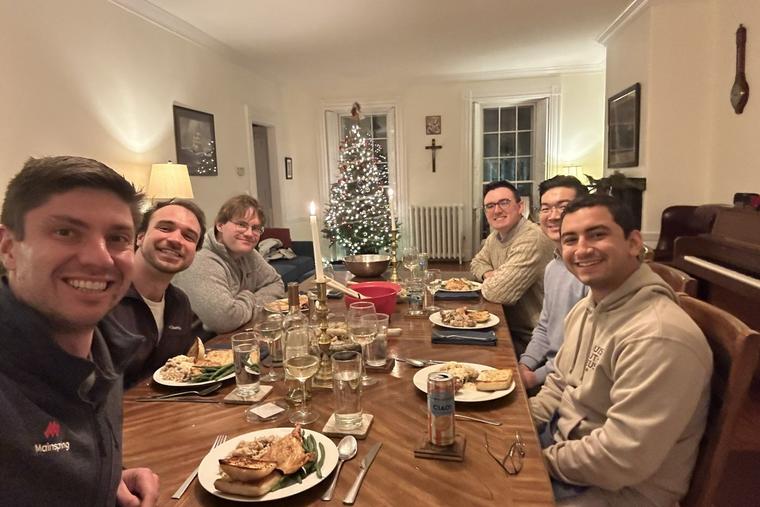
There’s no formal “rule of life” at Petrine houses like you might find in a religious order, but residents commit to daily prayer, weekly communal dinners, activities which foster a sense of brotherhood, and a general spirit of hospitality and service.
Young men apply for spots in the houses directly through Petrine, which uses background checks and an interview process to ensure they will be a good fit for the Catholic-aligned residence.
Petrine also taps a designated leader for each house, who is tasked with maintaining the house’s Catholic culture. However, the founders stress that these houses are lay communities, not a monastic order. Residents represent a range of different life stages and professions and need the space to work, study, date and otherwise discern their vocation, said Kaminski.
“The reality is, guys just need the freedom to live their spiritual lives the way they need to,” said Kaminski. “So for these houses, it should be a way to [support] that and have guys helping each other and being exposed to other ways to know God and love God and love each other.”
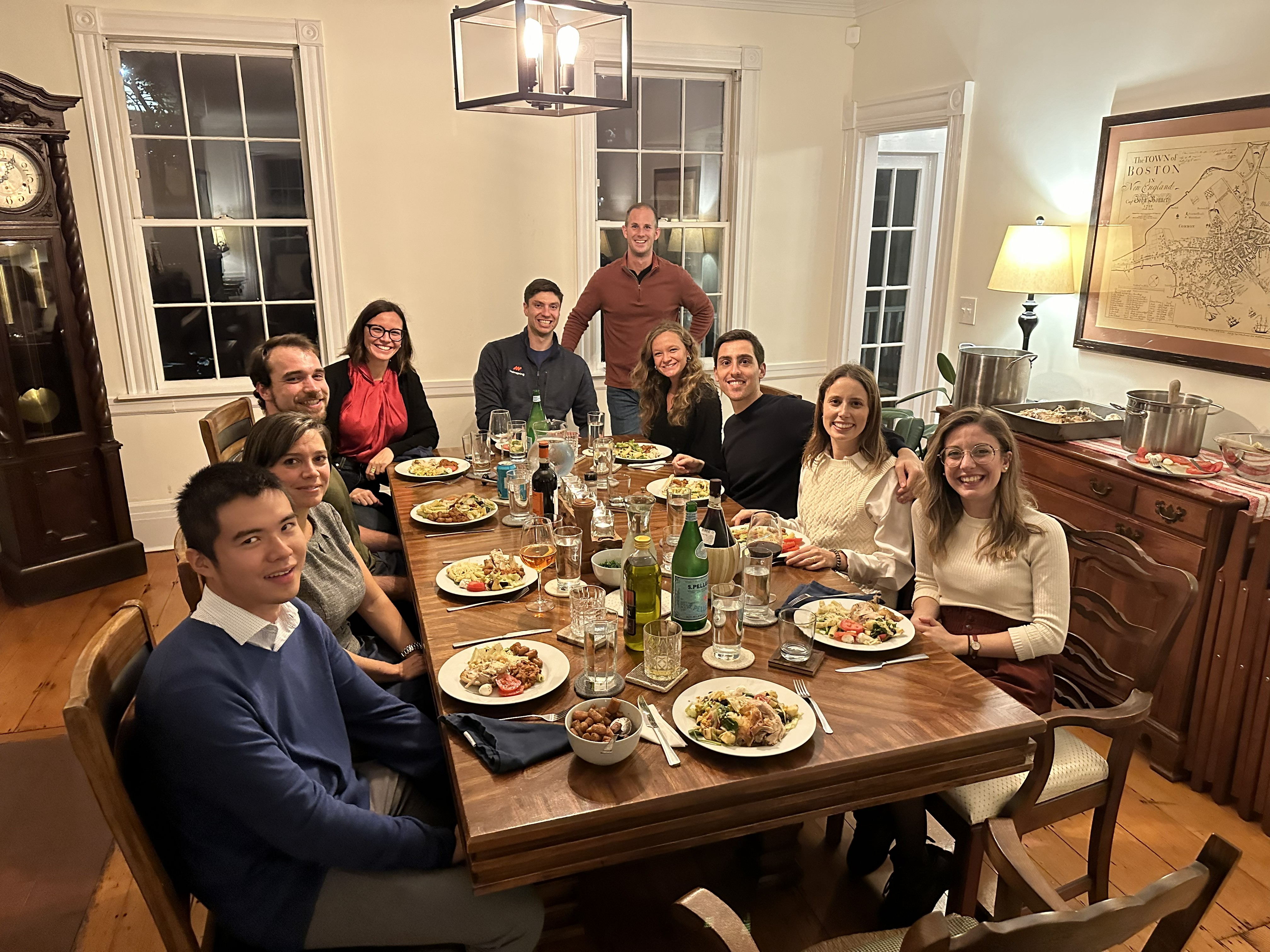
Petrine encourages the men to seek spiritual direction, and to invite local clergy to take part in the life of the house, albeit informally. They aim for a fun environment, too, hosting get-togethers and parties for friends and neighbors.
Practical Support
In addition to providing a formative Catholic environment, the Petrine model aims to address some of the common logistical issues that many informal houses of Catholic men face.
For one, many of these kinds of communities find that the de facto leaders of the house tend to “graduate” — often by getting married, entering seminary, or moving — and don’t leave behind a strong enough culture to keep the house going. With a house under Petrine’s oversight, however, there is a consistent pipeline of vetted young men coming in to fill openings and ensure that the property remains mission-aligned.
Moreover, because Petrine provides much of the back-end security, legal, and administrative support for the home, that relieves that burden on the parish or diocese that owns the property. Parishes are often ill-equipped to serve as landlords, and may lack the funds to make previously unused properties, such as rectories, habitable for tenants. After signing a long-term lease with a parish or other church entity, Petrine raises money to renovate the property and deals with the tenants.
Additionally, with 8-12 men living in each property and splitting the rent, Petrine says the houses present a more affordable option than most other traditional rental arrangements, like a couple of guys splitting the cost of a Zillow rental.
New Life to Old Buildings
Andrew Hall, 23, who is slated to move into the St. James House, currently lives and works at the nearby Saint Paul's Catholic Student Center that serves the University of Wisconsin-Madison. He said campus ministry has seen a massive increase in interest in Catholicism over the past five years, particularly among young men, and that communal living is a key factor in nurturing the faith of young people who are beginning to take their faith seriously.
When young Catholics start living together, he said, “that's really where we see the faith take off.”
“We need to foster virtue in young men in trying to do the right thing in every situation. And housing is the best environment to do that on a day-to-day scale,” Hall said.
At Our Lady of Guadalupe in Madison, discussions between Petrine and parish stakeholders took several months, and the St. James House is currently being prepared to host 8-10 men. The switch to becoming a Petrine property will mean consistent weekly and monthly activities — both social gatherings and community service — with the goal of making the house a known hub for young Catholic men in the parish.
With the continued closing and merging of parishes on a large scale across many dioceses nationwide, Father Olson said he expects an even greater need for creative real estate solutions like the one offered by Petrine.
“I think things like this and arrangements like this, being creative with use of space, is going to be a huge part about whether or not we can be successful,” he said, “Whether it's in housing or in other ways.”