The Theology of Presence
COMMENTARY: It’s as old as the Visitation, and we should learn to practice it.
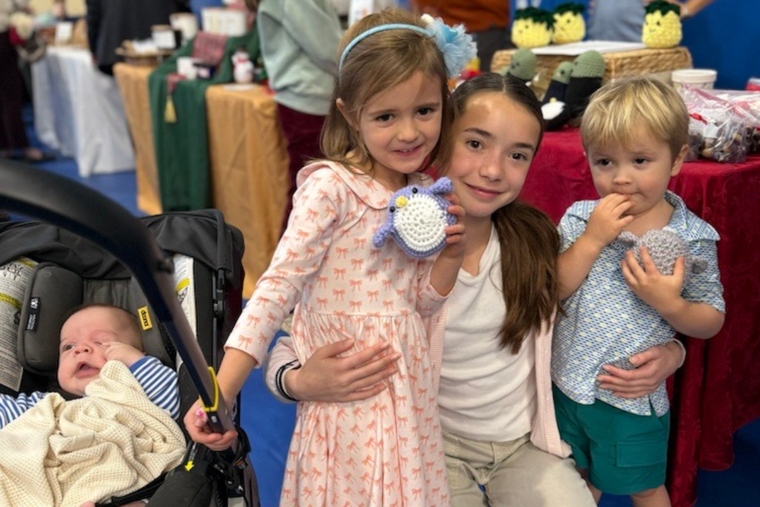
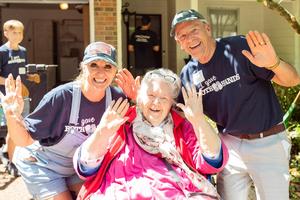
Last summer at our parish Corpus Christi picnic, I spotted my 11-year-old daughter sitting in the grass, entertaining toddlers who belonged to a young couple we barely knew.
My younger kids are unable to resist the small and adorable, so I wasn’t surprised. What I didn’t expect was that the afternoon would produce a treasured friendship and a model for something I think more of us should be doing deliberately.
I am in my mid-50s, with more days behind me than ahead and a growing conviction that hard-won wisdom is not mine to keep. The trouble is that it has fewer obvious places to go. My older children are grown and scattered. Young parents, meanwhile, are raising families far from their own parents and the aunts and uncles who once filled the gap.
Somewhere between those two facts, there is an opportunity.
There is a word for this kind of generous, sustained presence in another’s life: accompaniment. Its model is Mary, who upon learning that her elderly cousin Elizabeth was expecting, did not send congratulations and move on. She went “in haste” to the hill country and stayed three months.
What she brought was not a casserole or a gift card. It was herself — her presence, her prayer, her joy. The child in Elizabeth’s womb leapt at her arrival. Something that simple, that ancient, is still available to us.
As it happens, this couple could hardly be a more fitting answer to that need. The parents, Matt and Trish Simpson, are in their mid-30s: thoughtful, capable and considerably more self-aware than I was at their age. Matt is a young lawyer finishing a prestigious judicial clerkship.
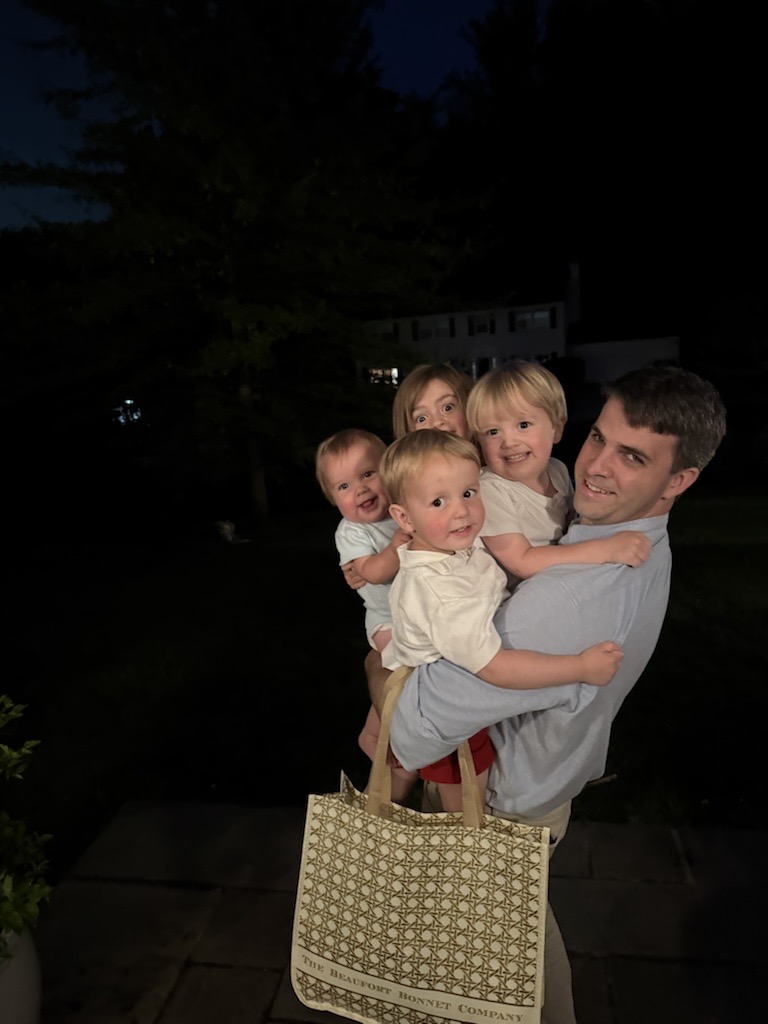
He is also a Paralympian who competed on several medal-winning Goalball teams, the only nonadaptive sport in the Paralympics, a fast-paced game played exclusively by athletes with visual impairments. He walks to daily Mass with the kids in tow and has recently built a box garden in the backyard, a reminder that “by himself?” simply is not part of his vocabulary.
Trish is whip-smart and prone to the most endearing snort of laughter when recounting one child’s confident conclusion that restaurants stock ketchup because “they know he loves it.”
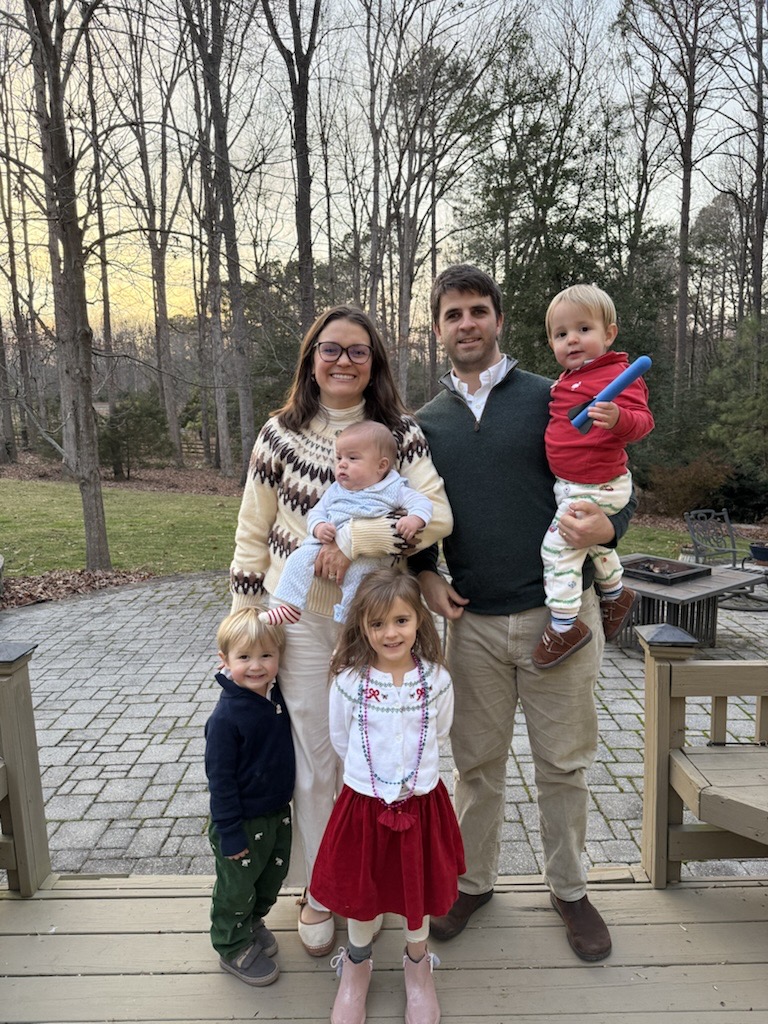
Before we knew their names, my family privately referred to them as “the blind family.” To our relief, they find this hilarious.
Both parents are Catholic converts, and I occasionally serve as an informal sounding board when questions about work, parenting and modern life begin closing in. Admittedly, my advice is not always flawless.
Shortly before Mother's Day, I enthusiastically suggested that Matt buy his wife a gym membership. Matt, for his part, floated the idea of a new vacuum cleaner. Between the two of us, we had apparently assembled a master class in gifts no young mother particularly wants.
My Gen X sensibilities — shaped over years of learning to navigate people who think and act very differently than I do, or differently than I know to be true, by looking for the most charitable explanation for their behavior or positions — have nonetheless proven useful when Matt edges toward what I jokingly refer to as “the edge of intolerance.” He takes it well.
The Institute for Family Studies (IFS) has found that what young parents want most is the sense that they are not navigating family life entirely alone. The IFS also finds that higher education correlates with living farther from family, which describes this young family and my own. We used to rely on grandparents and nearby aunts and uncles for help. Geography has quietly dismantled those networks.
Pope Leo XIV, addressing a million young people gathered in Rome for the Jubilee of Youth last August, was direct about what fills that void — and what does not.
“Only genuine relationships and stable connections can build good lives,” he said, warning against the shallow ties of the digital age that reduce persons to commodities. He might have been describing the IFS data in theological terms: What researchers measure in survey responses, the Holy Father names as a hunger of the soul.
The good news is that no policy fix is required. The solution is a choice, and summer offers the perfect occasion to make it. A church picnic, a neighborhood block party, an afternoon at the pool: Any of these can be the beginning of lasting friendship and confidence.

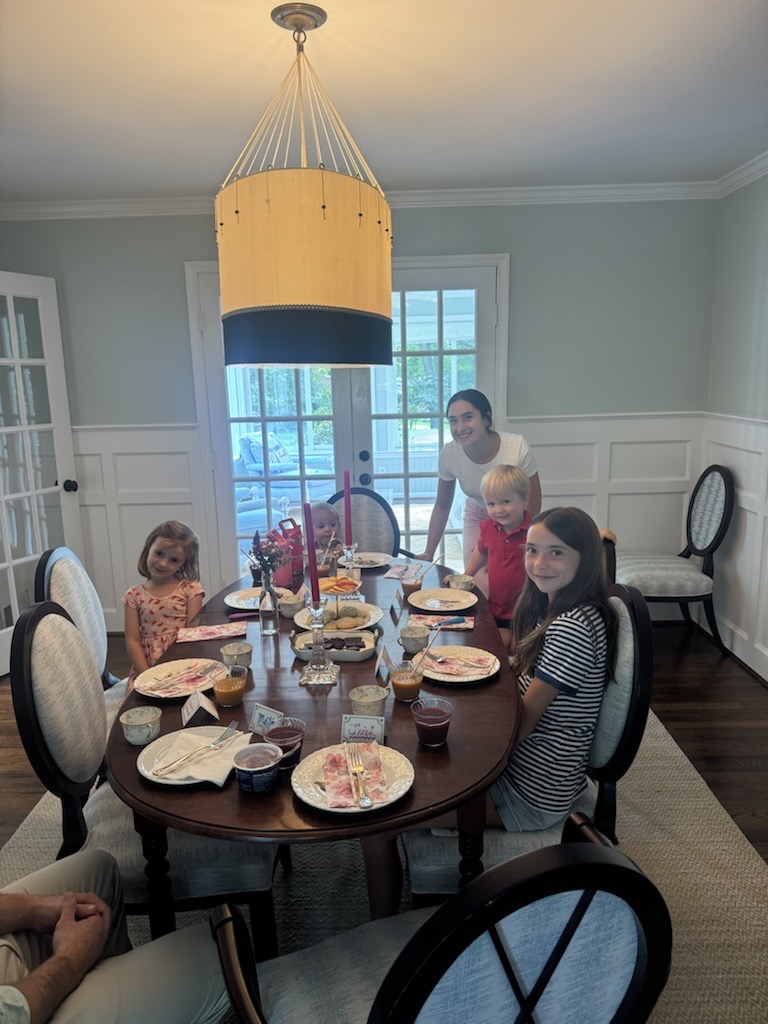
As for us, we babysit, learn to be line judges for Goalball, and attend T-ball games and ballet recitals. They go to Shakespeare performances and pass by to see teens ready for prom.
Next summer, we plan to cheer in person at the Los Angeles Paralympics — a road trip that I hope will include stops to visit older children who have moved into lives of their own, including one now raising a family himself.
None of it is complicated. All of it is priceless. Mary went “in haste” to Elizabeth because love does not dawdle. Neither should we.
- Keywords:
- catholic families
- catholic community