‘The Russians Will Never Bomb This Place’ — Then They Did
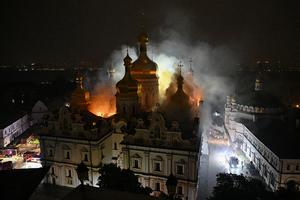
COMMENTARY: A devastating Russian drone attack on Dormition Cathedral, one of the world’s most important religious sites, has further deepened Ukraine’s resolve to win the war.
There are times, as a writer, when words fail you. When they are inadequate and pale. When you know the language to capture beauty or describe emotion is beyond the grasp of your imagination and typing fingers.
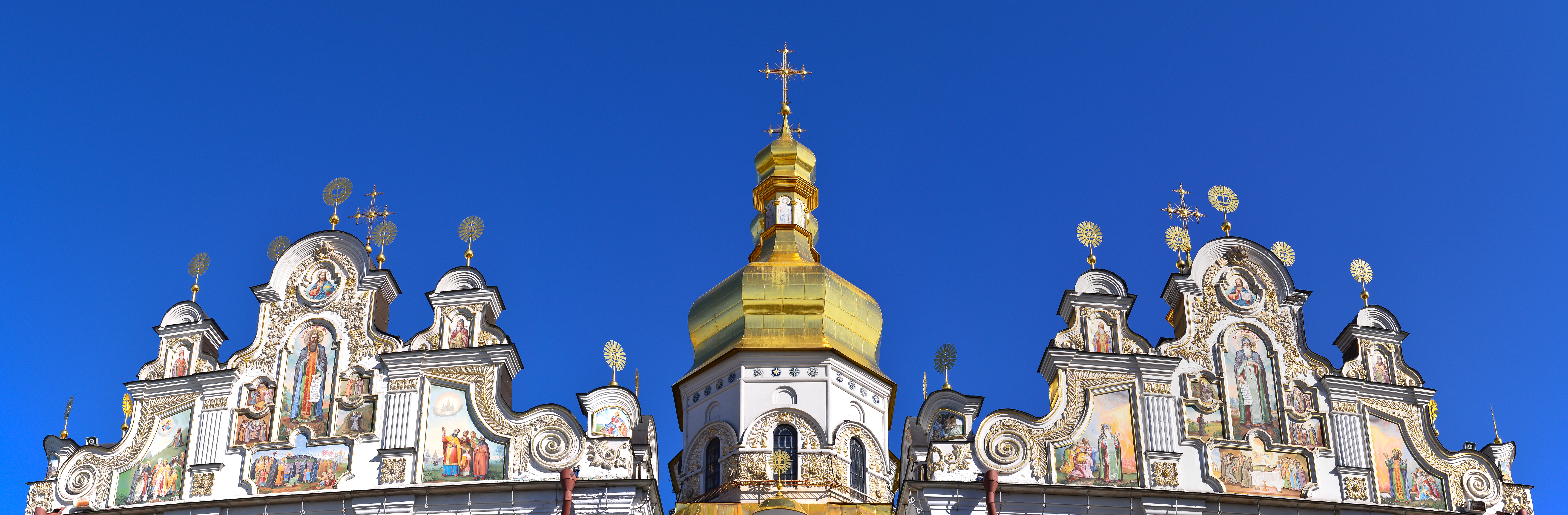
So, I am mentally speechless now as I try to describe the first time I stepped inside Dormition Cathedral, the centerpiece of the Pechersk Lavra in Kyiv. I can’t describe its beauty.
“Magnificent” seems too mild a word. I can only say how small I felt before the enormity of the three-story altar wall and the frescoes on the stanchions that soared to the dome paintings. And humbled, dull and untalented as I admired the vibrant colors of icons and the intricate golden frames of lace around them.
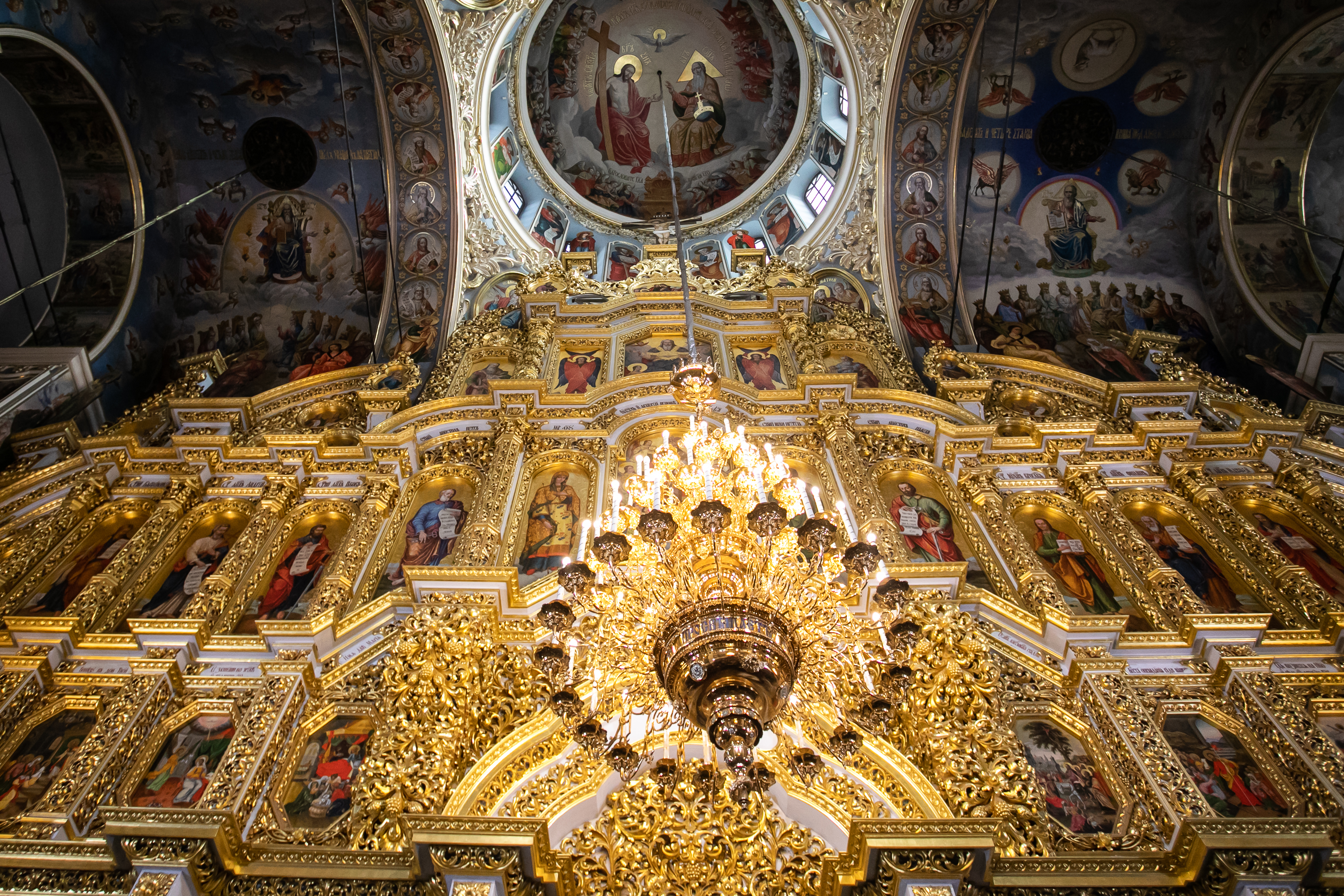
Equally, I can’t describe the spiritual burst in me. It deepened my faith. It gave me a sense of absolute certainty that all I believed as a Catholic is true because only a real and living God could inspire such artistic perfection.
I’ve been fortunate to have been dumbstruck by the magnitude of the Duomos of Florence and Milan, Notre-Dame in Paris, Sagrada Família in Barcelona, St. Patrick’s in New York City, and other world-renown cathedrals. Dormition Cathedral belongs on that list. On eight separate visits to Ukraine since the war began, I became a frequent worshipper, finding new detail in the artwork on every visit. Each time it became more impressive.
I first entered Dormition Cathedral after war came to its doorstep in early spring of 2022. My work brought me to a warehouse where volunteers sorted food, medicine and gear collected by Ukrainians worldwide for the army and civilians in war-torn areas around Kyiv. Hidden among a complex of museums and cultural sites, the warehouse was next door to Pechersk Lavra, a main tourist attraction in the city,
Built above catacombs that hold mummified remains and icons of its earliest Russian Orthodox saints and monks, the Pechersk Lavra (cave monasteries) dates back more than 1,200 years when the Kievan Rus’, the first Eastern Slavic state, adopted Christianity.
For that reason, my Ukrainian co-workers said we were in the safest place in Kyiv.
“The Russians will never bomb this place,” they said.
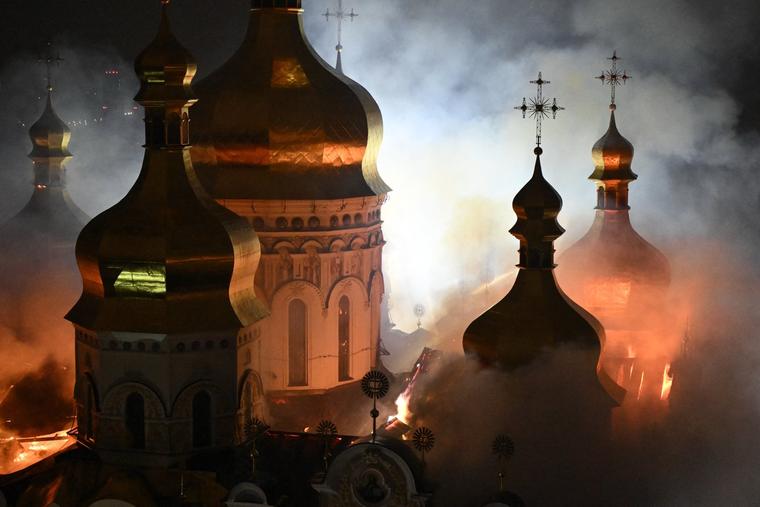
“Never” ended on June 15. In an attack condemned worldwide as sacrilegious, the roof of the cathedral burned, as firefighters hosed water on it. Underneath the compromised structure, priests scrambled to keep sacred relics and icons from further damage, racing against the danger of a collapse. Ukrainian officials estimate that restoring the damage will cost 10 million euros.
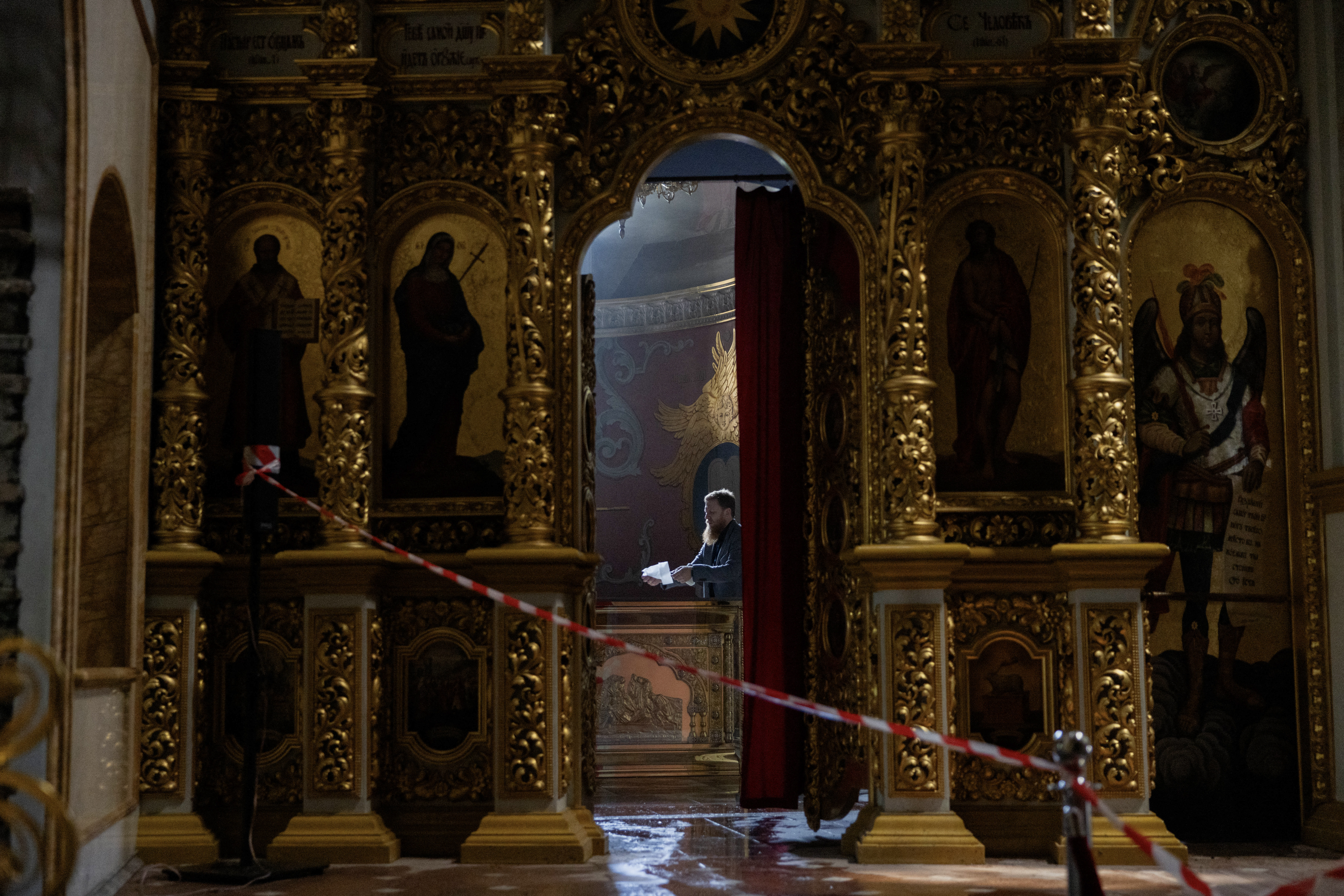
When I saw the video of the flames, I knew once the shock wore off, the bombing of this most sacred of places would only do more to galvanize the Ukrainian people against barbarity that a Soviet-minded Russia represents. This is a lesson Putin never seems to learn, even as the Ukrainians now have long, explosive reach into Russia’s oil and military production.
In the first days of the war, when Ukrainians blocked streets to other sacred and cultural places with anti-tank hedgehogs and piled sandbags in front of vulnerable windows and doors, Dormition Cathedral remained opened, a symbol of defiance and hope.
Worshippers came in steadily, genuflected multiple times, kissed icons, lit candles, and prayed for their country and the people fighting for it. The church provided them the peaceful comfort of rituals, like rock on which Christ promised to build his Church “and the gates of Hades will not overcome it.”
At that time, the world media was just discovering the Bucha massacres. The withdrawal from Russia’s failed attempt to take Kyiv left behind horrifying evidence of executions, rape, torture and mutilations.
The atrocities and mass graves at Bucha and Izyum outraged and coalesced the population to fight back forever because those incidents ripped the scabs off the old wounds.
Unearthed with those mass graves was the buried history of forced starvations of millions during Holodomor and the mass murders and disappearance of more millions during Stalin’s continued regime through World War II until his death in 1953.
It became clear to all Ukrainians that Russia was not only an existential threat to their country but to them individually. When Ukraine wins this war, people should remember that’s when Russia lost it.
Putin’s attack on Dormition Cathedral follows the same pattern. The bombing put back into public consciousness an equally sacrilegious act. The Soviets destroyed the 900-year-old original in 1941, when Stalin’s retreating army booby-trapped much of Kyiv as the Nazis approached.
The war in Ukraine is a Soviet-style war on Christianity. Putin’s army has destroyed more than 700 churches and religious facilities, according to a recent tally. It began when the Russians rolled into Chernihiv from Belarus in February of 2022. They blew up the 11th-century Transfiguration Cathedral and the 18th-century St. Catherine’s Cathedral in the very first days of the war. Two years ago, they bombed and ransacked Odesa’s Transfiguration Cathedral. Last June, they hit Holy Wisdom Church at St. Sophia’s Cathedral in Kyiv with a drone. In March, a ballistic missile damaged a 15th-century monastery and St. Andrew’s Church in Lviv. All, like the Pechersk Lavra, are UNESCO heritage sites.
None of this has broken the will of the Ukrainians. It has just made them angrier. And more defiant. And more faithful.
Each time I returned to Ukraine, I noticed an increasing number of people on the tours and pilgrimages to the Pechersk Lavra. They seemed oblivious to air-raid sirens as they walked through the sprawling monastery, a labyrinth of buildings painted pure white and topped by golden domes. They came by the hundreds on weekends, summer, winter, spring and fall, to stroll the extensive grounds, drink coffee in cafés and visit souvenir shops.
It became even more popular as a symbol of resistance in 2022. Ukrainian President Volodymyr Zelenskyy announced he would hand control of the Pechersk Lavra to the Orthodox Church of Ukraine (OCU) and throw out the pro-Russian priests of the Ukrainian Orthodox Church (UOC) aligned with the Moscow Patriarchate.
On Jan. 7, 2023, I followed a crowd of thousands into Dormition Cathedral courtyard to hear the first sermon and liturgy by the OCU. I didn’t fully understand the significance at the time, but tears streaming down the faces of men and women told me something monumental had occurred. One of my co-workers joyfully explained that they rescued their faith from Putin.
When history looks back at this war, it will understand that was a major step in the Ukrainians rescuing their culture and country.

Mark Di Ionno Author and journalist Mark Di Ionno is a 2013 Pulitzer Prize finalist in news commentary and a Pulitzer Prize winner as an editor in 2002. He is the author of five award-winning books and has made seven extended trips to Ukraine to deliver humanitarian aid, provide military supplies, and teach tourniquet training to Ukrainian soldiers.