War Thrusts U.S. Military Prelate Into the Spotlight as One of America’s Most Consequential Catholics
As conflict flares in the Middle East, the head of America’s global military diocese balances Vatican diplomacy with the heavy moral realities facing U.S. troops.
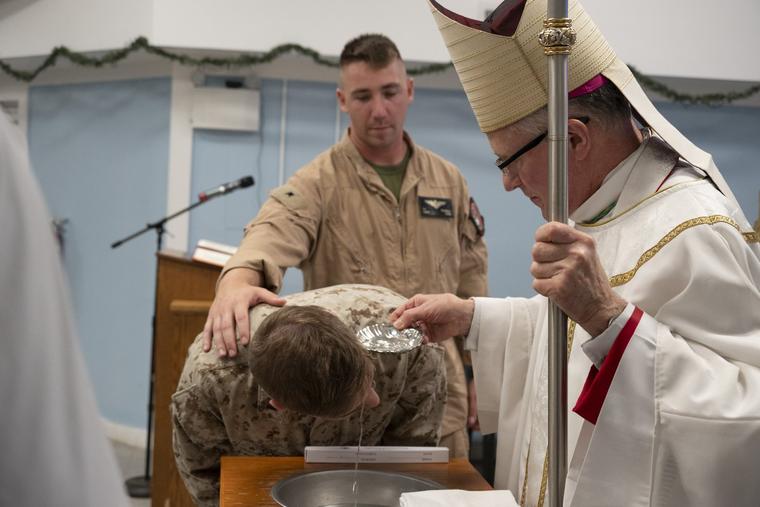
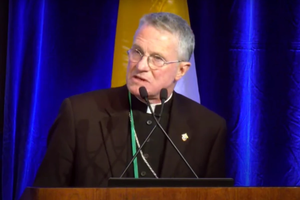
The current war in Iran is no abstraction for Archbishop Timothy Broglio, who heads the United States’ only global diocese, the Archdiocese for the Military Services (AMS), a borderless jurisdiction that includes Catholics serving in the U.S.. armed forces together with their families.
Three of the U.S. military installations visited last Christmas by Archbishop Broglio — bases in Bahrain, Kuwait and Qatar — were later bombed by Iran in the war launched by the U.S. and Israel on Feb. 28.
But as Vatican leadership under Pope Leo XIV becomes increasingly concerned about the deployment of military solutions that seem to ignore international law before dialogue is attempted, it has often fallen to Archbishop Broglio to articulate Church teaching on sensitive issues around war, peace, and the primacy of human dignity.
The scope of his jurisdiction is daunting: as the head of the Archdiocese for the Military Services, Archbishop Broglio pastors 1.8 million Catholic servicemen, or 20-25% of the total U.S military worldwide, spread across 750 U.S. military bases in 80 countries.
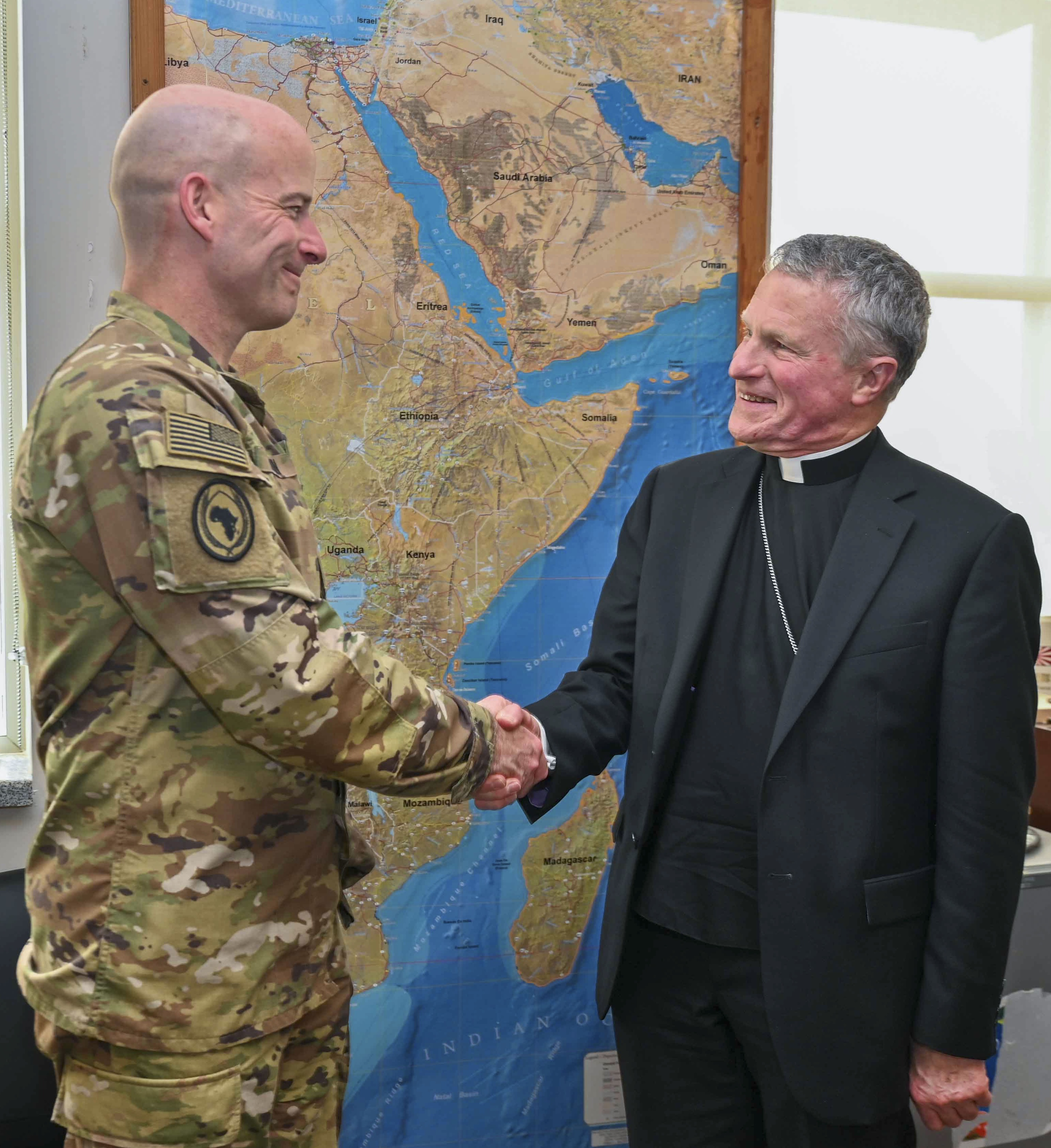
“If we had 500 chaplains on active duty, we could meet all the needs,” the archbishop told the Register. Instead, he has about 200 chaplains across the branches of service, with 137 of them in the U.S. Army’s active duty and reserves last October.
Archbishop Broglio is particularly suited for the task at hand. He is a skilled diplomat, familiar with the ins and outs of international law. After 11 years in Rome as chief of cabinet to Pope John Paul II’s secretary of state, Cardinal Angelo Sodano (1990-2001), the Cleveland native served as papal nuncio to the Dominican Republic and apostolic delegate to Puerto Rico (2001-2007). He also represented the Holy See in Paraguay and Ivory Coast.
And like the Holy Father, Archbishop Broglio is a polyglot with French, Spanish, and Italian up his sleeve, in addition to English.
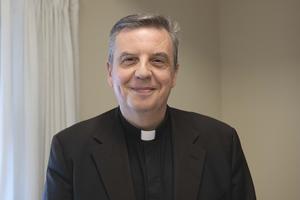
During an in-person interview, his decisiveness and precision are striking. One might mistake him for a four-star admiral were it not for his modest black suit and clerical collar.
Appointed as leading prelate for the U.S. military in late 2007 by Pope Benedict XVI, Archbishop Broglio has led this demanding diocese under five very different presidential administrations — Bush, Obama, Biden, and both of Trump’s nonsequential terms.
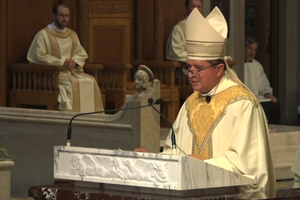
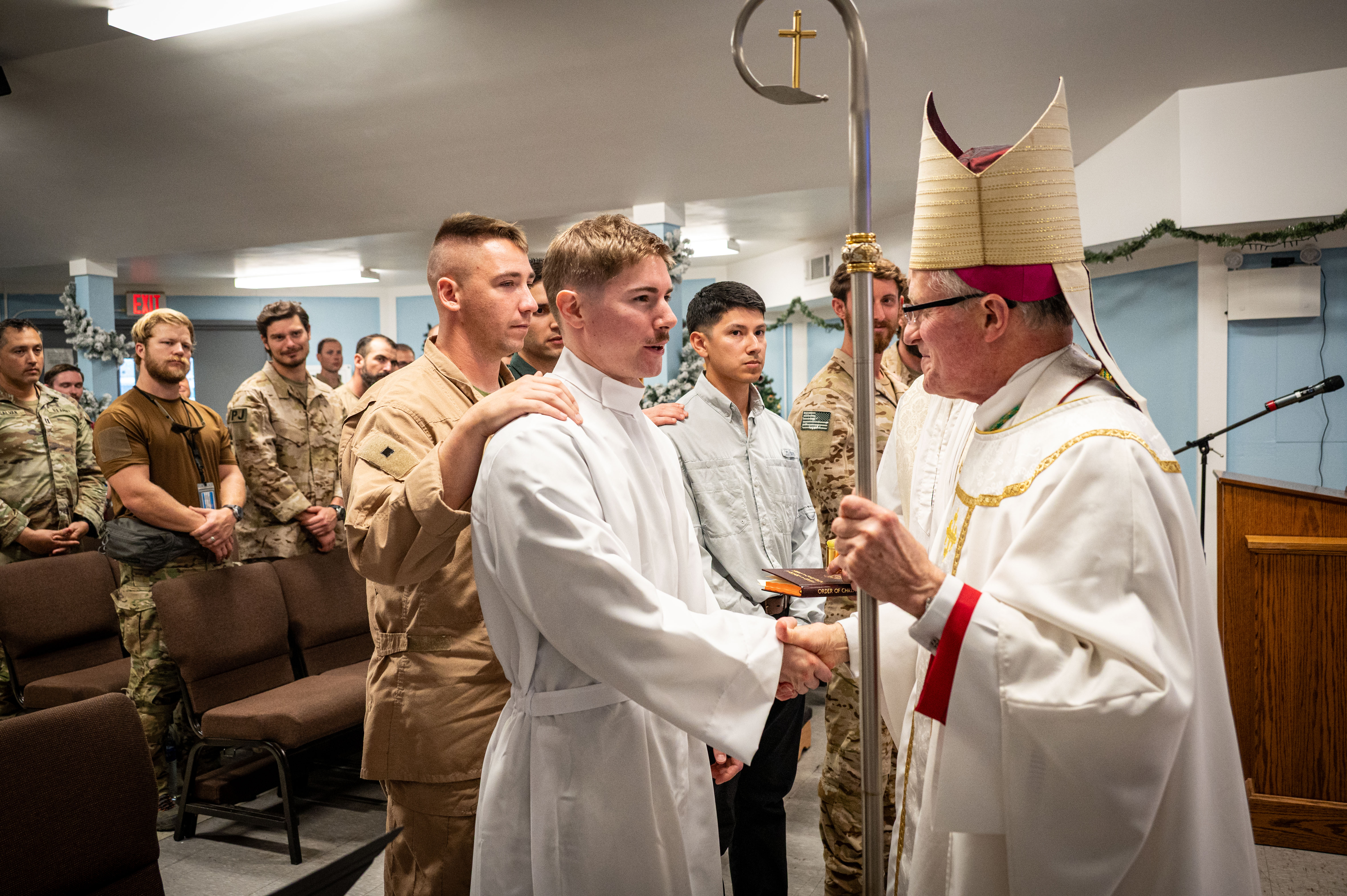
Archbishop Broglio frequently visits U.S. bases around the world where he celebrates the Eucharist and provides the sacraments, offers spiritual advice and counsel to the deployed, and connects with local religious.
Moral Dilemma of Service
Speaking on the impact of a military mission on the average soldier, sailor or pilot, the archbishop said, “They’re very much affected. I think, statistically, everyone comes back with some sort of trauma. Not that it’s so severe as to be classified as pathological, but they do come back with some sort of trauma.”
Especially regarding the moral dilemmas military personnel face, Archbishop Broglio stressed the importance of addressing “the whole question of moral injury.”
“Sometimes people in wartime situations are obliged to do things that they wouldn't normally do in other situations,” he said. “And that does require some healing.”
Moral dilemmas range from receiving a direct order that “is morally questionable” to an assignment that undermines the practice of faith.
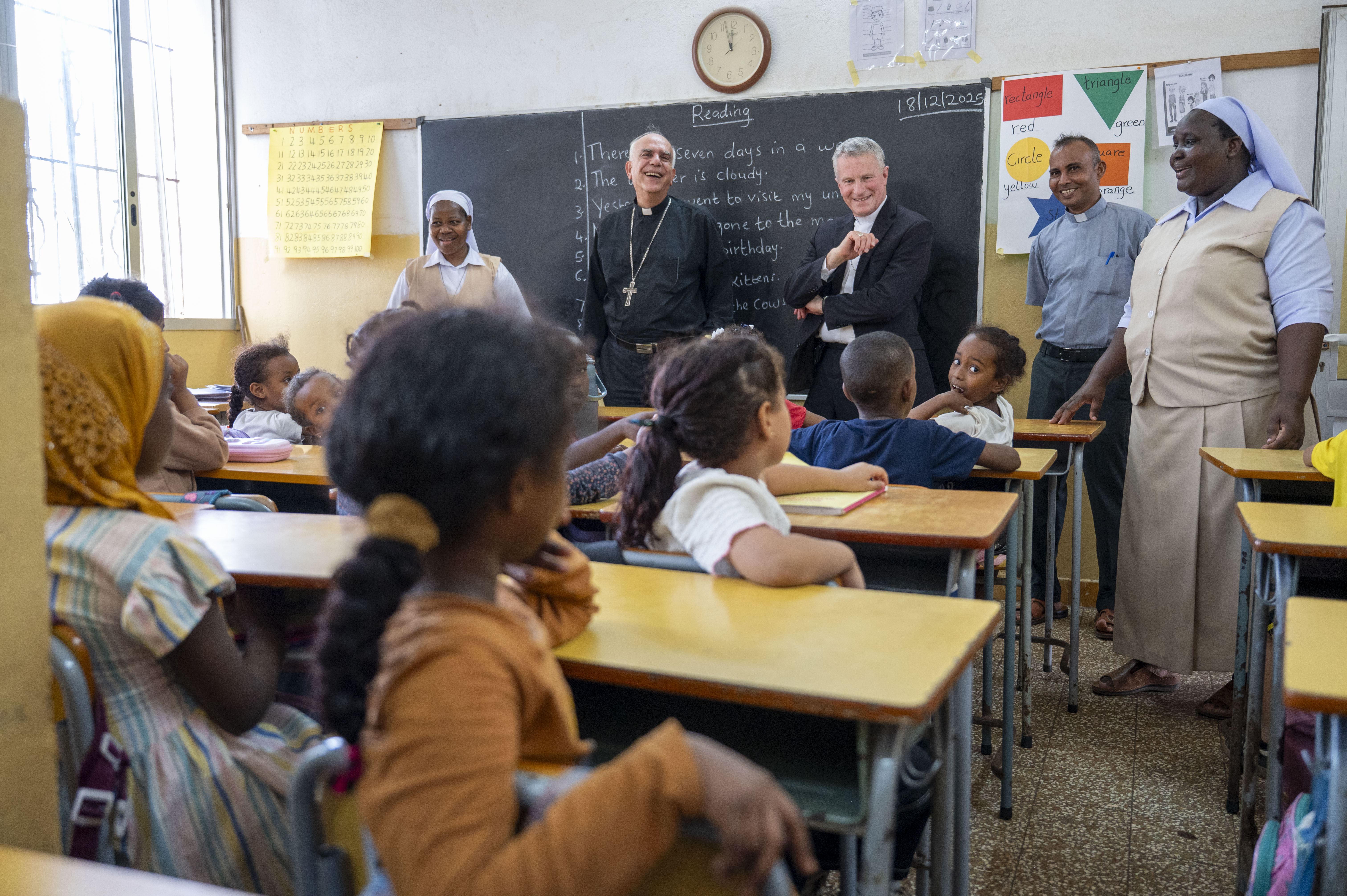
“This morning I talked to a Marine who was out on a mission during the war in Iraq,” the archbishop said. “And he realized only when he came back that it was Easter Sunday. This was a practicing Catholic. He felt very bad” about forgetting the holy day.
A recent example of military actions that elicit this moral question was the U.S. War Department’s bombing of boats used by alleged drug traffickers in the Caribbean and Pacific last September.
In response, Archbishop Broglio issued a public statement in December, where he said, “In the fight against drugs, the end never justifies the means, which must be moral … and always respectful of the dignity of each human person.”
The message was subsequently awarded first place as Best Diocesan Pastoral Message of 2025 by the Catholic Media Association.
On Easter Sunday, Archbishop Broglio appeared on the TV news show Face the Nation, discussing the war against Iran, which he described as not justified under Catholic teaching. The host asked, considering the dubious morality of the action, what guidance would he offer Catholic service members in that theater? “Do as little harm as you can, and try to preserve innocent lives,” the pastor responded.
1999 Serbia Bombing
This year’s bombing campaign against Iran is not the first time Archbishop Broglio faced U.S.-initiated military aggression.
While working in the Secretariat of State under Pope John Paul II, the archbishop was part of an intense 1999 diplomatic effort to persuade the U.S. and NATO to halt its bombing of Yugoslavia during the Catholic and Orthodox Easter season. The Holy See argued that a ceasefire could facilitate negotiations and humanitarian aid, but NATO’s air campaign intensified over Orthodox Easter weekend despite Yugoslavia’s agreement to a cease fire. The U.S. objective was to halt alleged “ethnic cleansing” in Kosovo.
The archbishop reflected, “It is disconcerting because obviously I would hope that those holidays, which are sacred to various religions, that they would be respected.”
“When an initiative like that is taken, there is great hope of some positive effect. So obviously, the first emotion I remember is disappointment” that the bombing did not end, but “all those gestures are always done with a certain amount of realism. It’s not the era of Pax Romana in the Middle Ages; The Pope doesn't have quite the same power to force his will!”
Asked if U.S. bombing during holy seasons, including Muslim Ramadan and the Persian New Year, known as Nowruz, is a recent strategy, Archbishop Broglio noted that President George Washington led an attack on the British on Christmas Day: “So, from the very beginning [in the U.S.], there’s been a bit of a tradition of carpe diem, or ‘seize the moment.’”
Discrimination or Misunderstanding?
Despite larger fears over U.S. foreign policy, the U.S. military archdiocese achieved a meaningful win this year.
As EWTN News reported last October, Archbishop Broglio protested the sudden termination of laypeople working for the U.S. Army as catechists, Catholic community coordinators and liturgical musicians.
As he recounted to the Register, the current chaplains could not possibly cover all the functions eliminated, thereby undermining worship. Archbishop Broglio then informed the secretary of the Army and the Army’s chief of chaplains — to no avail.
“When those meetings did not produce any fruit, I went with a public letter, which definitely produced a reaction,” explained the archbishop. Today, “where those positions existed, they exist again. I’m pleased.” According to Military Times, the U.S. Army resumed hiring religious support personnel in January.
When asked if he thought the problem was a matter of budgets or attitude, he responded, “Attitude,” adding, “It was sold as a matter of budget, but it was not.”
“I think there's always a little bias in the sense that the Chaplain Corps is dominated by Protestants and evangelicals,” the archbishop added, “but that depends on individuals who are in key positions. In general, I have found people to be collaborative. You do find ignorance, though. People just don't know what the Catholic Church requires in certain situations and don't know what's important to us.”
Building the Kingdom
Archbishop Broglio said there was one thing he did not know when he accepted this assignment in 2007 was just how little funding the archdiocese had.
“After I got to Washington, I discovered why I should have said No. The archdiocese was almost broke, and I had no experience raising money, but it’s something you learn to do,” he explained.
Besides fundraising, Archbishop Broglio is creating new missionary models to serve Catholics in the military such as Team St. Paul, a full-time missionary apostolate designed for service members ages 18-29 on military bases.
The archdiocese also continues to welcome those discerning vocations. In April, for instance, a record number of 38 men attended the AMS’ West Coast discernment retreat.
Best Administrations for Military Catholics
Of the five administrations with which he worked, Archbishop Broglio said his relationships with the Bush and the Trump administrations have been the smoothest.
“My life was much easier under both of those administrations,” he said. “The tendency during both the Obama and the Biden administrations was to use the military as a social experiment. And at a certain point, you know, you had to say, ‘Yes, sir,’ and do whatever you are told.”
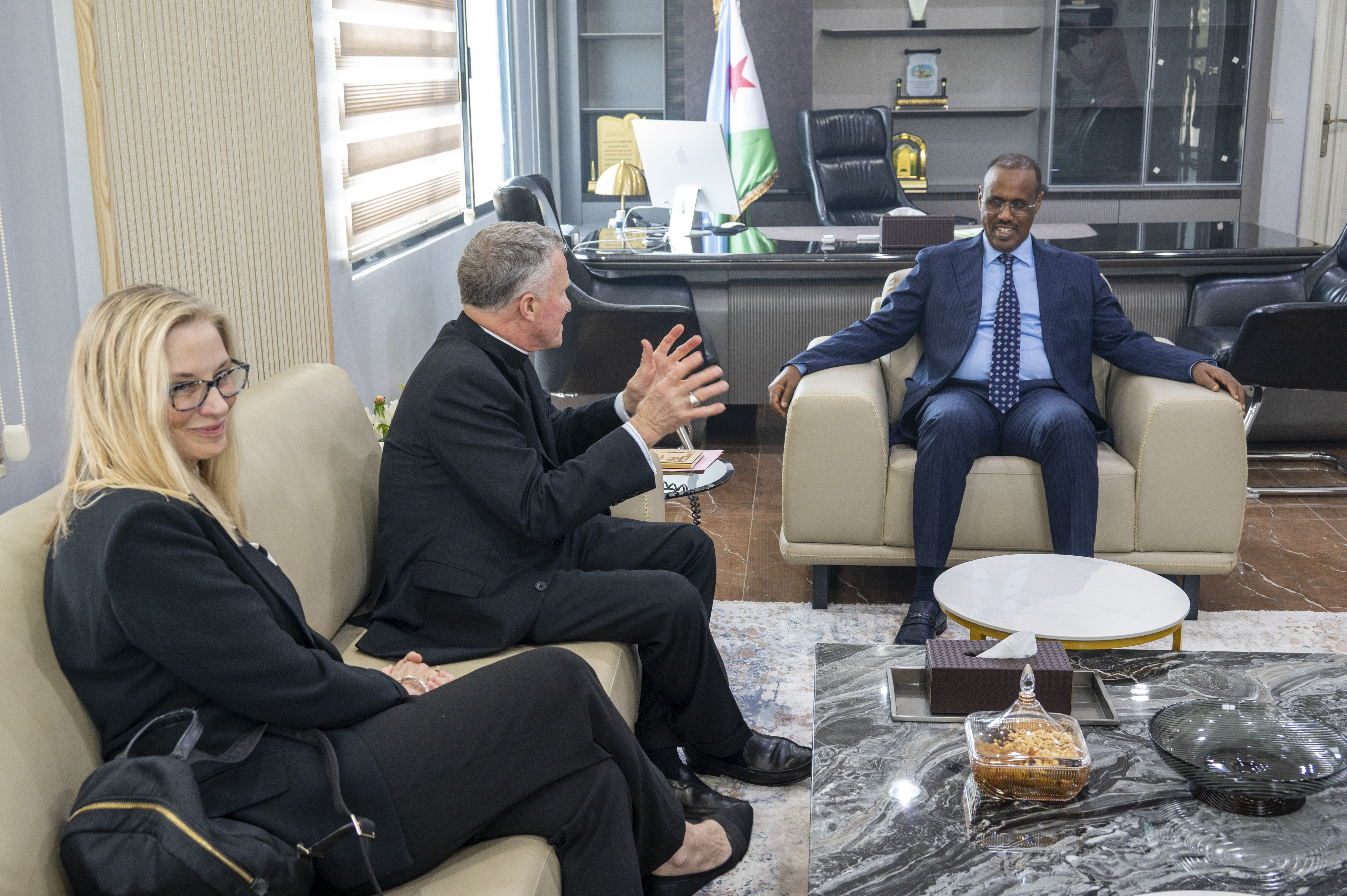
For instance, Archbishop Broglio cited the first and second Trump administrations as ending policies driven by gender ideology.
“Since most of the social experiments were instituted by executive order, they were eliminated by executive order,” he said. “Because the military is a more conservative body, I think it welcomed” these changes.
Just War Theory
Archbishop Broglio also addressed the pitfalls surrounding the conversation of just war theory and Catholic teaching.
“I think one danger would be construing Catholic social teaching as some sort of social democracy — an ideology,” he said
“Another danger would be construing the just war theory as synonymous with ‘peace at any price,’” Archbishop Broglio said. “There are some people who want to paint it that way, but I don't think anyone today would question the necessity of the United States entering the Second World War.”
- Keywords:
- archbishop broglio
- military archdiocese