Islam as a Mirror: What Europe’s Migration Crisis Reveals About the West’s Loss of Faith
U.S. historian Raymond Ibrahim argues that Europe’s crisis of Muslim migration has less to do with Islam than with a West that has lost the will — and the faith — to defend itself.
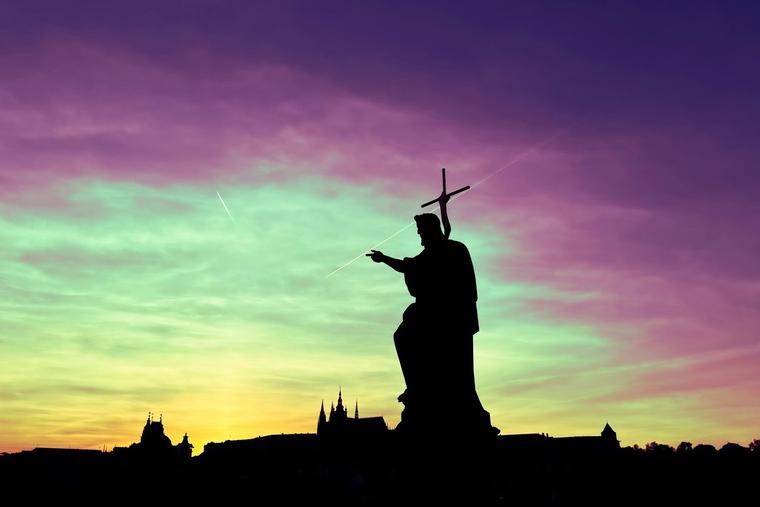
Mass migration has become one of the defining flashpoints of Western politics, from the United States to Europe. For three decades, the Catholic Church has tried to bring moral clarity to the question, with each pope shaping that response through his own background and theological sensibility. Pope Leo, infused with his longtime experience as a missionary in Latin America, has repeatedly pressed the Trump administration over its treatment of migrants, suggesting that opposing abortion while supporting harsh deportation policy is not, in fact, a pro-life position.
That universal moral framework, however, encounters a particularly complex reality in Europe, where migration is overwhelmingly Muslim and where a long history of conflict with Islam still shapes political debate. Many European Catholics often feel torn between a desire to defend a culture and a faith they see eroding and a Church whose leadership has consistently called for welcome and mercy toward migrants regardless of origin and religion.
Few people have spent as long studying those relations as Raymond Ibrahim, a U.S. historian of Christian-Muslim relations and author of a number of internationally acclaimed books, including Sword and Scimitar: Fourteen Centuries of War Between Islam and the West and Defenders of the West: The Christian Heroes Who Stood Against Islam. Speaking with the Register in the context of a series of conferences in Europe in May, he offered a reading of the current moment that takes the crisis seriously while challenging the terms in which it is most commonly framed.
The West’s Identity Crisis
For Ibrahim, the question of Muslim migration in Europe cannot be understood in isolation from the prior question of what happened to the West’s own confidence and religious identity. A civilization that no longer holds firm beliefs about itself, he argued, has no resistance to offer anything that does.
He traced this in part to what he sees as a Christianity progressively reduced to a private, individualized faith, stripped of the cultural and civic weight it once carried. “One of the problems with modern Western Christianity is that it has just been internalized into an individual faith, some abstract idea like ‘I’m saved; I have a relationship with Jesus,’ but now people live purely secularly with the world,” he said. “It wasn’t like that historically. It was much more something about the culture itself; it was very visible.”
The consequence, in his view, is a faith that no longer shapes public life or gives society a shared framework to defend. “One of the tricks today is to strip Christianity out of the world by convincing everyone: ‘It’s only about you and God and your mind — keep it to yourself.’ That’s one way to actually kill Christianity.”
Invited, Not Invading
That loss of conviction, Ibrahim argued, is also what explains how mass Muslim migration became possible in the first place. “Muslim migrants are basically being invited into Europe, not invading,” he said. “This is a very important distinction to remember because a lot of people want you to think the problem of the West right now is Islam itself, which is a misleading conception.”
Historians and migration specialists often attribute contemporary migration primarily to demographic, economic and geopolitical factors rather than to a coordinated ideological project. But for this scholar — born to Coptic Christian immigrants from Egypt to the U.S. — this crisis is more than just a management issue or misguided idealism.
Ibrahim has spent two decades studying the centuries during which Islam was truly a conquering and expansionist force against Christendom, from North Africa to the Middle East, through the Balkans and Spain. But he thinks that this historical reading is not sufficient to interpret today’s reality. “From a historical perspective, I would say that Islam undoubtedly represented an existential threat,” he stated, noting that this is no longer the case because Islam no longer possesses the military and economic power necessary to conquer the West.
Ibrahim no longer accepts the interpretation that the Western elites in favor of unlimited immigration sincerely believe that all cultures and religions can coexist as long as material needs are met. Instead, he believes that these policies reflect what he sees as a deliberate hostility toward the traditional Christian civilization that once gave Europe its cohesion.
“Time has shown that mass immigration from countries with overly diverse cultures and religions does not work, that it leads to tensions and even crime. And they have not reconsidered their decision. They continue to do the same thing and are even going further.” “At this point,” he continued, “it is impossible to believe that this is not by design.”
He pointed to what he sees as a deep animosity toward traditional Christianity specifically — not religion in general, but the older, civilization-shaping form of the faith that places God well above governments. “If you go to public schools in America,” he said, “you are told that Christianity was a problem until the Enlightenment that gave us the great society we have today.”
“The greater enemy to those rejecting this civilization is not the Muslims — they couldn’t care less. It’s the Christians,” he said. “They will go as far as ally with the Muslims and be supportive of and empower them because of their hatred for the Christians and what they represent.”
Unexpected Mirror
For Ibrahim, the debate on immigration in the West — and particularly in Europe — reflects the deeper question of whether societies are capable of offering a model of civilization that is compelling and confident enough to attract only those individuals who wish to integrate into it.
The very dynamic Ibrahim describes that is making a Muslim presence especially visible in Europe is producing an effect that he finds telling. While some young Western men have converted to Islam over the past decades, drawn to what he described as the clarity, discipline and unapologetic masculinity that many Christian societies seem to have lost, Islam’s growing visibility in Europe is also creating an unlikely wake-up call for a young cohort that had lost touch with the religious practice of their ancestors.
As one example, Ibrahim pointed to young Europeans posting videos on social media about rediscovering Lent after watching Muslim friends observe Ramadan openly. He described the trend as “an inadvertent positive development.”
“You bring these Muslims who are not raised that way, and they express the external sort of manifestation of their religion. Then Western people get jealous, and they’re like: ‘Wait, I thought we couldn’t do these things — what about my own tradition?’” He called it one of the rare but genuine byproducts of Islam’s visible presence in the West, a mirror that shows it what it is losing.
“Christianity was meant to be something that actually permeates and infuses a society.”


![‘The Holy See has made clear that the clergy of the Society [of St. Pius X] are now to be regarded as schismatic,’ Bishop Frank Caggiano said in a statement.](https://publisher-ncreg.s3.us-east-2.amazonaws.com/pb-ncregister/swp/hv9hms/media/2026070617078_0ab6902d-8c02-4eac-aba4-1ec174e52618.png "‘The Holy See has made clear that the clergy of the Society [of St. Pius X] are now to be regarded as schismatic,’ Bishop Frank Caggiano said in a statement.")