Cheers to Jane Austen on Her 250th Birthday
Insights on Life and Love From the Beloved Novels
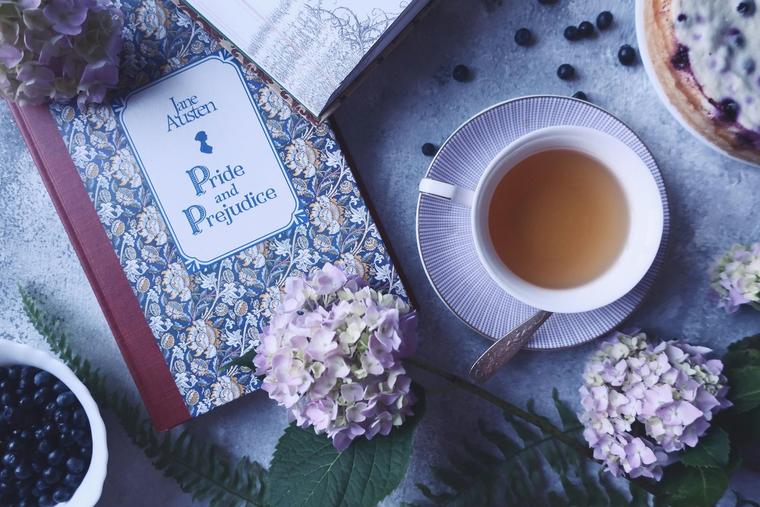
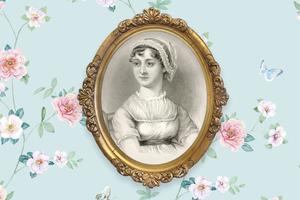
Why do I reread Jane Austen’s novels? I appreciate how the heroines exhibit grace and virtue during life’s joys and trials. These timeless tales are perfectly paired with a batch of scones and a good cup of coffee or tea (which Jane, I am sure, would prefer). A birthday cake would be more appropriate today, Miss Austen’s 250th birthday.
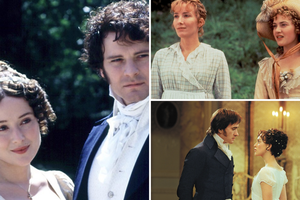
Let’s begin with Elizabeth “Lizzy” Bennet from Pride and Prejudice: I admire how she looks on the bright side of things. She can laugh at Mr. Fitzwilliam Darcy’s sternness — and most awkward social skills as they relate to women — at least until her feelings for him make her regret the circumstance in which they find themselves (before the second proposal, of course).
Then there’s Elinor Dashwood and her good sense amid heartbreak over Edward Ferrars’ secret engagement in Sense and Sensibility.
Next is Miss Emma Woodhouse in, of course, Emma. To be honest, she is not my favorite heroine. I find it hard to believe that she missed how much Mr. George Knightley cared for her. He was always thinking of her well-being and happiness, from making sure she was kind to being willing to live with her anxious father. Mr. Knightley lives up to his name. (For this reason, he is forever my favorite hero.)
Miss Austen is never preachy, but it’s obvious who is leading a good life and who is not. The goodness of characters like Anne Elliot of Persuasion and Jane Bennet (sister of Elizabeth) shines forth, while Lizzy, Emma and Marianne Dashwood (sister of Elinor) have a bit to learn in their growth in virtue, which they do throughout the course of the novels.
Miss Austen’s heroines are “at the service of love.” Lizzy wants sister Jane to be happily married and confronts Darcy so that it might be so (due to his influence with his friend and Jane’s love interest, Mr. Charles Bingley). Elizabeth tells Darcy of her family’s pain so that she can unburden herself. And she recognizes that his mitigation of the Lydia Bennet-Mr. Wickham scandal is a service of love for her. (“Her heart did whisper that he had done it for her.”) He wanted the best for her and did what he could to make that happen. That’s what real love means.
Likewise, Emma reaches out to help Harriet Smith secure a good marriage — not always helping in the right way, as readers well know, but she tries. The same is true with her outreach to Miss Bates (despite her unkind comment on Box Hill). And Elinor, ever the helper, makes sure her mother and sisters fare well in the wake of her father’s death. Her judgment about Willoughby goes unheeded by Marianne, but in the end, Colonel Brandon comes along, a friendship that Elinor develops as a true one and one that paves the way for Marianne’s happiness. Elinor also ponders all things related to Edward in her heart (“an excellent heart,” as Austen describes it), a very Marian quality. This dual happy ending for the dear Dashwoods is lovely to read.
The telling of nearly-lost love is so endearing in Persuasion, too, between Miss Elliot and Capt. Frederick Wentworth. Anne’s loving personality is what wins her love, ultimately.
Their reconciliation truly is romantic.
His beautiful letter acknowledges what he loves about her: “I have loved none but you. ... Too good, too excellent creature! You do us justice, indeed. You do believe that there is true attachment and constancy among men. Believe it to be most fervent, most undeviating, in F. W.” (Please read the entire letter to appreciate it fully.)
Then comes a perfect description of Anne’s heartfelt reaction from Miss Austen: “It was an overpowering happiness.”
In each of the novels, the characters find love at the right time. Love as God meant it to be lived is a joyful, lovely thing, as the Church teaches.
Marianne was meant for Brandon, while Elinor was supposed to be with Edward, and Emma was intended for Knightley.
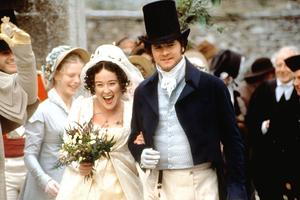
Elizabeth’s heart, meanwhile, had to be prepared for Darcy.
She must realize that she is prone to quick judgments. And Darcy’s character does eventually show itself in full. She and Darcy had to overcome all the things that love isn’t to discover what it is (1 Corinthians 13).
“I do, I do like him,” Lizzy tells her father after Darcy’s second proposal. “I love him. Indeed, he has no improper pride. He is perfectly amiable. You do not know what he really is.”
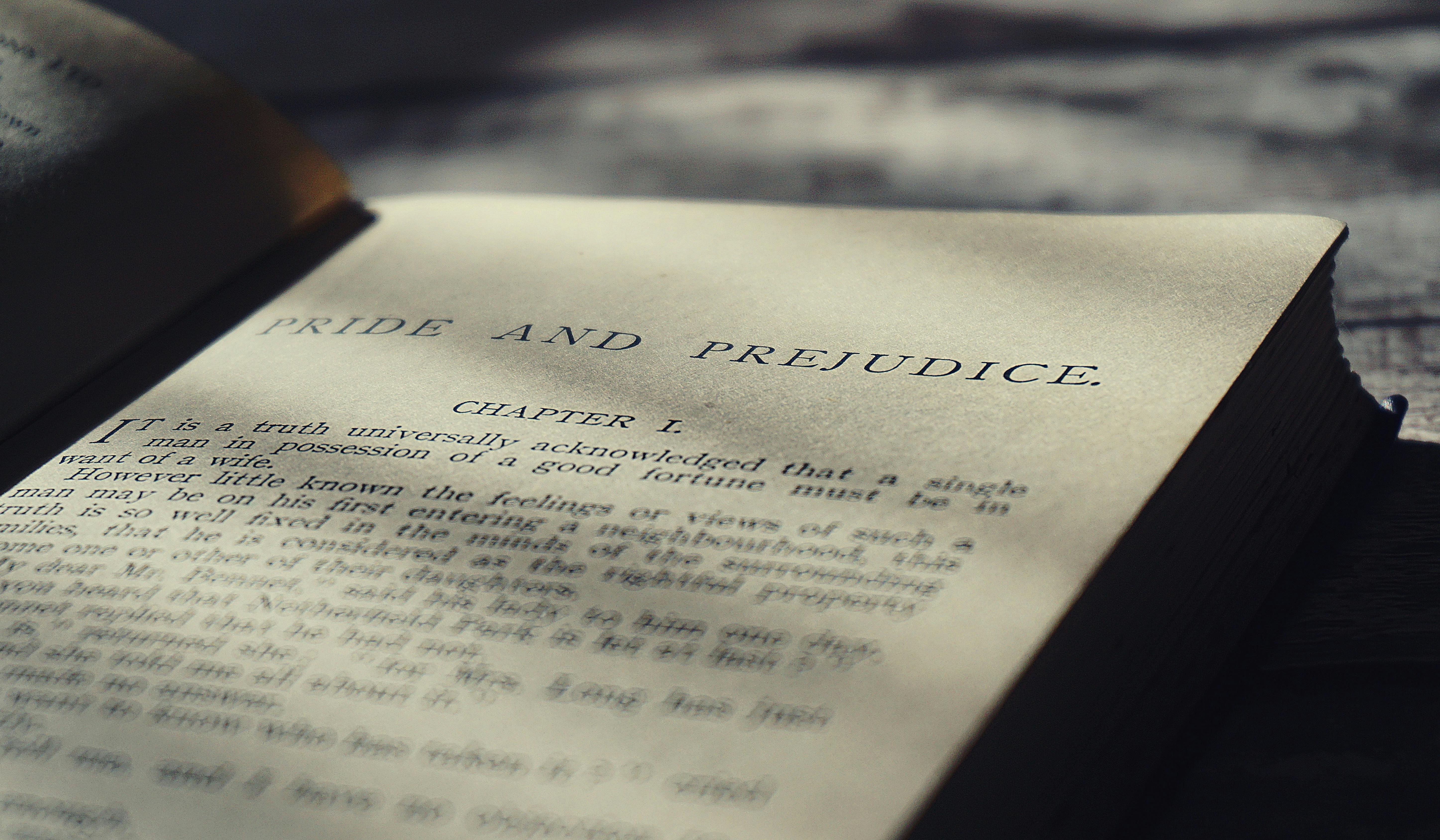
That is the mark of love, knowing who someone truly is and loving them because of it, strengths, weaknesses and all.
And, not to spoil another happy ending, Jane’s sweetness wins her Mr. Bingley. Their mutual sweetness draws them toward one another. Jane, probably more than any other character, exhibits true Christian charity toward all.
At heart, I am an Anne and Elinor.
Other Austenian-minded readers have their own relatable heroines, as they shared in recent conversations with me.
Which heroine is Sarah Reinhard, an Ohio-based Catholic author, speaker and bookworm, most like? “I wish I could say Elizabeth, but I’m more Emma,” she admitted.
Jessica Hooten Wilson, the Fletcher Jones Chair of Great Books at Pepperdine University — who shares an appreciation for Austen with her daughter, who has enjoyed young-adult versions of the iconic reads — loves Persuasion, but Anne is not most like herself; the professor said she has the most in common with Pride and Prejudice’s Elizabeth.
Ann Burns, a wife, mother and founder of The Feminine Project, said, “I think there’s something about Lizzy Bennet, who is a bit feistier, thinking, ‘I know best’ and then realizes she has growth to do. I strive to be Anne Elliot.”
Who is most like Jane Austen herself? (Find literature scholar Joseph Pearce’s answer here.)
Emily Williams is another Austenite — she gives library presentations on the Austen aesthetic and has a framed Bank of England 10-pound banknote featuring Miss Austen on her wall (an honorific that Austen’s fellow British authors Charles Dickens and William Shakespeare do not have, incidentally).
She is also an English professor.
“Any day is a good day to talk about Jane,” the adjunct professor at Belmont Abbey College told me recently, adding, “We have a lot of Austen fans on campus.”
The plots and themes are universal and relatable, and she posits that fans flock to Austen for what is offered: an escape from the crumbling of modern society: “We long for Austen and the innocence her novels represent, a simpler time marked by civility. We attach ourselves to her. It’s not just for ‘chick lit’ — many men love Austen. She’s in the same league as Dickens and Shakespeare and the Brontës.”
Modern female bibliophiles who reread the beloved novels are in good stead.
Professor Williams observed, “All of the women in Austen’s novels, those we root for, the heroines, are intelligent women who read.”
And Miss Austen’s Christian upbringing of course comes through on the page.
“We know she was a person of deep faith,” Williams said, as Austen’s prayers attest. And in her lovely letters, Williams added, Austen comes across as most human, too. “She was flawed; she gossiped; she had haughty opinions; she could be sarcastic, and had a dark sense of humor, had ups and downs. Much like her heroines, she was flawed but with so many saving graces. That’s why we so easily relate to her.”
One person well-versed in Christianity might be a surprise Austen reader.
“I finally gave Jane Austen a chance,” a parish priest told me.
Father Daniel Nolan, of the Priestly Fraternity of St. Peter, a parochial vicar at Holy Ghost parish, in Bethlehem, Pennsylvania, has listened to an audio version of Pride and Prejudice.
It’s “not just about a bunch of women discerning who to marry,” Father Nolan said.
With several years of priesthood on his résumé, he can comprehend all of the nuance.
He commended Austen’s “command and mastery of language, which made reading a joy.”
He added that her writing “not only informs the mind, but conforms it — the mind is altered by what you’ve read,” including the genteel manners of the “era of nobility.”
He reported that he often brings up points of note in the novel in conversation with his flock.
He is quick to recommend the classics in general.
“A good book is true to the moral fabric of universe,” he said. “There’s a reason that a classic is a classic: People across cultures and time recognize truth in it. It resonates with the human person; you are going to see truth in these works: care about love, honor, honesty — whenever will these virtues not resonate?”
Speaking of clergy, clerical content is a particular theme in Austen’s novels, British journalist and EWTN host Joanna Bogle pointed out.
“It is interesting to note Jane Austen’s attitude to the church and clergy of her day,” she told me in an email. “She is evidently a woman who understood the basic importance of the Christian faith, and she takes for granted the need to worship God together on Sundays. But her clergy, with rare exceptions, are pompous and even unpleasant men (think of Mr. Elton and Mr. Collins!) and certainly not pastors to whom people would turn for wisdom and guidance. Is this perhaps a comment on the Anglicanism of her day? It is interesting to note that, not many years after her time, the Oxford Movement created a great revival in the Church of England, with figures like John Henry Newman and, in a different way, Florence Nightingale, both of whom produced profound and wholesome changes in English life.” (Listen to similar points on Register Radio.)
For fans who would like to understand Miss Austen based on what she read, Reinhard recommends Jane Austen’s Bookshelf, for the insights offered about what would have influenced her writing — for example, there’s Evelina, which Reinhard read. “I couldn’t put it down; hilariously done.” (Bonus: Sense and Sensibility fans will find Willoughby in Evelina.)
Overall, she’ll keep rereading these beloved books: “It’s hard to believe it’s been 250 years. Human nature doesn’t change.”
As Burns put it, “I love Jane Austen. I started reading her novels at age 12 or 13 — they have been such a huge influence on my life. She really understands the moral dimension to mannerly behavior. While a mannerly person may not be moral, she stresses that a virtuous one must be mannerly. She becomes more of a mentor the more you read her.”
Overall, Burns said, her novels are truly “able to speak to any era. Austen resonates today — her stories break through everything because she speaks truth with profundity and wit.”
ALL THINGS AUSTEN
- Keywords:
- jane austen

Amy Smith Amy Smith is a Register senior editor who edits devotions and features for print and online. Fueled by prayer and coffee, she enjoys writing about everything from Jane Austen to saints for the Register. She is the author of The Plans God Has for You: Hopeful Lessons for Young Women (Emmaus Road Publishing). Her writing has also appeared in various other Catholic publications. She has a master’s degree in journalism and a B.A. in English.