Gentlemen, It’s Okay to Like Jane Austen
The novels’ lessons can be particularly formative for young men.
Editor’s Note: This story is part of literary special content. Find related stories here.
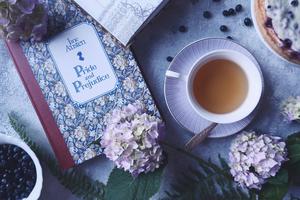
More than 200 years after Jane Austen published Pride and Prejudice, many women still gush over its literary genius — and some recommend that their male friends and brothers read the beloved female author.
Men who have enjoyed Austen’s literary works note her humor, the beautiful prose and the important life lessons the books can teach men of any age.
And, they say, Austen’s stories provide profound insight into relationships and love. These lessons are applicable to every person who picks up an Austen novel, according to Joseph Capizzi, a professor of moral theology at The Catholic University of America and self-professed Austen fan.
“We always need insight into true things about human beings. And I think Austen reveals a lot of truth about human beings,” Capizzi told the Register.
In each of these novels, Capizzi added, Austen explores the relationship between men and women in such a way that sheds profound insight into human nature.
“There has been a struggle for all of humanity, how to sort out the relationships of men and women to each other. Austen, in everything she does, explores how men and women engage each other,” Capizzi said. “I think men lose a lot if they miss this genius. I think she’s a genius in human nature, and her thoughts on the relationships of men and women are quite profound.”
As the father of five daughters, Capizzi has related to many of Austen’s plots.
“These books are about the mistakes that people make or the right decisions regarding relationships and how critical that is to the dynamic of other relationships, particularly regarding family,” Capizzi said. “It teaches you that if one has a vocation to marry, the next critical decision is marrying well — who is this person you’re going to bring into your life and the life of your family? How is that going to positively or negatively influence you and your family?”
“That is the drama of these books, a drama which holds so many valuable lessons,” he observed.
These lessons on family can be particularly formative for young men, agrees Christopher Blum, a professor of philosophy at the Augustine Institute, who previously told the Register that his wife “got me reading Jane Austen.”
“In her books, the young man is setting out to found a family with the heroine, and we have, by the time we get to the end of each one of these novels, ample reason to believe that they know exactly what it means to start a family and that they want to have kids and raise them up virtuously,” Blum said. “That’s great for young men because young men need purpose and adventure.”
He added, “For today’s young man, the most attractive thing in the book is the adventure, the moral adventure of fatherhood and being a husband that we see kind of portrayed here in these novels,” Blum said. “At the end of these novels, it’s not just a happy marriage. It’s not just, you know, boy meets girl, boy wins girl, boy marries girl, right? No, no. It is the story of struggle that ends with this invitation to embrace the adventure of fatherhood.” While lessons on family are important, Blum argues that Austen’s works, through their character-development arcs, can help men better understand women and their perception of men and relationships.
“The books take us through the thought process of virtuous young women: ‘What are good young women looking for in a husband?’ and that, clearly, we have to see past the ‘accidents.’ It is not just that he’s handsome and has a lot of money,” Blum said. “But the moral of each of the major novels has to do with his character, not with his appearance or his wealth, but who he is as a person.”
“They are novels of character,” he underscored.
The novels’ gentlemen are exemplars for modern men, according to Joseph Wurtz, dean of students at Benedictine College. He said he first read Jane Austen in his 30s at the prompting of his brother and close friends. He was most impressed by the characters’ witness to virtue.
“I think Austen believes in virtuous living, and her characters reflect that,” said Wurtz, who lives with his wife, Megan, in Atchison, Kansas, with their six children. “They are not perfect. They make mistakes. She exposes the vice, the vanity, the pride, but she comes back to, well, how do you get through that struggle? You live virtuously. The virtue is ultimately celebrated, and it’s something her characters reflect.”
Capizzi sees the characters’ pursuit of virtue as a theme throughout Austen’s work.
“We always need insight into true things about human beings. And I think Austen reveals a lot of truth about human beings,” Capizzi said. “In a lot of her books, a major subtext of the story is virtue and the operation of virtue or vice in human beings and how it develops in people.”
As for reading Austen, all three men recommend that young men read at least one of Austen’s books to learn about virtue, fatherhood and relationships as they begin to mature as men.
“I think it is appropriate to read Austen when one gets to senior year in high school and the college years, when one is starting to think responsibly about women and starting to think about having a family of his own,” Blum said.
And, guys, it’s okay to wrestle with the writing. “These are not action novels — they are quiet, they are romantic, caustic, witty and quite funny,” Capizzi said. “But you have to learn the humor. The humor is not modern humor, by any means, but it’s still really funny.”
With some effort and dedication, though, male readers will enter a world enveloped in what makes the human heart beat.
“Readers have to work through this enduring sense of love, and I think that’s good for us, because we probably think too briefly about love and not the struggle, the effort it sometimes takes,” Wurtz said. “Learning those lessons through a beautifully told story is helpful to us because it opens our imagination and opens our wonder, and we are drawn in by the beauty and by goodness of the story.”
- Keywords:
- jane austen
- catholic men