In Secular Norway, New Shrine Honors Persecuted Christians as Catholic Interest Grows
The new prayer center, the eighth established by Nasarean.org worldwide, opens as the nation’s Catholic leaders report increasing interest in the faith among young adults raised outside Christianity.
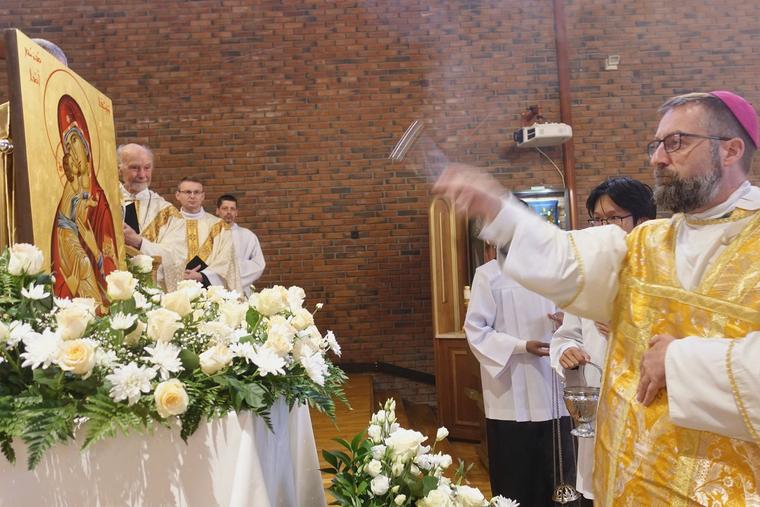
The Diocese of Oslo, Norway, a capital city marked by advanced secularization and immigration from non-Christian countries, inaugurated a shrine dedicated to persecuted Christians June 20. The shrine is the eighth such prayer center established worldwide since 2018 by the U.S.-based organization Nasarean.org — and the second in Scandinavia, after Stockholm in 2023.
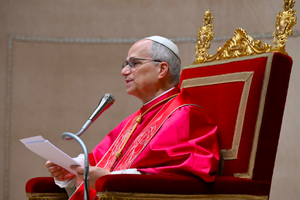
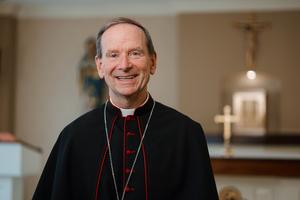
Blessed under the patronage of Mary, Mother of Persecuted Christians, the shrine at St. John’s Church was inaugurated by Bishop Fredrik Hansen, who took office less than a year ago.
For Bishop Hansen, who spoke with the Register ahead of the ceremony, the timing carries a particular resonance, as Norway is experiencing what he described as a small but steadily growing turn toward the Catholic faith, notably among young Norwegians. The witness of persecuted Christians abroad offers, he believes, both a challenge and an encouragement to those finding their way to the faith at home.
Persecution, Witnessed Firsthand
The juxtaposition may seem unexpected since Norway remains one of Europe’s most secular countries, where Christians face no threat comparable to the violence endured by believers in parts of the Middle East, Africa or Asia. Yet Bishop Hansen believes the witness of persecuted Christians abroad carries a message for Western societies as well, reminding believers of both the cost and the value of faith in an age marked by growing indifference toward religion.
The bishop’s attachment to the cause predates his episcopal ordination. Before his appointment to Oslo, he served in the Holy See’s diplomatic corps in Vienna, at the Organization for Security and Co-operation in Europe, an institution with a mandate covering hate crime, discrimination and religious intolerance. It was there, he said, that he first encountered the suffering of Christians within Europe and beyond — those who, because of their belonging to Christ, face violence, discrimination and intolerance. “This is something I have carried with me,” he said.
When Father Benedict Kiely, founder of Nasarean.org, approached him around the time of his episcopal ordination, Bishop Hansen said he “jumped on it.” The project, for him, rests on a theological conviction he traces directly to Scripture. “As Christians, we are bound one to another. We are brothers and sisters in Christ, and the suffering of one part of the body is the suffering of all,” he said. A diocese’s prayer life, he believes, cannot be separated from solidarity with the persecuted Church abroad.
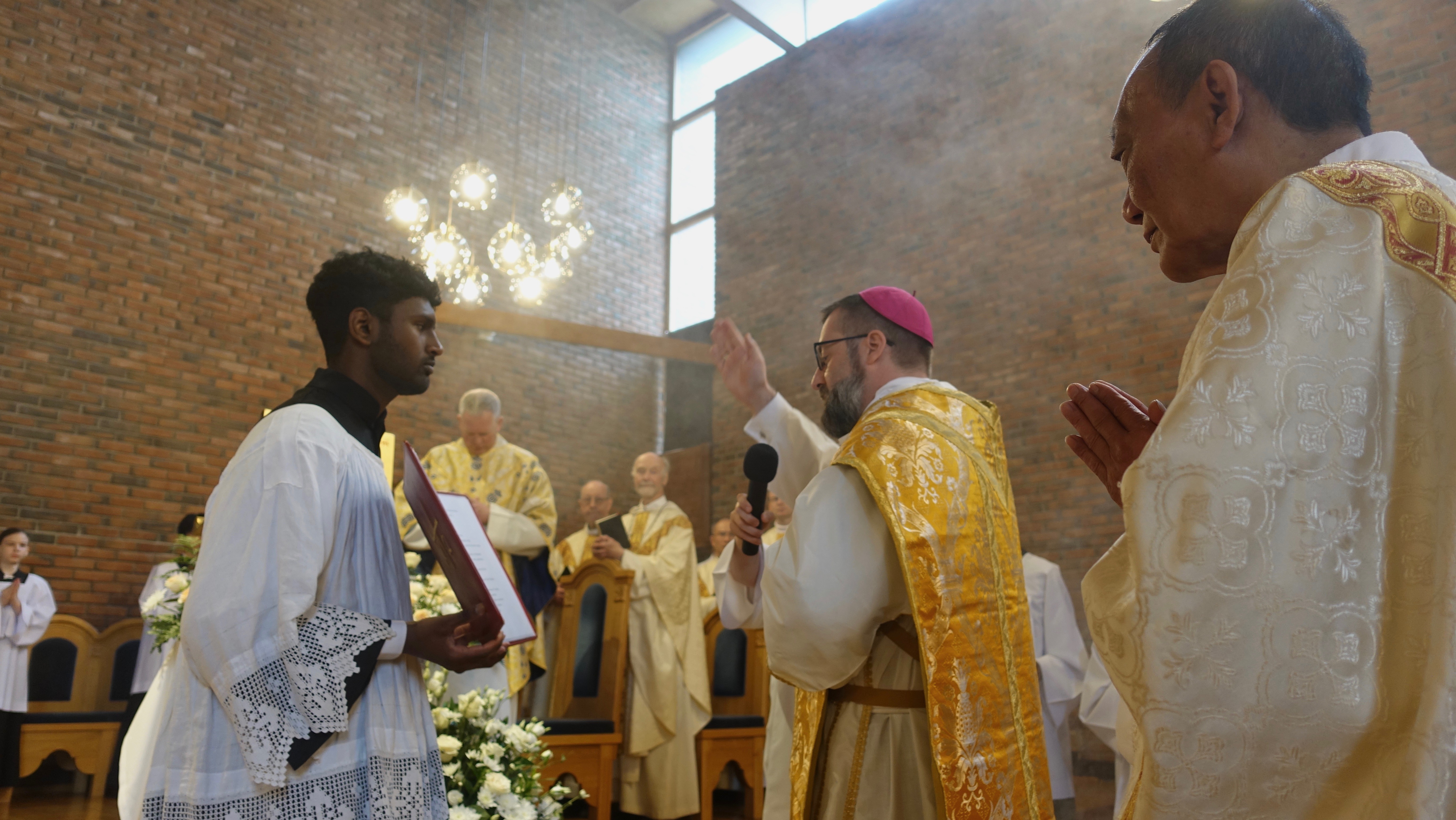
The shrine also invites a more unsettling reflection. The resentment toward organized religion that marks secularized Norway is not equivalent to the violent persecution Christians face elsewhere, but Bishop Hansen sees in both the same root hostility that Christ himself foretold. “There is within this an animosity towards the faith and against the Lord that we see being expressed in different ways in different parts of the world, but which has the same root,” he said.
Signs of a Quiet Revival
The inauguration also arrives amid a marked shift inside Norwegian parishes. The Catholic Church in Norway, now vying with Islam for the position of the country’s second-largest religious community, has long been sustained by immigration from Poland, Lithuania, the Philippines and Latin America. But in the past two years, introductory courses that once drew five or 10 participants have begun attracting 30 or more, according to the prelate. Many of the newcomers are young ethnic Norwegians from secular backgrounds who were never baptized as children.
“When they come into their late teens and early 20s and look at what the world and society has done to them, they seek out Christ,” Bishop Hansen said. What draws them, he added, can be summarized in two words: truth and liturgy — an attraction to a Church that “does not hold back from preaching the truth” and to a Mass that is reverent, well-prepared and rooted in the Catholic liturgical tradition. For Bishop Hansen, the shrine makes such connection visible. “Whenever the Church is challenged — whether simply by words or by physical attack — the Church grows,” he said. “This is where we see the true gift that is Christianity and the true blessing that comes from following the Lord.”
A Growing Network
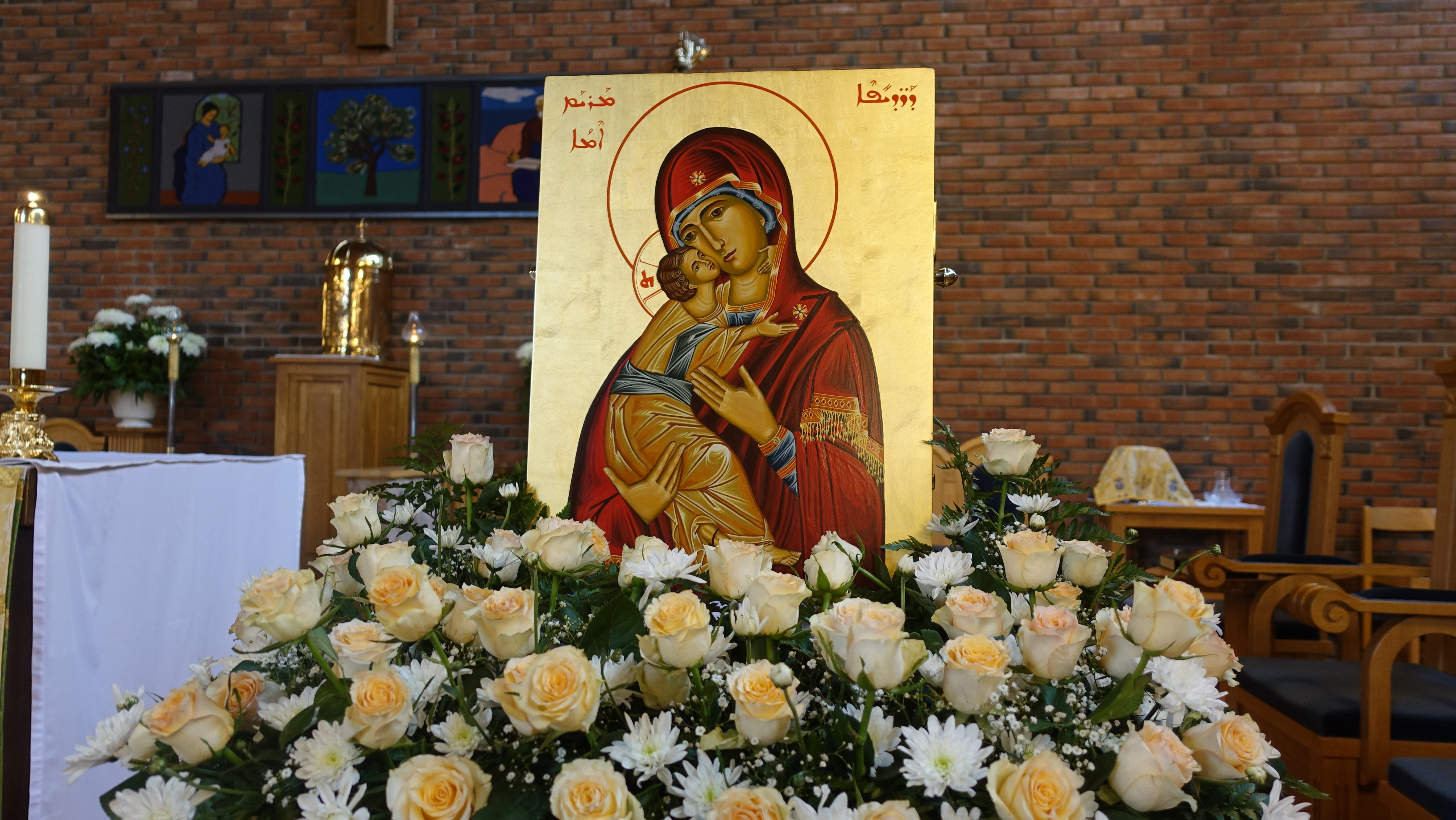
The Oslo shrine extends a project Father Kiely launched in 2018, built around an icon of Mary inspired by the traditional “Mother of Tenderness” image and inscribed with the words “Mother of the Persecuted” in Aramaic. Shrines under this title have already been established in New York; London; Clinton, Massachusetts; Stockholm; Lander, Wyoming; Astana, Kazakhstan; and Qaraqosh, Iraq, with Oslo becoming the eighth.
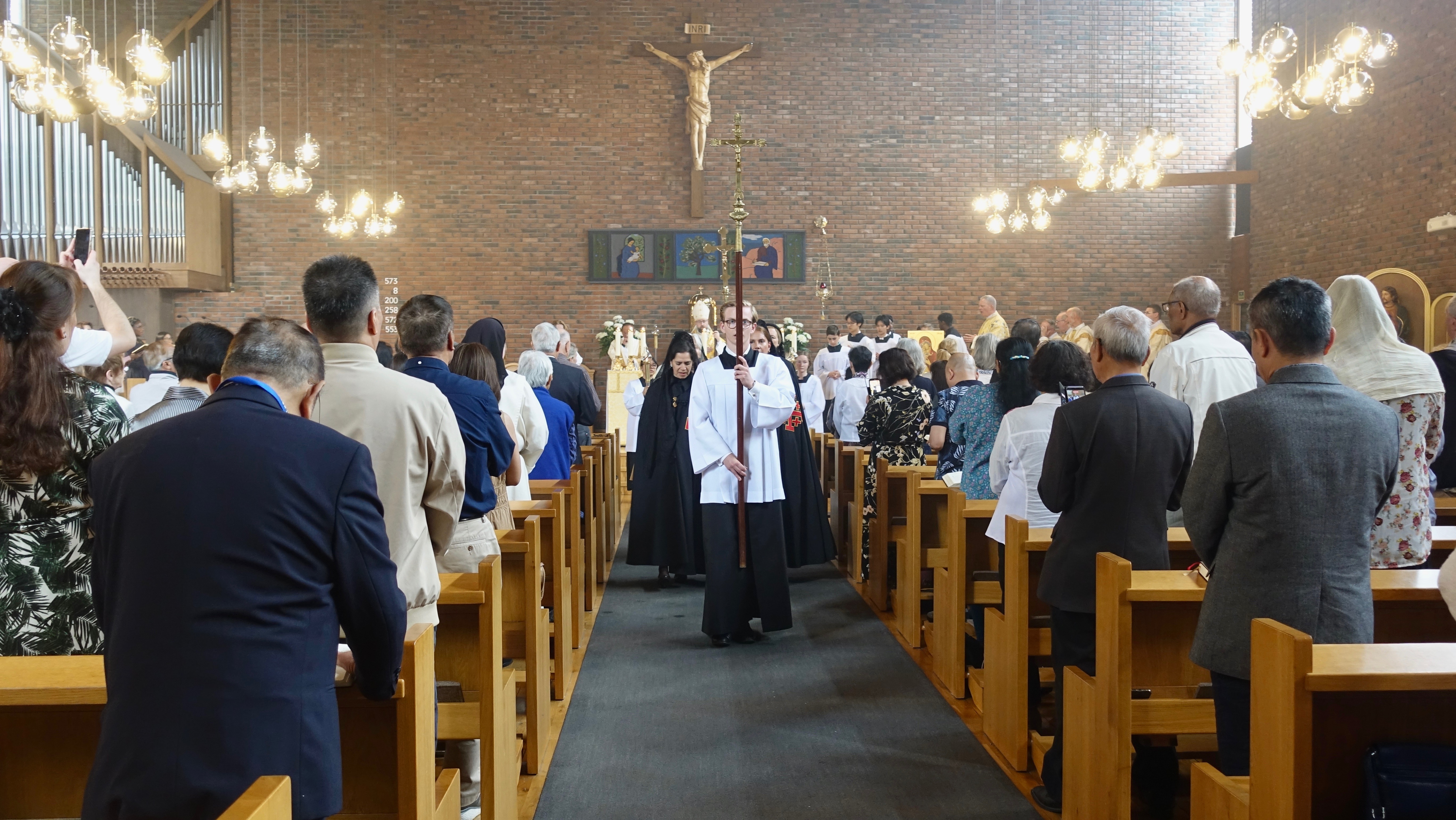
Following the inaugural Mass, Father Kiely joined several Norwegian organizations working on behalf of persecuted Christians for a panel discussion — a starting point, he hopes, for lasting collaboration between the Diocese of Oslo and civil society groups.
He told the Register that two further shrines are planned before the end of the year, in the Diocese of Charleston, South Carolina, in late July, and at the Coptic Catholic Cathedral in Ismailia, Egypt, in December — bringing the total to 10 shrines in 10 years, as Nasarean.org marks its 10th anniversary. Alongside the shrines, the organization has expanded its work assisting Christian families to remain in their homelands, now supporting small businesses in Iraq, Syria, Lebanon, Egypt, Armenia and Jordan.
For Bishop Hansen, the Oslo shrine is also an opportunity to situate his young and growing diocese within a wider communion with the global Church. Norway, he noted, will celebrate a thousand years of evangelization within the next few years, and the shrine, he believes, can be part of a larger story of Catholic renewal taking shape across the Nordic countries. “There is a growing sense of a Nordic, Scandinavian Catholicism,” he said, “that wishes to contribute to the universal Church. And our duty is to make it happen.”
- Keywords:
- persecuted christians
- norway