Supreme Court Rules 6-3 Against Prisoner Seeking Damages for Religious Rights Violation
COMMENTARY: Damon Landor will not receive a dollar for what was done to him. But he has done something important by carrying a case that exposed a real gap in the law all the way to the highest court in the country.
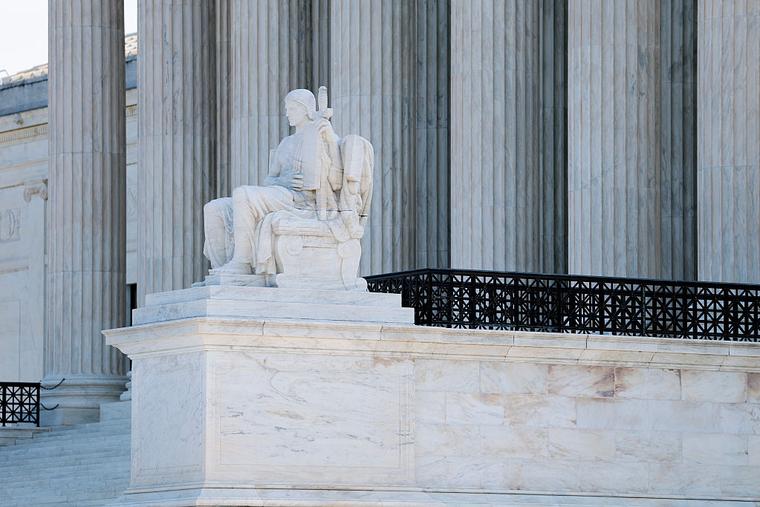
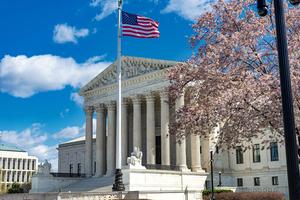
In Landor v. Louisiana Department of Corrections and Public Safety, the U.S. Supreme Court held 6-3 that a federal law protecting the religious rights of prisoners does not offer them the right to sue individual prison officials personally for money damages.
The court reasoned that under the Spending Clause of the Constitution, Congress cannot impose liability on prison officials directly. Instead, it “must depend instead on consent,” which they had not agreed to be sued in cases like that brought by Damon Landor.
Landor’s story is not easy to forget. For nearly 20 years, he had worn dreadlocks as an act of religious devotion rooted in his Rastafarian faith —a practice modeled on the Nazarite vow described in the Book of Numbers. Prison officials in Louisiana knew this. They had accommodated his practice in the past. The federal appeals court with jurisdiction over the state had already ruled that forcing Rastafarian inmates to cut their hair violated federal law.
None of that mattered on the day it counted most. With only three weeks left in his sentence, Landor was transferred to a new facility. When a guard moved to cut his hair, Landor produced a copy of the court decision protecting Rastafarian inmates. The guard threw it in the trash. The warden arrived, demanded paperwork from Landor’s sentencing judge, and when Landor offered to call his lawyer, the warden replied: “[t]oo late for that.” Guards handcuffed Landor to a chair and shaved his head.
It is worth setting aside at the outset a concern that opening the courthouse doors to prisoners on religious liberty claims would flood federal courts with frivolous lawsuits. It would not. The law already has two filters in place. The Religious Land Use and Institutionalized Persons Act (RLUIPA), the federal statute at issue, does not give prisoners the right to ignore prison rules. Officials may restrict or burden religious practice when they can show a compelling reason and when they use the least intrusive means to achieve it. What they cannot do is simply ignore religious rights with no justification at all — and yet, that is what happened here. On top of that, under the Prison Litigation Reform Act, any prisoner who wants to sue in federal court must first exhaust every available grievance procedure within the prison system. That requirement alone screens out a large share of potential claims before a judge ever sees them.
So the court was never asked to give prisoners a blank check. It was being asked something narrower: When an official disregards the law, can he be held personally responsible? Under today’s ruling, the answer is No.
Justice Neil Gorsuch, writing for the majority, focused on the nature of RLUIPA itself. Because the Spending Clause, Gorsuch explained, “confers no authority to regulate directly, Congress cannot just dictate whatever other sanctions it might wish for violating conditions found in Spending Clause legislation.” Such additional sanctions are permissible “only with the voluntary and knowing consent of those who must bear them.” To “sort out whether consent exists,” the court turned to contract principles. Those principles, Gorsuch explained, point to the institution, not individual employees and “Mr. Landor does not allege that any of those individuals has entered any agreement with the federal government, let alone that any of them has voluntarily and knowingly consented to answer private suits under RLUIPA.”
Before Congress enacted RLUIPA, prisoners with religious liberty complaints relied on the First Amendment’s Free Exercise Clause, enforced through §1983, which allows, subject to qualified immunity, monetary damages against individual officials. But a 1990 Supreme Court decision, Employment Division v. Smith, significantly weakened that protection, holding that neutral, generally applicable laws need no special justification even when they substantially burden religious practice. Congress responded by passing RLUIPA to provide a shield to the religious liberties of prisoners. Today’s opinion confirms that that shield lacks a corresponding sword when it comes to holding individual officials accountable.
The majority noted two ways Congress could have lawfully imposed personal liability: (1) by conditioning federal funding on officers agreeing to “enter separate contracts with the federal government consenting to answer suits under RLUIPA” or (2) conditioning its funds on the state’s “agreement to exercise its own regulatory powers to adopt a state law cause of action” against officers who violate RLUIPA.
Justice Ketanji Brown Jackson, joined by Justices Elena Kagan and Sonia Sotomayor, dissented. Condemning the “severance of rights and remedies” as a “sleight of hand,” the dissenters alleged the majority “magically transforms a federal statute into an invitation to be accepted or declined, deemed binding only if each particular defendant has explicitly agreed to be penalized.” The dissenters also pointed to the court’s unanimous decision in Tanzin v. Tanvir, arguing that nearly identical language in RLUIPA’s companion statute, the Religious Freedom Restoration Act (RFRA), allows damages against individual officials, asserting that “RLUIPA’s Spending Clause underpinning does not rob the statute’s text of its plain meaning.”
Damon Landor will not receive a dollar for what was done to him. But he has done something important by carrying a case that exposed a real gap in the law all the way to the highest court in the country. The question now is whether Congress is paying attention. The Supreme Court has rendered its verdict on what remedies are available under RLUIPA. It is time for Congress to make clear that no prison official can ignore the religious rights of inmates under their charge and walk away with no consequences.
- Keywords:
- supreme court