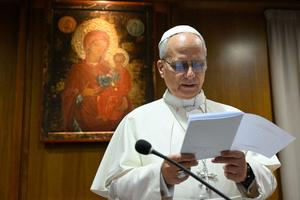
Pope Leo Speaks to the Heart, and the World Is Listening
COMMENTARY: As the saying goes, sometimes the medium is the message. Leo is radiating in word and deed the message of Christian humanism that he preaches.
A priest on his way to Rome walked into a Chicago airport bar, and all everyone wanted to talk about was a papal encyclical. This sounds like the beginning of a bad joke, but, in fact, it happened to me the weekend after Pope Leo XIV published Magnifica Humanitas. I cannot remember a single occasion in my more than 35 years as a priest when there was such broad and genuine interest shown in a papal encyclical.
My experience at the O’Hare Airport bar was further confirmed during my visit to Rome. I arrived on a Sunday and was pleasantly surprised to find St. Peter’s Square, despite enhanced security to enter, absolutely packed with people to hear the reflection on that Sunday’s Gospel and to pray the Angelus with Pope Leo XIV.
That week, Pope Leo left for his weeklong pastoral visit to Spain, where he drew tremendously large crowds. Despite the well-documented secularization of Spain, 600,000 young people prayed with Leo in vigil before he celebrated Corpus Christi Mass, and 1.2 million people processed through the streets of Madrid to worship with him that Sunday.
Why is Leo XIV suddenly so popular, and why are ordinary people, Catholic and non-Catholic alike, beginning to listen attentively to what he is saying?
Authentic Encounter
First, I believe, Leo XIV’s call to unity and communion, rooted in his Augustinian tradition, is striking a chord in people hungry for authentic human encounters in an age of increasing isolation and loneliness. For example, at the Angelus I attended on May 31, the large crowd heard Pope Leo reflecting on the mystery of the Holy Trinity:
“Dear brothers and sisters, in the Mystery of God — Father, Son and Holy Spirit — we are at home, just as Nicodemus felt at ease when he was in Jesus’ presence. The life of God is marvelous and captivating; it gives peace to our heart, which is often very restless, and it allows us to encounter our brothers and sisters in the joy of the Spirit. The Trinity helps us to love everyone and everything: We discover that every creature is made for communion, relationship and encounter. On the other hand, we understand why division, polarization and contempt for diversity bring destruction, sadness and barrenness to the world.”
People are longing for authentic encounter and communion and will listen to leaders — political and religious — who speak of unity and peace.
A few days later, I had the privilege of a private audience with Leo XIV as part of a small delegation from the Association of Catholic Colleges and Universities. There I heard him speak of our need to overcome “the fragmentation of knowledge”:
“One of the challenges that the world of education is currently facing is the increasing fragmentation of knowledge. While it is easy to find people who are experts in a particular field of study, many of these individuals ‘struggle to find direction in their lives, partly due to an inability to connect information with deeper knowledge or maintain a sense of purpose’ (Magnifica Humanitas, 146). They often lack a global vision of reality that is capable of uniting not only the various fields of knowledge, but also the multiple aspects of life and the inner longings of the human heart.”
Proclamation of the Truth
Pope Leo XIV, as Father David Pivonka, the president of Franciscan University, so eloquently pointed out in his June 9 commentary for the Register, sees the solution to this fragmentation in a holistic proclamation of the truth. Pope Leo challenges us educators to instill in our students a “passion for truth.” Speaking to us in a private audience, he said: “Unless Catholic education instills in students a true passion for the truth — and not only intellectual truth, but the Truth that is Christ himself (cf. John 14:6) — we can hardly expect people to be willing to put forth the effort required to recognize truth and adapt one’s life accordingly.”
True Christians know how liberating the truth that is in Jesus is. But even more, in our secular age steeped in post-modern relativism and sentimental emotivism, people are longing to hear people proclaim that there is truth and that the truth is knowable. They are also delighted to hear about the truth of their inherent dignity as human persons.
It is just this dignity that young people today believe is threatened by new technologies, including artificial intelligence. Across the nation — from Central Florida to Middle Tennessee State to the University of Arizona — commencement speakers were booed by graduating classes if they praised these technologies. Why, because we are raising a generation of Luddites? Far from it. Rather, the young (and not so young) recognize that, if we allow it, these “advances” could well be a real threat to humanity.
Leo XIV’s message in Magnifica Humanitas and elsewhere is resonating with people because they are searching, albeit sometimes without full recognition, for something better. They are searching for that which is authentically human. They ultimately are searching for Christ, for as Gaudium et Spes, 22, teaches, “it is only in the mystery of the Word made flesh that the mystery of humanity truly becomes clear.”
Challenge to Madrid Youth
When Leo kept vigil with the young in Madrid, he challenged them to accept their “great mission” with the call: “Be human! Men and women of flesh and blood. Not appearances, but reliable faces. People who seek justice because they are hungry for it, as the daily bread.”
The young are also seeking a more just and equitable world. Many of the young sense that those goods and services that were readily available to prior generations seem inaccessible to them: healthcare, home ownership, a meaningful career, education, marriage, and family opportunity. Leo XIV speaks to the importance of access to the goods necessary for integral human development throughout his encyclical. In fact, the word “access,” is used at least 36 times in his encyclical, usually in relationship to essential realities necessary for human flourishing.
One of these is access to faith-based higher education, for those who are capable, without regard to their economic status. Already in Dilexi Te he had taught, “For the Christian faith, the education of the poor is not a favor but a duty.” This duty must be fulfilled. There needs to be more colleges and universities like the one I have the privilege to lead, Donnelly College in Kansas City, Kansas, that make Catholic education accessible to those on the margins.
In Magnifica Humanitas, Pope Leo XIV calls upon government and people of goodwill to ensure access to both basic education and higher studies to aid parents in their awesome responsibility as the primary educators of their children.
The Holy Father’s voice is being heard. In addition to his call to unity and communion, to inclusion and equity, for truth and access, and for the development of moral guidelines for our new technologies, Leo is being listened to because he radiates the Christian humanity that he preaches.
Shared Passion for Baseball
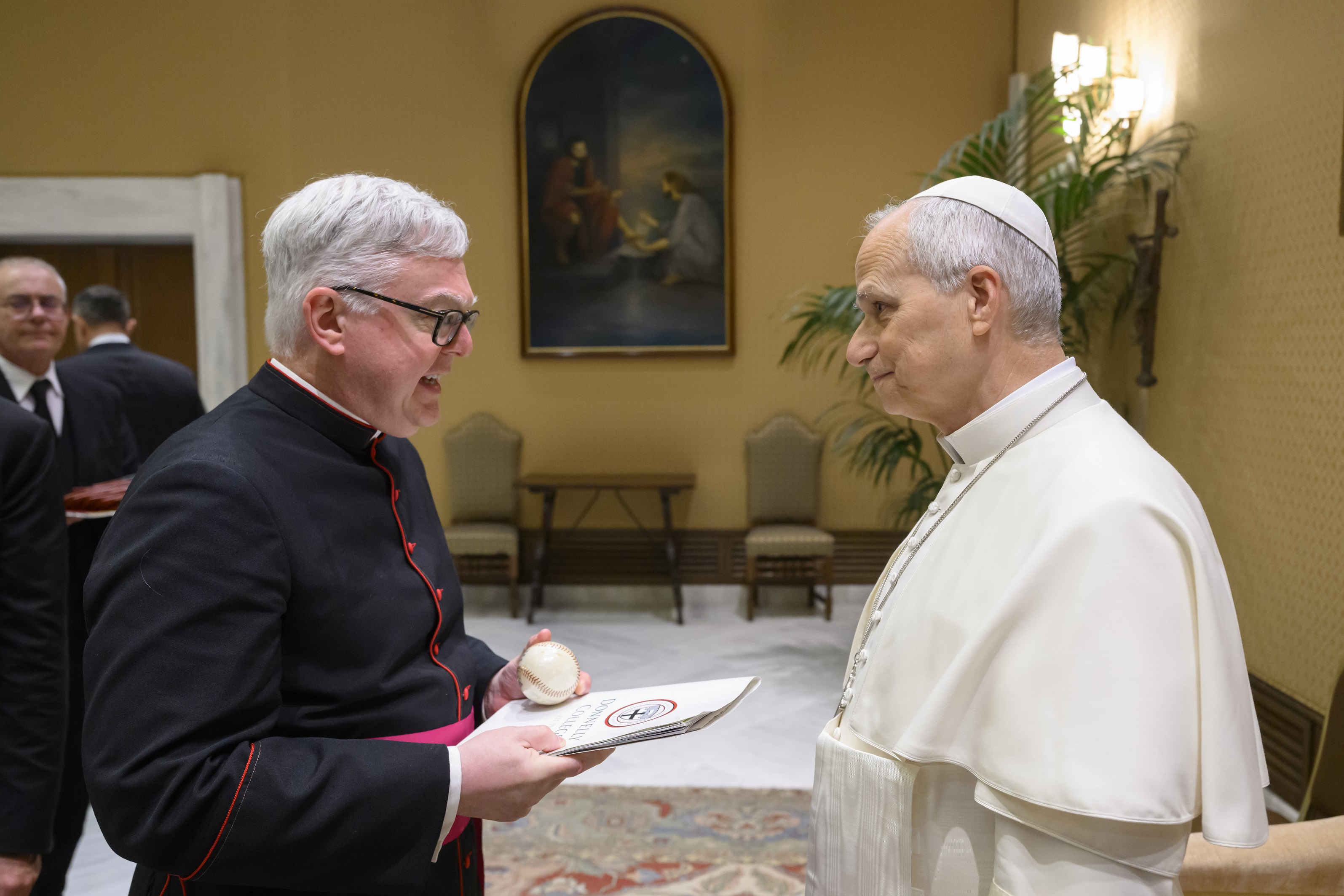
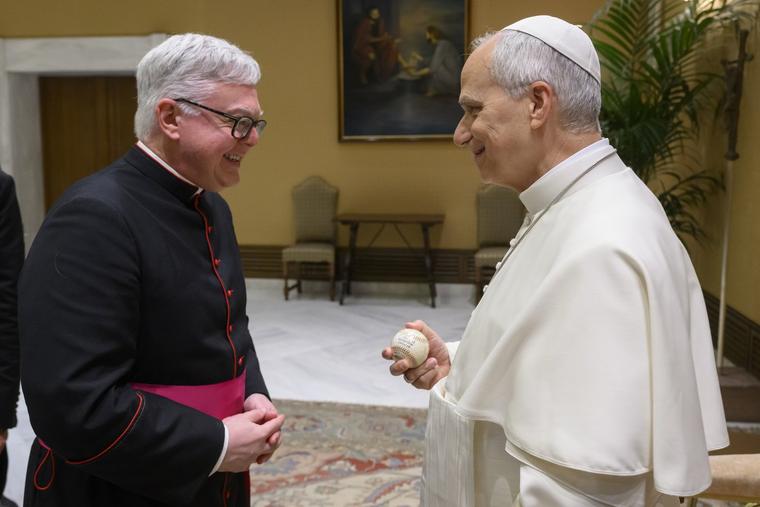
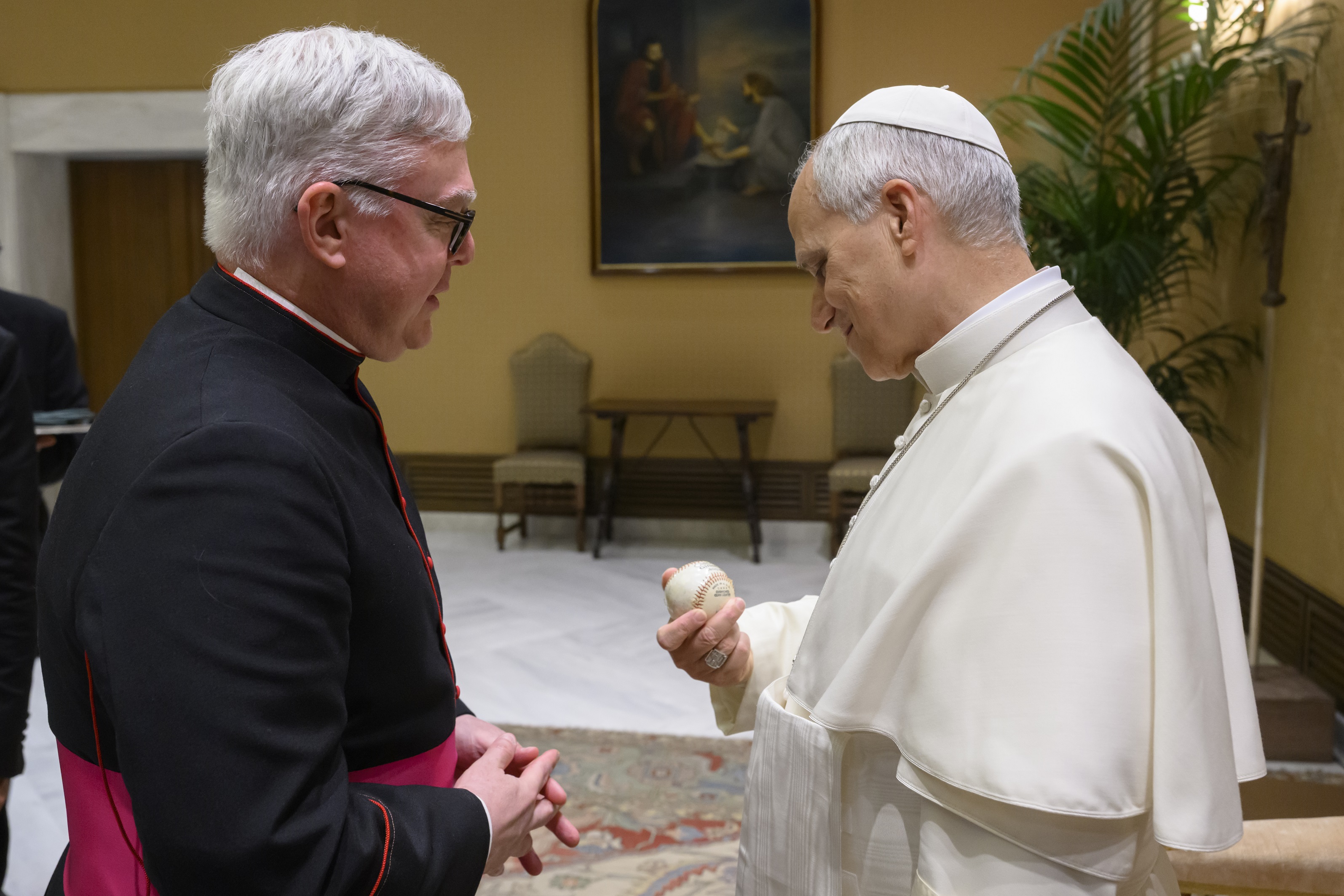
I encountered this quality of Pope Leo XIV personally in my audience with him. Leo and I are about the same age. We both are children of the 1950s and ’60s and both grew up enjoying the great American pastime of baseball. His beloved Chicago White Sox won the American League pennant in 1959 and the World Series in 2005 (with Leo in attendance for at least one game). My beloved Pittsburgh Pirates won the World Series in 1960, 1971 and 1979. Thus, when contemplating what gift I could give to the Pope, I thought of our shared love for baseball and presented him with a ball signed by several stars from the early 1960s, including Nellie Fox, one of Leo’s boyhood heroes. Those in the room with me told me he lit up when he looked at the signatures. This little act of humble joy is seen in the many encounters people have had with Leo XIV.
And ultimately, this, too, is why people are listening to Leo XIV’s message of unconditional love — as the saying goes, sometimes the medium is the message. Leo is radiating in word and deed the message of Christian humanism that he preaches. This indeed is an encouraging sign of the times for which we should give thankful praise to our loving God who has sent us this “son of St. Augustine” as a successor of St. Peter.