In Spain, Pope Leo XIV Tells Young People: ‘You Can Change History — Do It With Love’
The Pope spoke with hundreds of thousands of young people in Madrid on the first day of his six-day apostolic visit to Spain.
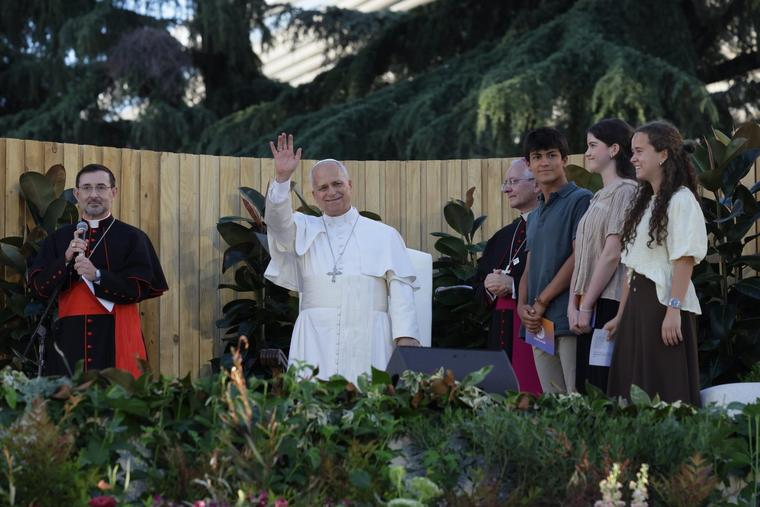
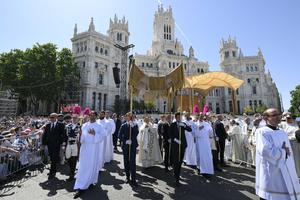
Pope Leo XIV was greeted by a spirit of youthful eagerness in Madridʼs Plaza de Lima on the evening of June 6, with many youth crying with emotion and others chanting: “This is the Popeʼs youth!”
The event brought together more than 600,000 young people, according to the authorities.
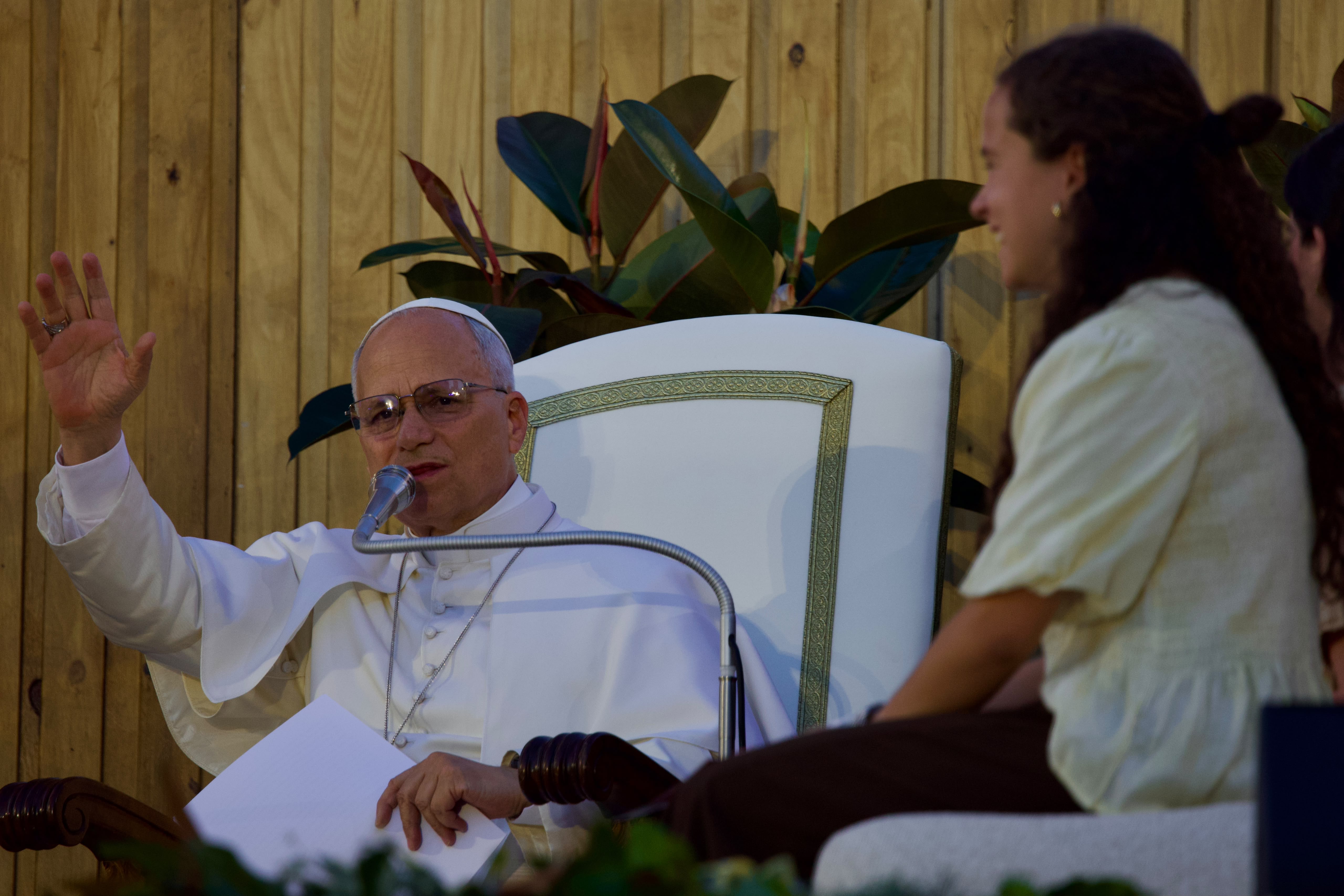
The Pope was especially comfortable in Spanish, a language in which he spoke on several occasions. At one point he told the crowd of hundreds of thousands of youth: “You can change history — do it with love.”
At another time, he unambiguously encouraged young people not to fear vocational commitment: “Never be afraid of having a vocation for priestly life or religious life.”
And he added: “You donʼt have to be afraid to get married and start a family.”
Addressing questions from young people, the Pope said at one point: “The disciples of Jesus are always contemporaries, but never prisoners of the passing time. We are free in Christ!”
The Pontiff stressed that Christ frees “with his love,” a love that leaves the person “always free in the face of all coercion and deception.”
“We are free from fashions, because we are disciples of the truth; we are open to the future, because we know that death does not await us,” he said.
Likewise, he entrusted young people with a great “mission,” namely: “Be human! Men and women of flesh and blood. Not appearances, but reliable faces. People who seek justice because they are hungry for it, as for the daily bread.”
“You are human as Christ is, the perfect man, the Risen One who shares history with us at all times. Cultivating this commitment, look at the Apostles, the first Christians, inhabitants of a pagan world,” he added.
Before his speech, the Pope heard several testimonies. Among them was that of Niurka, a young 33-year-old Cuban lawyer who arrived in Spain a little over a year ago, pushed by the serious economic and political crisis of her country. “I was very scared. But the Church welcomed me,” he said.
Khadry also spoke of his experience coming from Senegal. He arrived in Spain in 2020 after surviving the dangerous Atlantic route to the Canary Islands. In a gesture full of symbolism, he gave the Pope his residence card, reflecting the importance of regularization in starting a new life.
In his remarks, Leo XIV also issued a warning to Christians against the risk of being dragged by currents outside the Gospel.
He pointed out that, frequently, Christians “allow themselves to be infected by attitudes marked by worldly ideologies or by political and economic positions that lead to unfair generalizations and misleading conclusions.”
“The fact that the exercise of charity is despised or ridiculed, as if it were the fixation of some and not the incandescent core of the ecclesial mission, makes me think that it is always necessary to read the Gospel again, so as not to run the risk of replacing it with the worldly mentality,” he concluded.
This story was first published by ACI Prensa, the Spanish-language sister service of EWTN News. It has been translated and adapted by EWTN News English.