Pope Leo XIV Convenes Second Consistory Amid Continued Concerns Over ‘Synodal’ Structure
ANALYSIS: Increased participation and opportunity to submit contributions to the Holy Father are new elements to the meeting, but skepticism endures.
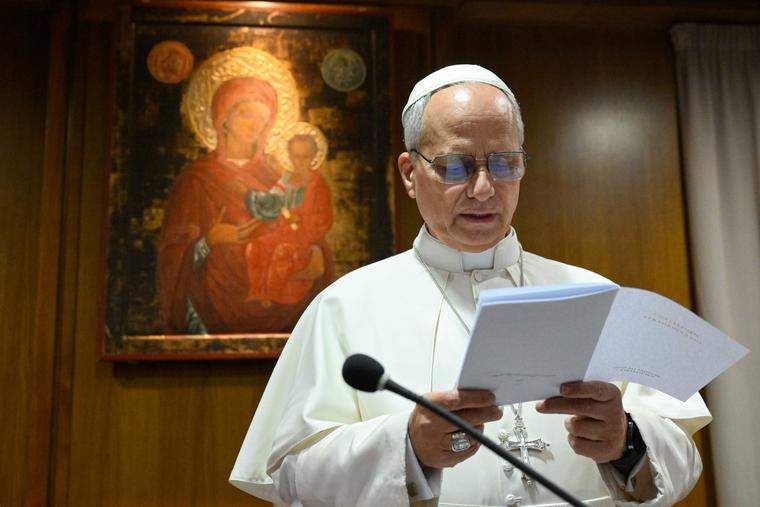
This week’s extraordinary consistory of cardinals — the second of Pope Leo XIV’s pontificate — aims to address criticisms made of the previous consistory that took place in January, but concerns remain going into the meeting regarding its synodal structure and discussion topics.
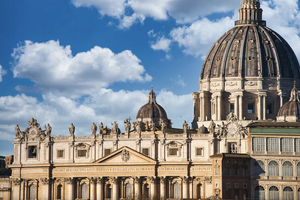
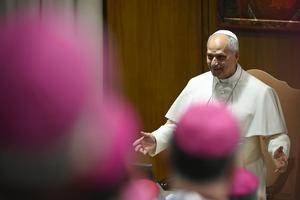
The June 26-27 consistory, to be attended by both voting and non-voting members of the College of Cardinals in the presence of the Pope, will take place in the audience and synod halls of the Paul VI Hall in the Vatican.
It follows the January meeting, attended by 170 cardinals, which was welcomed for restoring an opportunity for cardinals to voice their concerns to the Pope after such consistories were suspended by Pope Francis since 2014.
But some cardinals criticized the January meeting for its tightly managed procedure and synodal structure, with one persistent criticism being that it was “very controlled.” They lamented a lack of genuine debate and a sense that key decisions and framing had been set in advance. Short plenary interventions (talks), heavy use of prepared briefing papers, and a rapid timetable reinforced a pattern in which the College of Cardinals functioned more as a body that receives decisions than as one that truly deliberates with and advises the Pope.
These concerns suggested that, although Pope Leo had sought to respond to the cardinals’ pre-conclave call to restore consultative consistories, the College of Cardinals remained largely marginalized in the Church’s universal governance. Critics contrasted the meeting with earlier extraordinary consistories and papal consultations, which allowed broad discussion, direct listening by the Pope, and open exchanges among cardinals without filters or intermediaries.
The June consistory partially answers these procedural and collegial criticisms. In a leaked June 3 letter to the cardinals later confirmed in a published program, Cardinal Giovanni Battista Re, the dean of the College of Cardinals, disclosed that a final session of “free dialogue” with three-minute interventions would take place, thereby giving the cardinals space to raise their own concerns rather than only react to pre-set themes.
The final discussion, expected to last no more than 90 minutes, will come at the end of four phases of controlled discussions: The first will offer each cardinal an opportunity to speak for three minutes, but only answering questions set out in the consistory program. A second “shared listening” phase will permit the cardinals to speak for two minutes, though no new proposals will be put forward; only significant points from the listening phase will be discussed. In a third phase, the groups and their secretaries will summarize their discussions which will then be entered into the final report.
20 Groups
As in January, the groups will be organized into two sections to reflect the Pope’s desire to pay special attention to the experience of the particular Churches, encouraging the voices from different regions of the world to be heard. One section will thus comprise nine groups of ordinary cardinal-electors (including nuncios and cardinal-electors who have completed their service as ordinaries); the other section will comprise 11 groups of cardinal-electors of the Roman Curia and non-elector cardinals. Each group will have a chairman and secretary who will draft the final report with the input of all group members.
In a further step to allow all the cardinals to be heard at the June meeting, they will be invited to submit any concerns directly to Pope Leo via a dedicated email address that only the cardinals can use. “Each participant,” Cardinal Re wrote, may “submit any written personal contributions” to that email address, “preferably no more than two pages in length.” A Vatican source told the Register that this could be the most helpful of all the changes to this meeting, but much depends on who has been given responsibility for managing the email responses so that the cardinals can be sure the Pope will read them.
“The Pope has people he trusts to do the work, and so hopefully it will be one of them, perhaps his personal secretary, whom he has known for many years,” the source said. “It seems there’s a general intention to give the cardinals access to the Pope, but how it will work in practice remains to be seen.”
Cardinal Re stressed in his letter that the upcoming meeting would be carried out “in an atmosphere of mutual listening and respect” and that “tensions and disagreements should not be avoided, provided they are addressed with respect and fraternal affection.”
Despite these changes, some cardinals continue to be apprehensive about the meeting’s “synodal” structure. Cardinal Gerhard Müller told the Register June 25 that a more traditional consistory format is favored by many of his confreres. “I have heard that many cardinals prefer more open debates in the plenary and not this method of table discussions in small groups,” he said.
A further element of concern is the subjects to be discussed. The program says the cardinals will cover issues such as the impact of tensions, divisions and conflicts on the Church, what languages and attitudes can foster peace and reconciliation, and issues raised in Pope Leo’s first encyclical, Magnifica Humanitas. The last session will be dedicated to the “implementation process of the synod,” perhaps giving a chance for some participants to express concerns over the controversial Synod Group 9, which argued for a normalization of same-sex relations in the Church.
At the end of these discussion sessions, time will be set aside for any brief personal remarks by the participants on the topic under discussion, and each participant may still submit any personal contributions.
Missing Topics
Observers have noted that the liturgy is absent from the agenda, despite earlier expectations that the traditional Latin Mass, restricted since July 2021, would be discussed, along with a briefing written for the January meeting by the Vatican’s liturgical chief, Cardinal Arthur Roche. That text, which strongly defended Traditionis Custodes, was circulated but never delivered. With the traditionalist Society of St. Pius X about to consecrate new bishops without a papal mandate on July 1, reports say the Vatican likely wished to avoid confronting the issue so close to the event, which will likely lead to excommunications of those involved.
Also not up for discussion is reform of the Roman Curia, another issue bumped off the January agenda at the last moment. Nor is any explicit discussion expected of just-war theory, despite earlier Vatican statements that it would be included, following Pope Leo’s assessment of the just-war tradition in Magnifica Humanitas as “outdated.” However, the section in which it appears in the encyclical will be discussed during the afternoon session on the first day. Meanwhile, despite the Synod on Synodality already having been a focus of discussion in January, it remains so in the June consistory.
In sum, the subjects set to be discussed appear “too light,” according to some participants. “The scheduled program doesn’t seem to align with many of the important issues and urgencies facing the Church and the world at the present time,” a Vatican source told the Register.
Cardinals chosen to introduce the various themes are Cardinal Grzegorz Ryś of Krakow, Poland, who will be offering a biblical meditation; Cardinal Víctor Manuel Fernández, prefect of the Dicastery for the Doctrine of the Faith, who will be introducing the theme “The Culture of Power and the Civilization of Love”; and Cardinal Stephen Brislin of Johannesburg, who will introduce the theme “Building the Good: The Worksites of Our Time,” based on the introduction and conclusion of Magnifica Humanitas. Cardinal Mario Grech, secretary-general of the synod, will lead the final session on the implementation of the Synod on Synodality.
These texts will be published, along with the Pope’s opening and closing addresses, but otherwise the cardinals have been asked to maintain strict confidentiality regarding the proceedings and not to make statements to the press in order to preserve an atmosphere of fraternal exchange.
A number of cardinals will reportedly not be attending, due to ill health or other reasons. They include Cardinal Joseph Zen, 94, who has been strongly critical of synods and their structure in the past; Cardinal Péter Erdö of Budapest, Hungary, 73; and Cardinal Willem Eijk, 73, of Utrecht, Holland.
- Keywords:
- cardinal consistory
- college of cardinals

Edward Pentin Edward Pentin is the Register’s Senior Contributor and EWTN News Vatican Analyst. He began reporting on the Pope and the Vatican with Vatican Radio before moving on to become the Rome correspondent for EWTN's National Catholic Register. He has also reported on the Holy See and the Catholic Church for a number of other publications including Newsweek, Newsmax, Zenit, The Catholic Herald, and The Holy Land Review, a Franciscan publication specializing in the Church and the Middle East. Edward is the author of The Next Pope: The Leading Cardinal Candidates (Sophia Institute Press, 2020) and The Rigging of a Vatican Synod? An Investigation into Alleged Manipulation at the Extraordinary Synod on the Family (Ignatius Press, 2015). Follow him on Twitter at @edwardpentin.