AI Has a Grammar — Marshall McLuhan and St. Angela Merici Help Us Read It
COMMENTARY: Media reshapes society through its inherent characteristics — a lesson McLuhan articulated and St. Angela embodied, one that matters urgently in the age of artificial intelligence.
Artificial intelligence (AI) is reshaping society in ways we can scarcely imagine. The critical question is not whether AI will improve or degrade our lives, but whether we understand how it works as a medium — its fundamental grammar, in the words of media theorist Marshall McLuhan.
Without this understanding, we risk passively submitting to an AI-saturated future in which the technology shapes us far more than we shape it.
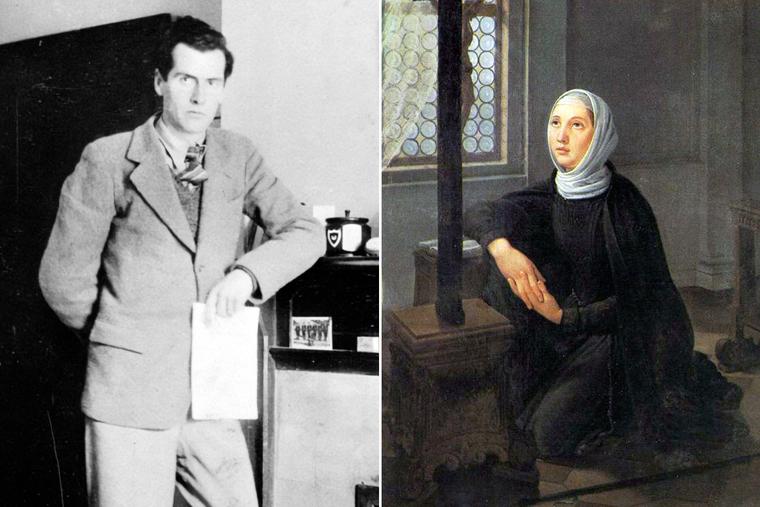
McLuhan (1911-1980) understood how different media affect culture. The Canadian philosopher and media theorist, who converted to Catholicism in 1937 after reading G.K. Chesterton, spent his career analyzing how different media fundamentally alter human consciousness and social organization.
His work, dense and abstract, seemed deliberately obscure to many readers in the 1960s. When he coined the phrase “the medium is the message,” many, including this author, dismissed him as another Catholic intellectual wringing his hands over television's corruption of culture.
That dismissal was premature.
McLuhan actually anticipated the internet era with his concept of a “global village” — a world of instantaneous communication in which local and distant events blend into shared information. The downside may well be the divisiveness we now experience, in which people passively accept information, news and music tuned and shaped to their preferences.
McLuhan’s central insight is relevant: Media reshapes society not primarily through its content, but through its inherent characteristics.
Hearing that the medium itself is the message is disturbing. It is more comfortable to believe that what we say has consequences independent of how we say it. Yet, McLuhan argued persuasively that the structural properties of communication technologies exert more influence than the information they transmit. Television didn't just broadcast radio programs with pictures; it created an image-dominated culture.
McLuhan’s understanding of media finds an unlikely ally in St. Angela Merici, the 16th-century foundress of the Ursuline order. Her educational philosophy, providing a basis for a global network of women’s educational institutions, offers an illustration of the McLuhan principle. St. Angela's insight was that properly formed women become wives and mothers who unconsciously transmit values through their very presence. She wrote that such a woman is like a firmly rooted tree, necessarily producing good fruit nourishing those around her.
McLuhan connected this insight to media. Just as a person's character unconsciously shapes those around them, a medium's inherent properties shape its users. Print technology, for instance, didn't merely preserve existing ideas more efficiently; it fundamentally reorganized human thought toward linear, analytical reasoning. Alexis de Tocqueville, McLuhan noted, understood the “grammar of print,” and was therefore very effective in analyzing American democracy. Print culture created a particular kind of citizen — individualistic, contractarian, oriented toward abstract principles. England, retaining more of an oral society, was, therefore, more difficult to analyze.
Every medium, McLuhan observed, tends toward fragmentation precisely because it relies on mechanistic technology. Information is reduced, translated, encoded — transformed from lived experience into transmissible signals. Text fragments reality into sequential words. Radio fragments information into electromagnetic waves. Television fragments it into scan lines and pixels. Digital technology fragments everything into binary code.
In 1977, when visiting Australia, McLuhan argued that each medium creates “a different form of awareness, setting traps for our attention, responding to our quest for identity.” Yet paradoxically, immersion in mediated experience can erode the very identity we seek. We become, as he put it, what we behold. Television, designed primarily as an advertising delivery system, created a culture in which image dominates substance — a candidate's appearance matters more than policy positions or party affiliation.
With artificial intelligence, we are again facing the McLuhan challenge. Will we understand its grammar before it reshapes us? When AI produces articles, creates images, writes code or generates analysis, the content originates from algorithmic pattern-matching rather than human intention.
Consider how AI has already affected our lives. We Google reflexively, accepting algorithmic rankings as authoritative. A quick search has become a staple commodity, like cotton, grain or lumber.
McLuhan indicated that staple commodities become bonds that fix themselves in the psychic life of a community. The bond created by a particular medium is neither necessarily good nor bad, but it is pervasive. Therefore, it behooves us to interpret its message carefully.
AI packages reality into training data, processes content through neural networks, and synthesizes content at unprecedented speed and scale. It presents as indistinguishable from human creation. This creates what McLuhan called a “bump” — a discontinuity between the information environment we're accustomed to and the new one being constructed around us.
The cultural implications are troubling: As AI standardizes routine interactions, society risks becoming more impersonal. We are hyper-connected yet profoundly alone, lost in any potential leisure that AI might actually bestow.
The instinctive response to AI’s disruptive potential is regulation: Create rules, establish guardrails, mandate transparency. This approach misses McLuhan's fundamental point. Media reshape society through their structural properties, not their content.
McLuhan emphasized understanding the grammar of a new medium. For AI, this means developing widespread literacy about how machine learning works, what its limitations are, where it excels and where it fails.
McLuhan saw the late-20th-century fascination with Eastern spirituality as a search for wholeness that Western media-saturated culture lacked. Today, we may be witnessing people seeking authenticity through traditional religious practices. Indeed, McLuhan recognized meditation as the primary means for inoculating oneself from the pervasiveness of media’s messages.
Therefore, as St. Angela Merici knew, bearing good fruit requires formation in the enduring truths about human nature, value and purpose. AI cannot replicate these goals. However, individuals, deeply rooted in what is good, true and beautiful, could become the message, along with or in spite of an AI-saturated environment.
- Keywords:
- ai
- artificial intelligence
- church and ai
- marshall mcluhan
- media
- communications
- st. angela merici