Wanted: Faithful Builders for the AI Construction Site
COMMENTARY: In his first encyclical, Pope Leo XIV makes striking use of the metaphor of building to explain the position in which both the world and the Church now find themselves.
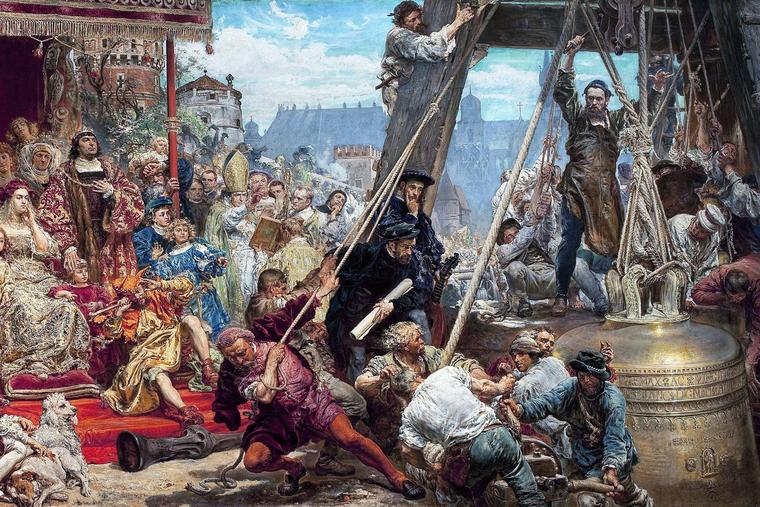
In this age of artificial intelligence, the question before us is not whether humanity will continue to build powerful new technologies. We will. The question is what kind of civilization these technologies will serve and what kind of people we are becoming in the process.
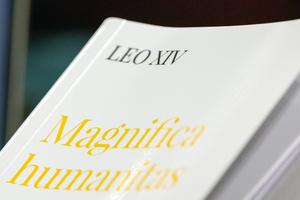
In his encyclical Magnifica Humanitas on safeguarding the human person in the time of AI, Pope Leo XIV makes striking use of the metaphor of building to explain the position in which both the world and the Church now find themselves. On the one hand, we could be building a new Tower of Babel, a civilization without God, wherein we strive for unity on our own terms and define progress according to power, efficiency and control.
Pope Leo sees clearly the danger of a technocratic culture increasingly detached from Christ, alienated from the meaning that he brings to human life — especially in weakness, dependence, suffering and love. Such a society risks becoming materially advanced while spiritually hollow, connected everywhere and yet incapable of true communion.
On the other hand, we could be rebuilding together the walls of Jerusalem. This city where God dwells has long been understood in Christian thought as a prefigurement of the Church and of the civilization of love she is called to help realize even now.
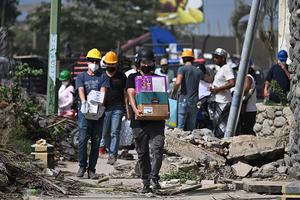
Pope Leo imagines, then, a construction site. He clearly identifies the dangers present: the use of AI for evil ends, for the worldly advantage of the elites, for the oppression and exploitation of the poor and marginalized, for unfettered surveillance, and for the consolidation of power by the few. He warns against technologies deployed not in the service of the human person but in the service of domination and unscrupulous profit.
Yet this encyclical is not fundamentally pessimistic. Beneath its warnings is a cautious optimism. We could still get this right. But we need the right builders on the construction site.
To form these builders, education is crucial. The AI revolution is not merely creating a technological crisis, but a formative one. The central challenge is not simply whether human beings will know how to use powerful technologies, but whether they will possess the wisdom and freedom necessary not to become the slaves of the technologies they use.
As Pope Leo points out, this education requires four tasks.
The first begins with the family. Parents are the primary educators of their children and have an inalienable right to choose schools where their children can learn how to seek truth, contemplate the meaning of life, and recognize the dignity of every human person. Pope Leo understands that no civilization of love can survive without strong families capable of forming children strong in moral and spiritual reality before the digital world forms them.
Secondly, Pope Leo calls for universal access to education. If education is essential to preserving human dignity and freedom in our technological age, then denying meaningful education will mean excluding people from full participation in society itself.
Thirdly, and perhaps most urgently, we must form teachers capable of guiding students through this new world. It is not enough for educators simply to tolerate new technologies. Teachers must understand both the possibilities and dangers of these tools so they can help students engage with them responsibly, critically and creatively.
The stakes are higher than academic performance. AI systems shape not only what we know, but how we think, how we communicate, how we pay attention, and even how we understand ourselves. Teachers properly formed in both technology and the magnificence of the human person are the key to students mastering these technologies rather than being mastered by them.
Finally, schools must inculcate a love for truth itself rather than a mere desire for information. One of the great dangers of our digital age, noted by Pope Leo, is that the constant flood of information can slowly erode the virtues necessary for wisdom, contemplation, memory, discernment and reflection. We risk producing generations capable of retrieving endless fragments of information while losing the ability to perceive reality as a coherent whole.
Pope Leo understands something our society seems to have forgotten. Technology is not just a neutral tool. It shapes everyone who uses it. This is especially true for the young, whose habits of attention, relationships, imagination, and self-understanding are constantly mediated through screens and algorithms.
This is a great tension in modern education. Students must learn to engage emerging technologies intelligently and responsibly. However, the very nature of many digital technologies works against the habits education depends upon. A culture of immediacy and hyper-stimulation gives rise to fatigue, distraction, boredom and apathy. Education, by contrast, is slow. As Pope Leo points out, it requires perseverance, patience, focus, and the willingness to sit with difficult questions long enough to find truth.
For that reason, parents and educators must teach students how to use technology, and when not to use it, and why. Human flourishing requires limits, silence, presence and communion. These are goods no machine can replicate.
Education is the key not to rejecting technologies like AI, but to rejecting the “technocratic paradigm,” which is blind to the grandeur of the person whose fulfillment is found in relationship and communion.
If our educational efforts, from the family to the university, send forth well-formed and wise builders, we will not fall into the mistake of thinking that AI is morally neutral and doesn’t need to be “disarmed,” as Pope Leo puts it. AI must be placed in humanity’s service and become part of our participation in the divine act of creation.
The future of the AI age will not ultimately depend on what machines can do. It will depend on whether we can form human beings who are capable of using technology without surrendering their humanity.
Stephen Hildebrand, Ph.D., is a professor of theology and provost at Franciscan University of Steubenville.
- Keywords:
- ai
- artificial intelligence
- magnifica humanitas