Catholics Helped Build America — and America Has Strengthened the Church
COMMENTARY: The Catholic contribution to America is undeniable; the American contribution to Catholic life is often overlooked.
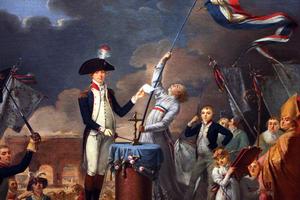
American Catholics are rightly preparing to celebrate the country’s 250th anniversary of independence. There is much to celebrate: Catholics have profoundly strengthened America. Yet the reverse is also true: America has strengthened the Catholic Church.
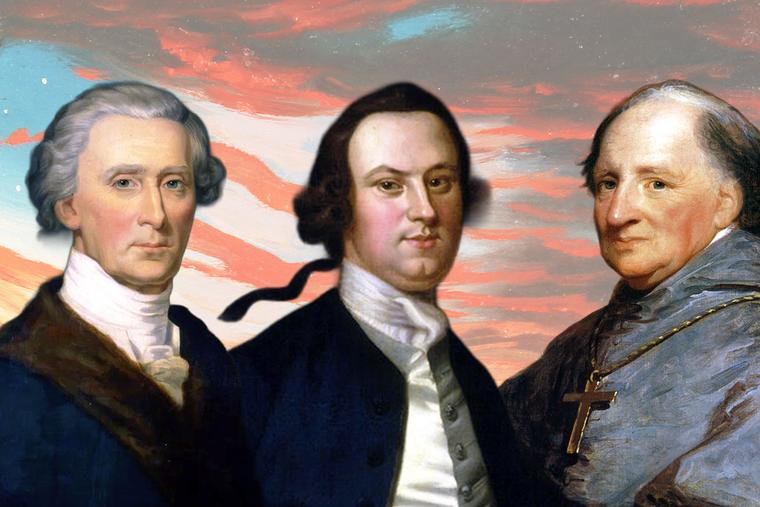
The Catholic contributions to this country are too numerous to count. While no one would say that America is a Catholic nation, the faithful have been present from before the start: Catholics came to Maryland a century before America’s founding. One of them, Charles Carroll, signed the Declaration of Independence. His cousin, Daniel Carroll, signed the Constitution, and another cousin, John Carroll, became America’s first bishop the year after that. In the Revolutionary War, Catholics valiantly fought alongside their mostly Protestant brothers in arms, ensuring the creation of the world’s first nation dedicated to religious freedom.
Ever since, Catholics have made that promise of freedom more real. Waves of Catholic immigrants came to these shores, drawn by the promise of equality and opportunity. They started families, built businesses, and settled the frontier, becoming just as American as those who had been here for generations. They’ve confronted injustice and helped right wrongs, like slavery and segregation, and Catholic leadership in public office is simply extraordinary.
It was the first Catholic president, John F. Kennedy, who helped lay the groundwork for the Civil Rights Act, and today, the vice president and six out of nine Supreme Court justices are Catholic. Over the years, millions of Catholics have donned the uniform of the various branches of the United States military, protecting the promise of liberty, equality, and justice for all. Their service and sacrifice have ensured that America endures — and flourishes — to this day.
Why have so many Catholics done so much for America?
Perhaps because they have seen in American ideals a glimmer of the Church’s teaching. Much of the founders’ worldview was shaped by Catholic thinkers and teachings. The concept of “natural law,” which infuses the Declaration of Independence, is closely linked to the writings of St. Thomas Aquinas. Reflecting on America’s principles, the U.S. bishops declared in the 1880s that the founders built “better than they knew.” No wonder so many Catholics have flocked here. No wonder so many Catholics have done their part to build up America!
Yet it’s just as true — and perhaps more surprising — that America has built up Catholicism.
Look no further than the Church’s embrace of religious liberty in the Second Vatican Council. That praiseworthy development was in large part the work of an American priest, Jesuit Father John Courtney Murray, who spent decades advocating for the Church’s recognition of this foundational human right. Had America not been built on that freedom, the Church would likely have taken longer to acknowledge, in the words of the Council Fathers, that “the human person has a right to religious freedom.”
More broadly, America’s culture of individual empowerment and problem-solving has given rise to unprecedented levels of lay leadership within the Church.
In America, more than any other country, the laity has embraced the call to evangelization, creating organizations devoted to advancing the faith. These “lay apostolates” are part and parcel of American Catholic life — groups like FOCUS, the Augustine Institute, Legatus, the Knights of Columbus, and so many others. Thousands of such organizations have shaped the faith of millions of people and helped keep American Catholicism distinctly vibrant in a secular age.
In that sense, America’s contributions to the Catholic Church are surely just beginning. The U.S. model of lay involvement and leadership is beginning to catch on in other nations — see organizations such as the French Riviera Institute, which seeks to renew the Church in Europe. As more lay people embrace their role in the Church’s mission and support the hierarchy in evangelization, the faith will grow across the world. The American model of lay apostolates is exactly what global Catholicism needs.
At the Napa Institute’s summer conference in July, we’ll honor America’s 250th anniversary, and we hope you’ll join us. This is a time to celebrate the role that Catholics have played in this country’s progress. It’s equally a time to celebrate the role that America has played in the Catholic Church. And this Fourth of July is the perfect time to rededicate ourselves to the work ahead, as proud and patriotic Americans.
America still needs the love and hard work of all the Catholics who call this nation home. And the Catholic Church, across the world, still needs the leadership that American Catholics have pioneered.
- Keywords:
- united states
- catholic church in the united states
- bishop John carroll
- john f. kennedy
- father john courtney murray