How Benjamin Franklin Picked America’s First Catholic Bishop
So how did a lapsed Congregationalist and one of the least religious of the Founding Fathers end up picking the first Catholic bishop of America?
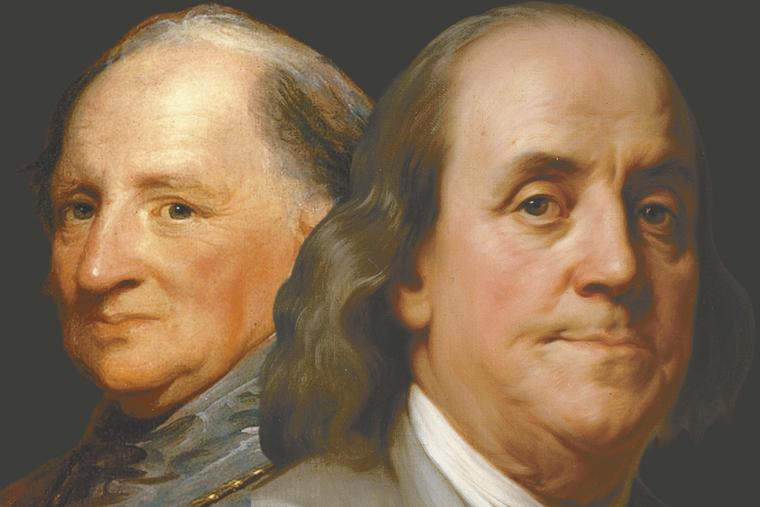
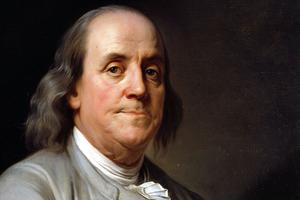
Benjamin Franklin stopped going to church as a young man and about five weeks before he died expressed “some Doubts” as to whether Jesus is God.
So how did a lapsed Congregationalist and one of the least religious of the Founding Fathers end up picking the first Catholic bishop of America?
The unlikely event has roots in failed diplomacy — the fourth of the United States’ many attempts to convince Canada to join the country.
Franklin had probably never heard of Father John Carroll of Maryland when the Second Continental Congress picked both for a four-man delegation in February 1776 to try to persuade Canada to join the Thirteen Colonies’ revolt against Great Britain. (This was 10 months after the Revolutionary War began, four and a half months before the Declaration of Independence.)
As America’s most experienced politician, and the most famous American of the time, Franklin was the obvious choice. He had spent years in London representing four American colonies as their agent, and his scientific and literary achievements made him a household name.
Samuel Chase of Maryland, known for what two historians call his “violent and fearless opposition to British rule,” was chosen for his speaking ability and forcefulness.
The third member was considered a masterstroke: Charles Carroll of Maryland. He wasn’t yet a member of the Continental Congress — that happened later in the year, in time for him to become the only Catholic to sign the Declaration of Independence (as “Charles Carroll of Carrolton”).
Carroll, whose grandfather had come to America from Ireland via London in 1688, held vast lands in western Maryland. He was the richest man in the colony and one of the richest in America.
He also supported the American cause and spoke French, so Continental Congress delegates expected him to help present the American case to French Catholics in Quebec, who made up the vast majority of the population there.
Seeming Failure
Delegates also expected Charles Carroll to get his friend and first cousin, Father John Carroll, to join the mission, in hopes he would make connections with Catholic clergy and laypeople and reassure them that the Americans respected religious liberty, even if Catholics were not allowed to vote or hold public office in some of the colonies (including Maryland).
Father Carroll was in a tough spot. Although he supported the American cause, he had no wish to get involved in politics or diplomacy.
“I have observed that when the ministers of Religion leave their duties of their profession to take a busy part in political matters, they generally fall into contempt; & sometimes even bring discredit to the cause,” Father Carroll wrote in a letter to a friend in April 1776.
Spoiler alert: The American mission to Canada failed. It was too late, underfunded, undermined by the behavior of American soldiers toward Canadian civilians, and eventually driven out by the arrival of a British fleet. Canada never joined the United States.
Father Carroll made almost no headway because Quebec Bishop Jean-Olivier Briand ordered priests to have nothing to do with the Americans — aware of anti-Catholic legal restrictions in some American colonies and satisfied that the British government had restored the Church’s rights and privileges through Parliament’s Quebec Act of 1774.
“All evidence,” writes Mark Anderson, military historian and author of The Battle for the Fourteenth Colony: America’s War of Liberation in Canada, 1774–1776 (2013), “… indicates that Father Carroll accomplished extremely little in Canada.”
Yet Father Carroll made one lasting connection in Canada: Benjamin Franklin.
Franklin, at 70, suffered during the monthlong trip from Philadelphia to Montreal from “a number of large Boiles,” or pus-filled lumps from an infection under hair follicles, as he later wrote. While in Canada, he suffered from fluid buildup in his legs consistent with gout, a painful inflammation of the joints.
When negotiations stalled in May, Franklin decided to go home. Father Carroll, realizing he wasn’t accomplishing much, decided a day later to catch up with him.
Neither wrote extensively about the journey, but Father Carroll, 41, seems to have helped the elderly Franklin as much as he could.
“The carriage ride from Saratoga to New York was a rough ride, and John Carroll did everything he could to help minimize the impacts of that rough ride,” Anderson told the Register.
Franklin and Carroll also had to put up with disagreeable companions for part of the journey — Thomas and Martha Walker, pro-American Canadians who nevertheless criticized the Continental Congress’ commission and proved “extremely obnoxious,” Anderson said.
“I think they both have excellent Talents at making themselves Enemies, and I believe, live where they will, they will never be long without them,” Franklin later wrote of the Walkers, in a letter Father Carroll described as offering merely “a faint idea of the impertinence of our fellow travelers."
“The Walkers' extended, unpleasant company must have been a tremendous challenge for both of them,” Anderson told the Register by email, perhaps resulting in “a bond fused by shared suffering.”
A New Bishop
Seven years later, in September 1783, Franklin was among the American and British diplomats who signed the Treaty of Paris, formally ending the Revolutionary War. King George III acknowledged in the agreement that the former Thirteen Colonies were “free sovereign and Independent States.”
The approximately 25,000 Catholics in the new United States of America had about 25 priests to serve them, but no bishop who could ordain priests and celebrate the sacrament of confirmation. In addition, America’s political independence had ruptured the tenuous bond the Catholic clergy in America had with their nominal superior in London. Most priests in America wanted a leader in the country.
Rome agreed. But who?
One option (which Franklin himself seemed to favor early on) was to appoint a French cleric as either bishop or vicar apostolic (a non-bishop with certain powers delegated by the pope, including the ability to confirm). American clerics resisted having a foreigner in charge, and Rome also preferred a native.
A likely American candidate was Father John Lewis (1717-1788), who had been the leader of the Jesuit mission in America when the pope suppressed the Jesuits in 1773. (The order was restored in 1814.) But Vatican officials weren’t sure.
The papal nuncio to France, Archbishop Giuseppe Doria Pamphili, asked Franklin by letter in July 1783 for his opinion. The two later met, on July 1, 1784, and the archbishop “acquainted me that the Pope had, on my recommendation, appointed Mr. John Carroll superior of the Catholic clergy in America,” as Franklin wrote in his private journal.
Church officials in Rome didn’t immediately elevate Carroll to the episcopal ranks largely because of concerns about anti-hierarchical sentiment among American Protestants, who associated bishops in England with interference in politics and personal freedom.
“They were very frightened of naming a bishop, because of the anti-episcopal feeling in the country. Crowns and miters were both seen as enemies of the new republic. And so staying in union with Rome without a bishop was the first go-to position, interestingly enough,” Father James Garneau, a historian of U.S. Catholicism, told the Register.
Five years later, with the coast seeming clear, Carroll was appointed America’s first Catholic bishop, with his episcopal see at Baltimore. He was ordained in August 1790, with the whole country as his diocese. He later became America’s first archbishop in 1808.
Carroll is the founder of what is now Georgetown University (in 1789). (He was also a slaveowner, and both he and the institutions he founded benefited from plantations that included slaves.)
Most historians see Carroll as a success as bishop, guiding it through uncertainty and irrelevance to stability and growth. He imposed discipline on clergy and made sure the Church’s teachings were clear while respecting America’s religious freedom and pluralism.
He was also able to win the confidence of political leaders in the new country that Catholics could be loyal Americans while also being loyal to Rome.
“His adroit management of Rome and of American perceptions crafted a church that thrived in a democracy without being democratic,” wrote Catherine O’Donnell in a January 2011 academic journal article (“John Carroll and the Origins of the American Catholic Church, 1783-1815,” The William and Mary Quarterly).
Franklin’s Choice
Why did Franklin recommend Carroll?
Carroll’s charity toward Franklin in 1776 was a factor, of course, but Franklin probably also saw Carroll as the sort of Catholic leader whom Americans would accept — a patriot whose cousin had signed the Declaration of Independence.
“He was not an unknown figure. The Carrolls had proved their loyalty and worth,” Father Garneau said.
As for the not-very-religious Franklin helping pick a Catholic leader …
“So Franklin’s place in this given his belief system — a Protestant, probably less than a Protestant, not a Christian — is odd in a way,” Father Garneau said. “But Rome’s used to dealing with pagans and heretics.”
What were Franklin’s religious beliefs?
They’re complicated. Walter Isaacson spends five pages discussing them in his 2003 biography Benjamin Franklin: An American Life, with few firm conclusions.
Historians often describe Franklin as a deist, believing in a watchmaker God who created the universe but doesn’t interfere in it — but that’s not quite right, since Franklin believed God “sometimes interferes by His particular providence” and recommended both praying and cultivating virtues.
Toward the end of his life, at age 84, Franklin received a letter from an old friend, Ezra Stiles, who was a Congregationalist minister, a believing Christian, and the president of Yale College, asking Franklin about “his religious Sentiments.”
While Franklin had spent his life living in nominally Christian societies in Boston, Philadelphia, London and Paris, he told Stiles this was “the first time” anyone had ever asked him about his religious beliefs.
On the question of Jesus of Nazareth, Franklin praised “the System of Morals and his Religion,” but admitted he had “some doubts as to his Divinity.”
Still, ever the diplomat, Franklin left room for maneuver, acknowledging that whether Jesus is God “is a question I do not dogmatize upon, having never studied it, and think it needless to busy myself with it now, when I expect soon an Opportunity of knowing the Truth with less Trouble.”
- Keywords:
- america 250
- Benjamin Franklin
- bishop John carroll