Pope Leo XIV Gives AI Historical — and Theological — Perspective
COMMENTARY: ‘Magnifica Humanitas’ is the exact right message for the moment.
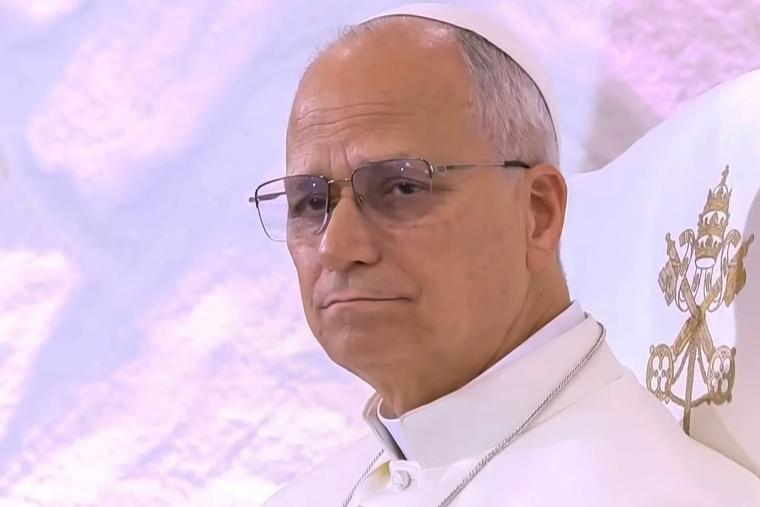
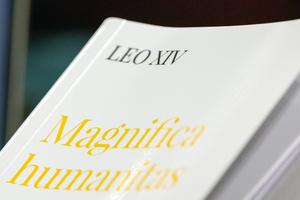
As the saying goes, history doesn’t repeat, but it rhymes. Pope Leo XIV’s new encyclical, Magnifica Humanitas, both proves the point and expands upon it. While the Holy Father released his first encyclical document on May 25, he signed it on May 15 — the 135th anniversary of Pope Leo’s groundbreaking encyclical Rerum Novarum. Pope Leo XIV is showing that the Catholic Church’s teaching is like a musical chord that becomes even more resonant and beautiful over time.
Magnifica Humanitas is the exact right message for the moment. Pope Leo wrote it amid the rapid rise of artificial intelligence, which holds tremendous promise for human prosperity but also tremendous potential for harm and abuse. The name of the encyclical means “magnificent humanity,” and therein lies the heart of what we all must remember in this age of AI.
Human beings are infinitely creative, and indeed, we are made in the image of our Creator — God. As Pope Leo makes clear, artificial intelligence will be a boon to humanity if it is developed and used according to this fundamental truth. He explicitly rejects the idea that this technology is intrinsically evil, as many Catholics wrongly fear.
The Holy Father is preparing the Church to lead the way in the coming digital revolution. But he is also building on what his predecessor and namesake — Pope Leo XIII — did during the heady days of the Industrial Revolution. Rerum Novarum, which means “new things,” developed what we now call Catholic social teaching. It provided the theological and intellectual framework for how we, as Catholics, should approach the biggest challenges of the age. Magnifica Humanitas tries to do the same thing, building on Rerum Novarum in powerful ways.
At their core, both encyclicals address the question: How should we understand humanity amid a dramatically shifting economic landscape? In the late 1800s, the workplace had been profoundly disrupted by the rise of factories and urbanization — a new phenomenon in human history.
In our time, artificial intelligence portends another seismic shift. In both cases, the challenges were anthropological as much as material. In Pope Leo XIII’s time, people wondered if human beings were merely cogs in the machine. In the age of Pope Leo XIV, we’re wondering if human beings will be replaced by machines — machines that seem to think faster and better than any human, almost as if they are gods themselves.
The beauty of Catholic teaching is that while the principles endure — and are indeed timeless — their application changes based on the needs of the time. Where Rerum Novarum focused on the relationship between capital and labor — between employers and workers — Magnifica Humanitas is concerned about AI’s relationship with humanity as a whole.
As the Holy Father writes, we are not choosing “between enthusiasm and fear, but between two paths of development: a progress that serves individuals and peoples, or a progress that subjects them to the mentality of power” (129).
Both Rerum Novarum and Magnifica Humanitas respond to the harmful ideologies of the day. In the late 1800s, socialism and communism were gaining ground, with their rejection of God and materialist view of humanity. Rerum Novarum provided a more meaningful direction — one rooted in humanity’s spiritual worth and value.
Similarly, Magnifica Humanitas is a clear rebuttal to the so-called “transhumanists,” who believe that technology can overcome human nature itself, eliminating our human limitations and even our need for God. In fact, we cannot, and any AI-driven attempt to do so will cause untold pain and suffering.
Ultimately, both encyclicals provide the Catholic faithful and all those interested with a road map. Rerum Novarum showed the faithful how to build the muscle of civil society to protect the family and promote the Gospel message. Magnifica Humanitas challenges us to develop and flex that same muscle to guide AI’s development and use.
We cannot cede this powerful technology to governments and groups that would use it to oppress us. To the contrary: We must harness artificial intelligence ourselves, for the good of humanity and the glory of God. Given my own work in business, I believe this vision is achievable, and that artificial intelligence holds tremendous promise for human flourishing. I couldn’t agree more with Pope Leo’s observation that artificial intelligence can “foster participation and justice.” For as the Holy Father rightly notes, all “technology has the power to heal, connect, educate and protect our common home.”
In the days ahead, theologians and leaders — both clerical and lay — will unpack the great store of wisdom contained in Magnifica Humanitas. Yet Pope Leo XIV himself has already made clear that his encyclical owes a debt to the encyclical of his namesake. It was Rerum Novarum that helped the faithful understand subsidiarity and our duty to solve problems locally; solidarity and our duty to defend the common good; and the human dignity that must be the measure of all economic actions and innovations.
These central principles of Catholic social teaching are as resonant in the 21st century as they were in the late-19th century. Indeed, the Church’s teaching is only growing in importance in the age of artificial intelligence, which can and must be directed toward human flourishing. Through Magnifica Humanitas, Pope Leo XIV has struck the chord that modern society most needs to hear.
- Keywords:
- ai
- artificial intelligence
- magnifica humanitas