America at 250: A Once-in-a-Lifetime Event Worth Celebrating
COMMENTARY: On this 250th Independence Day especially, we should focus on the tremendous good this country has done and the debt we owe to our fellow citizens.
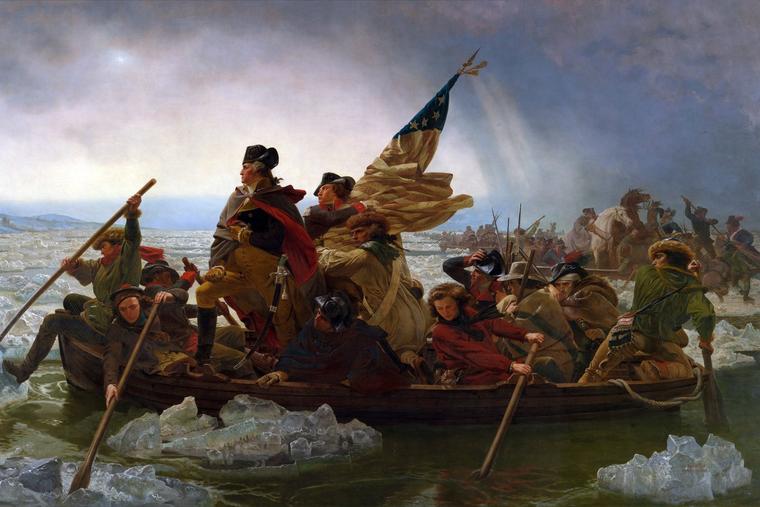
As Americans prepare to observe the country’s 250th anniversary of independence, I encourage all Catholics to join in this once-in-a-lifetime celebration of our incredible nation. Whether newly arrived to this country, or from a family that has been here for multiple generations, Americans have so much to be thankful for.
On individual birthdays, we don’t “celebrate” people’s personal sins or faults, or take the opportunity to point out to everyone else the honoree’s imperfections after the singing of Happy Birthday. So, too, on this Independence Day, we should focus on the tremendous good this country has done and the debt we owe to our fellow citizens, both to those now present and to those who have gone before us. There is plenty of time to try and fix that which we still haven’t gotten right.
For starters, as Catholicism is a minority religion in the United States, we should be doubly grateful that this was the first country to enshrine religious freedom in its founding documents. Indeed, during the last century, it was an American priest and scholar, Jesuit Father John Courtney Murray, who played a key role in the drafting of the document Dignitatis Humanae (On the Dignity of the Human Person), which was approved and promulgated by Pope St. Paul VI on the second-to-last day of the Second Vatican Council. This is often called the document on “religious freedom.”
No doubt, borrowing from his American sensibilities and our Constitution, Father Murray helped the Council fathers to proclaim:
“This Vatican Council declares that the human person has a right to religious freedom. This freedom means that all men are to be immune from coercion on the part of individuals or of social groups and of any human power, in such wise that no one is to be forced to act in a manner contrary to his beliefs, whether privately or publicly, whether alone or in association with others, within due limits.”
Clearly, those ideas now enshrined in the teachings of Vatican II borrow heavily from our own First Amendment. And I’m sure the possibility that we would someday have an American Pope was the farthest thing from our Founders’ minds, including most of the rest of us until very recently — a Providential alignment on this auspicious anniversary.
And on this most patriotic of all secular holidays, it should be noted that St. Thomas Aquinas (1225-1274) viewed patriotism as a form of piety — and right and fitting for the Christian believer. He wrote in the Summa Theologiae, “Wherefore just as it belongs to religion to give worship to God, so does it belong to piety, in the second place, to give worship to one’s parents and one’s country.” He went on to say, “The worship given to our country includes homage to all our fellow citizens and to all the friends of our country. Therefore, piety extends chiefly to these.”
Obviously, patriotism in the extreme can take on a form of jingoism or ultranationalism, while the rejection of patriotism can take on a form of oikophobia, or cultural self-loathing. Certainly, we see examples of both disordered extremes in the U.S. But I am grateful that we live in a country that permits these viewpoints, even if most of us find them distasteful.
Statistically, the majority of Americans (or future Americans) who are currently in their 20s, or younger, will be around to celebrate our country’s 300th anniversary, just as I remember our bicentennial in 1976. A big deal was made about the bicentennial back then, and a big deal is being made about our semiquincentennial now. And well it should be.
The people of the United States have achieved so much and have so much more yet to achieve. We should not let our individual and collective flaws overshadow this celebration. We are a good but imperfect people. And another 50, or 100, or 250 years will not change that.
This Fourth of July, and throughout this anniversary year, let us recommit to love our fellow citizens, our country, and all the friends of our country. In the words of St. Elizabeth Ann Seton, the first American-born saint, and the namesake of my alma mater, who wrote this to her son, William, a U.S. naval officer, at the end of the War of 1812, “Love your country — yet also all countries, my William — see things as they are.”
My country, ’tis of thee, sweet land of liberty, of thee I sing.
Happy birthday, America. May God bless us.
Father James A. Hamel is a priest of the Archdiocese of Newark, New Jersey. He recently retired from the Air Force after having served 25 years as a chaplain. He is currently on sabbatical.
- Keywords:
- 4th of july
- america 250