What John Paul II Left Implicit Is Now Explicit: SSPX Is in Schism
COMMENTARY: Pope Leo XIV has chosen, with discretion, to end the failed outreach of Pope Benedict XVI to the SSPX.
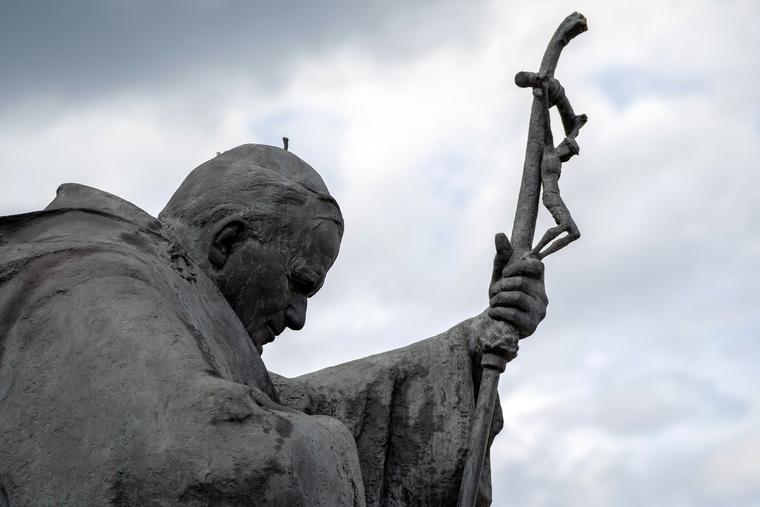
On July 2, 1988, Pope St. John Paul II wrote that the illicit ordination of bishops by the Society of St. Pius X (SSPX) constituted a schismatic act, not only for the six bishops involved then, but for all those who “formally adhere” to it.
Thirty-eight years later to the day, the SSPX again having ordained bishops without a pontifical mandate, the Dicastery for the Doctrine of the Faith (DDF) clarified what John Paul meant, by means of a decree and an explanatory note.
What John Paul left implied is now explicit — all the priests of the SSPX are “in schism and subject to the penalty of excommunication.” That applies too to the lay faithful who “formally adhere” to the schism, for example, by supporting the illicit ordination of bishops, or by exclusively frequenting the SSPX chapels.
The July 2 decree from the DDF — issued the day after the SSPX episcopal ordinations in Switzerland — contained a hint as to the Vatican’s understanding of the past 38 years. The decree carried the protocol number “99/2009.”
Protocol numbers are how Vatican departments organize their filing; a letter or submission is assigned a protocol number so that all the relevant documents are kept together in the right file. “Prot. No. 99/2009” is not a new file from 2026, but a file from 2009, specifically from Pope Benedict XVI’s lifting of the excommunications incurred in 1988.
The DDF understands its decree, therefore, to be part of the same dossier in which Benedict lifted the original penalties, which he did as an act of mercy at the request of the SSPX.
The meaning is subtle but clear. The leniency shown by Benedict did not achieve either conversion or communion with the SSPX; therefore, a return to the full impact of the 1988 penalties is now appropriate.
In 1988, in his letter Ecclesia Dei, John Paul made it clear that, in addition to the excommunications formally pronounced upon the SSPX bishops, all the priests and lay faithful of the SSPX were in danger of excommunication, the canonical penalty for schismatics:
In the present circumstances I wish especially to make an appeal both solemn and heartfelt, paternal and fraternal, to all those who until now have been linked in various ways to the movement of Archbishop Lefebvre, that they may fulfil the grave duty of remaining united to the Vicar of Christ in the unity of the Catholic Church, and of ceasing their support in any way for that movement. Everyone should be aware that formal adherence to the schism is a grave offence against God and carries the penalty of excommunication decreed by the Church’s law” (emphasis added).
John Paul left it at that, not specifying who was in “formal adherence” to the schism. It seemed obvious that it applied to all the priests who chose to continue in the SSPX after the 1988 schism; they were schismatics and therefore subject to automatic excommunication. But the Vatican did not explicitly say so, nor did it formally declare that any particular priest had been excommunicated, so some ambiguity reigned over 38 years, some of it mischievously promoted, pretending that the SSPX clergy were not in schism.
The situation of the SSPX lay faithful was not straightforward regarding “formal adherence” and required evaluation on a case-by-case basis.
The DDF explanatory note of July 2026 removes all ambiguity:
The sacred ministers belonging to the Society of St. Pius X are in schism and must therefore be considered schismatics, being subject to the excommunication foreseen by law (can. 1364 § 1).
Furthermore, it stated that SSPX clergy “illicitly administer the sacraments and that the sacrament of penance administered by them and marriages witnessed by them are invalid.”
It follows that no Catholic should frequent the sacraments administered by schismatic priests who are forbidden from administering the sacraments.
All that was clear enough, if not made explicit by Pope John Paul II. But there were those who preferred not to see it as clearly as he did, including his successor, Pope Benedict XVI, whose pastoral heart desired to put the best construction on matters. Of his 2009 decision to lift the excommunications, all the while acknowledging that SSPX clergy “exercised no legitimate ministry,” he wrote:
I think, for example, of the 491 priests. We cannot know how mixed their motives may be. All the same, I do not think that they would have chosen the priesthood if, alongside various distorted and unhealthy elements, they did not have a love for Christ and a desire to proclaim him and, with him, the living God. Can we simply exclude them, as representatives of a radical fringe, from our pursuit of reconciliation and unity? What would then become of them?
Certainly, for some time now, and once again on this specific occasion, we have heard from some representatives of that community many unpleasant things — arrogance and presumptuousness, an obsession with one-sided positions, etc. Yet to tell the truth, I must add that I have also received a number of touching testimonials of gratitude which clearly showed an openness of heart.
Whether Benedict accurately judged the openness of hearts in the SSPX in 2009, it is manifest in 2026 that hearts are closed. The very same bishops, Alfonso de Galarreta and Bernard Fellay, who asked to have their excommunications lifted by Benedict as a sign of goodwill, participated in the 2026 illicit ordinations, committing the same canonical crimes again. No firm purpose of amendment, no contrition, only contumacy.
The towering betrayal of Benedict’s benevolence is breathtaking.
Over 38 years, the SSPX has paid no heed to what John Paul told them about the status of their clergy. To the contrary, they have persisted in schism, subject to excommunication, encouraging others to join their number. Defiance may be sinful, but many sinful things are attractive, and the SSPX clergy have grown.
Pope Leo XIV has chosen, with discretion, to end the failed outreach of Benedict to the SSPX. He has returned to what John Paul clearly saw and wrote in 1988. For those who still refuse to listen, the DDF has made clear that John Paul was correct in his diagnosis then and now.
Indeed, the DDF procedures for admitting SSPX priests to full communion require a “formula of adhesion” that is taken verbatim from the “protocol” that Cardinal Joseph Ratzinger and Archbishop Marcel Lefebvre signed in 1988, before the latter reneged on it. The path to reconciliation in 2026 runs now through the protocol of 1988, not the clemency of 2009.
There remain some canonical steps to be taken now that the DDF has clarified the key principles. The extraordinary and generous provisions made by Pope Francis in relation to granting absolution and witnessing marriages will have to be formally revoked. Legally, a DDF decree cannot reverse a papal provision without itself having specific papal approval.
Additionally, it may be helpful to formally declare that all SSPX priests have incurred the penalty of excommunication; the DDF decree only declares that they are in schism, for which the penalty is excommunication. Perhaps a distinction without much of a difference, but the law needs to be precise, and the SSPX has proved itself masterful at creating confusion even when matters are clear.
For admirers of Pope Benedict, the aftermath of lifting the excommunications in 2009 has been painful, culminating in the perfidy of 2026. It is a grace — and perhaps a kindness of the SSPX — that he did not live to see it.