From Augustine to Auschwitz: Why Just War Still Matters
Responding to Pope Leo’s encyclical, patristics scholar Professor John Rist argues that history, from Rome’s fall to the Second World War, shows the necessity of moral clarity in war.
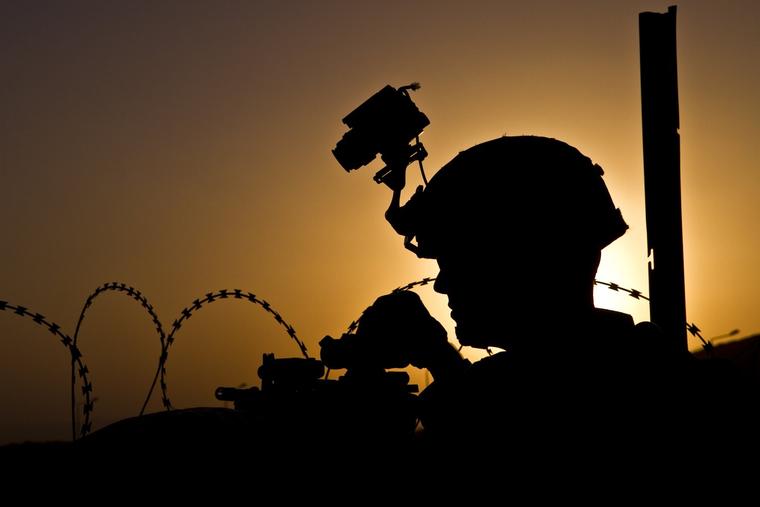
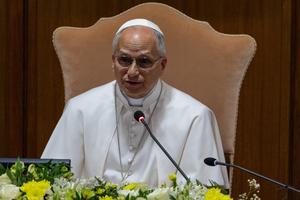
Pope Leo XIV’s new encyclical Magnifica Humanitas primarily deals with artificial intelligence in the context of human dignity, but one particular passage also addresses the topic of “just war theory” which the document describes as “outdated.”
“Too often,” Leo writes, just war theory has been used to “justify any kind of war” and fails to take account of the speed, destructiveness, and dehumanization of contemporary conflict.
At the same time, he explicitly preserves a narrowly understood right to self‑defense — a key component of just war theory — and calls instead for peace built through justice, dialogue, diplomacy, and a “civilization of love.”
The Church’s just war tradition dates back to St. Augustine who taught that war can be justified to defend the peace and protect the innocent under proper authority. St. Thomas Aquinas later made this into a more precise theory, giving three basic conditions for a just resort to war: legitimate public authority, just cause, and right intention.
The Pope’s comments have caused controversy and prompted thoughtful responses from Catholic scholars. Among them is Professor John Rist, a distinguished philosopher and historian of the early Church, who questions whether considering just war theory “outdated” adequately accounts for the enduring reality of sin and the persistence of political evil.
In the following interview with the Register, Professor Rist, a leading authority on St. Augustine, reflects on the continued necessity of just war doctrine, drawing on the saint’s works and historical experience to argue that abandoning it risks moral confusion and dangerous passivity in the face of aggression.
His comments come ahead of the June 26-27 consistory of cardinals when just war theory is expected to be further discussed, although the topic was not explicitly mentioned in a program leaked to the press on June 17.
Professor Rist, what concerns you about Pope Leo’s discussion of just war theory in Magnifica Humanitas?
Pope Leo's recent encyclical, Magnifica Humanitas, emphasizes the greatness of humanity and the importance of maintaining respect for human dignity, but has less to say about how effectively to handle the terrible sinfulness which that humanity constantly displays and from which many humans suffer, not least in the constant warfare which has existed as long as humanity itself. In the course of his exhortation he raises the question whether traditional just war theory is now out-of-date and whether we still need to maintain it, seeking rather to protect humanity by preaching dialogue, diplomacy and reconciliation.
The Holy Father points to the dehumanizing nature of modern warfare and the need for diplomacy. How do you respond?
Pointing to the massive dehumanization of modern warfare, the difficulty of distinguishing between military and civilian targets, the opportunities now available for propagandists so to mislead the public as to encourage, even under the pretext of waging a just war, massive military aggression, Pope Leo suggests that we should perhaps abandon traditional but outdated just war teaching and save ourselves from those who threaten us by emphasizing dialogue and diplomacy. But perhaps he underestimates the seriousness of the problem. Perhaps he should attend more carefully to the words of such as one of Saddam Hussein’s sons who, in my hearing, remarked: “What a fool that man Nasser was; he talked about driving the Israelis into the sea. What a fool! Some of them might escape by swimming.”
Does this particular passage in the encyclical leave ambiguity about the legitimacy of self-defense?
Although Leo grants that we must allow ourselves the right to self-defense in the strictest sense, he offers little explanation as to how that “strictest sense” would differ from what would be advocated in traditional just war theory. That, coupled with comments about such theory being out-of-date, might encourage some to believe that to wage a just war is now impossible.
Perhaps these passages will be modified after they are discussed at the consistory. However, in the meantime, and in reply to such a dangerous belief, I would argue that, far from agreeing that just war theory is now more or less out of date, it is more important than ever that its purpose and necessity be properly understood. Rather than being abandoned it should, where necessary, be improved to meet changing conditions. And as a guide to such possible improvement, I would follow the practical wisdom of Saint Augustine, no mere preacher of a sentimental humanism or an unrealistic piety but a pastor who, in the grim days of the end of Roman civilization in North Africa, urged his fellow bishops not to abandon their flocks but to remain in post even if faced with the prospect of torture for money which they did not possess.
How does St. Augustine’s thought help us understand war and moral responsibility?
Augustine does not have a developed theory of just war, but he discusses warfare on a number of occasions and in light of his first principles, it is easy to understand why he thought that although all wars are bad — in the sense that we would be infinitely better off without them — some are necessary and therefore just. As he told a prominent general who thought of giving up the profession of arms to become a monk, “We need generals.” Why do we need them? To protect ourselves, our families, our civilization, from the brutal aggression of wicked men: in our own times we might think of Hitler, Stalin, Mao, and many others. For Augustine understood that although we should always try diplomacy and seek a peaceful solution to our difficulties with despots, when push comes to shove, such people regard war, in the words of [Karl von] Clausewitz, as but diplomacy by other means. To understand that unhappy truth is to recognize that appeasing the wicked and supposing one needs only to “accompany” them or “dialogue” with them, is itself irresponsible.
What do you say about the moral difficulties posed by civilian casualties in modern war?
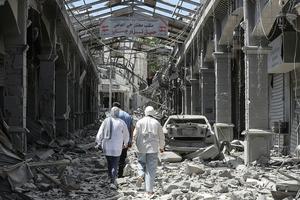
Contemporary warfare has changed little from its earlier manifestations in regard to limiting those killed to the opposing military, especially if (as recently in the case of Hamas) an evil enemy sets up his command posts in schools and hospitals, thus hoping to use civilians as human shields. In the more distant past the inhabitants of a captured city would often be butchered indiscriminately: nothing new about that. Nor should we forget that even in World War Two — a just war if ever there was one — the Allies killed large numbers of civilians (though with no wish to do so) in the course of achieving their military objectives: the siege of Caen in Normandy is an excellent reminder of such sad eventualities. Yet it would hardly be an exaggeration to say that if the Allies had always refrained from actions involving substantial civilian casualties, Hitler would have won the war.
How does Augustine address the moral burden of such decisions?
Augustine's thought on such events depends on one of his basic psychological and moral principles: namely that the good man (indeed also everyone else) is liable to be faced (not least, but not only, in wartime) with options, including the option of inaction, all of which he would regret, even bitterly; yet choose he must. That, in Augustine's theological language, is part of the “darkness of social life” which we must endure since the fall. Nor would Augustine think that although even soldiers of the just party might behave badly — and it is inevitable that at some time some of them will — that this affords any pretext for declaring that there is no such thing as a just war.
What are the broader implications of teaching that just war theory is “outdated”?
Analogous situations arise in many other areas of life. Thus, if a politician were to decide that there must be a social security net, he should not be put off by recognizing that some will always abuse the system he is preparing. In human life perfection cannot be expected; if we expect it, we shall be paralyzed and able to do nothing for the common good. Pope Leo is rightly concerned that, with the two world wars and the Holocaust fading into the past, we shall forget the horrors that war may cause. But the solution to that, far from our abandoning just war theory, is to make sure that we never forget atrocities. I believe that every student of morality should be very familiar with what happened as a result of appeasing (or accompanying) the Nazis for far too long. For such things could easily happen again, and we need to remember what they entail and how we may realistically prevent them. As General Eisenhower told a group of soldiers who had just liberated a concentration camp, wandering as they were between the emaciated living and the mutilated dead: “You may not know what you are fighting for, but now you certainly know what you are fighting against.” And who would dare to say that they fought in vain and would fight again in vain in some not impossible future.
Finally, what is your concern about how the encyclical might be interpreted?
Pope Leo is surely sincere in his concern about the horrors of war, but in this as in other matters, popes need to be especially careful that their words are not too easily misinterpreted by misguided or cowardly appeasers of evil men, such as those who, often in pietistic guise, are tempted to treat attacks on just war theory as covert advocacy of pacifism. Pacifism has always been a minor stream in Christian tradition. Yet there is no reason to believe that Jesus himself — let alone Yahweh — would advocate it. Had Jesus been a pacifist why would he have tolerated Peter carrying (and having no qualms about using) a sword? His own view of the military, so far as we can determine it, would probably have been close to that of John the Baptist: “Soldiers, do not exploit or abuse those whom you are supposed to protect.” In the absence of an always improvable theory of just warfare, we are left in a position analogous to that of the pacifist who approaches a thug beating up a cripple in the street, loudly calling “Let's resolve this peacefully. Let's dialogue about it. Just for now please stop harming this poor cripple.” The not unlikely result would be a kick in the groin for the pacifist and further battering for the unfortunate cripple.

Edward Pentin Edward Pentin is the Register’s Senior Contributor and EWTN News Vatican Analyst. He began reporting on the Pope and the Vatican with Vatican Radio before moving on to become the Rome correspondent for EWTN's National Catholic Register. He has also reported on the Holy See and the Catholic Church for a number of other publications including Newsweek, Newsmax, Zenit, The Catholic Herald, and The Holy Land Review, a Franciscan publication specializing in the Church and the Middle East. Edward is the author of The Next Pope: The Leading Cardinal Candidates (Sophia Institute Press, 2020) and The Rigging of a Vatican Synod? An Investigation into Alleged Manipulation at the Extraordinary Synod on the Family (Ignatius Press, 2015). Follow him on Twitter at @edwardpentin.