Archbishop Borys Gudziak: Peace Without Justice in Ukraine ‘Defeats the Truth’
Speaking at The Catholic University of America, the Ukrainian Catholic archbishop urged world leaders to weigh both “the cost of the war and the cost of the peace.”
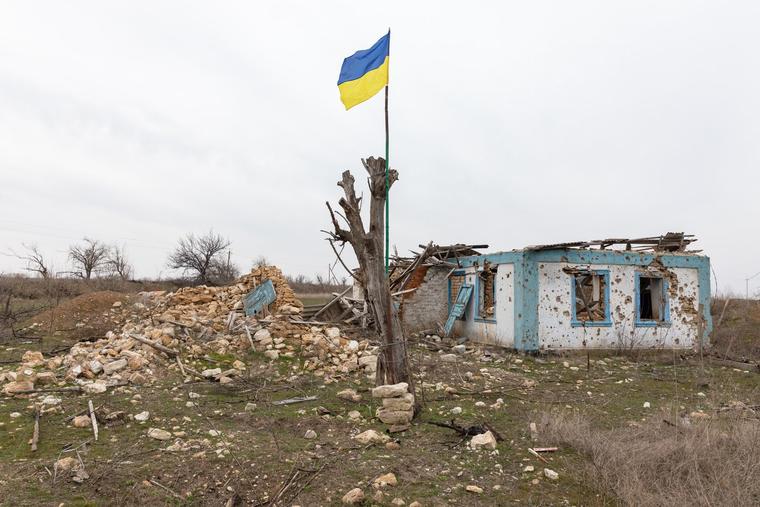
After more than three and a half years, the war in Ukraine shows no signs of ending. Over the last month, Russian President Vladimir Putin has stepped up his bombing campaign against the country while the frontline remains static.
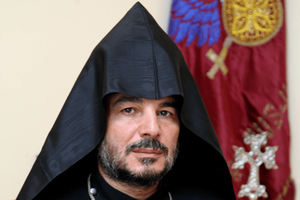
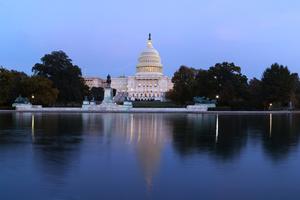
While the end might not be in sight, Metropolitan-Archbishop Borys Gudziak, the head of the Ukrainian Greek Catholic Church (UGCC) in the United States, emphasized the importance of preparing for not only peace, but a “just peace,” in a Sept. 29 lecture at Hannan Hall at The Catholic University of America in Washington, D.C.
The archbishop had recently returned from a four-week visit to Ukraine, which included Kharkiv, only 20 miles from the Russian border, and under constant air alarm each day. He also presided at the funeral of Andriy Parubiy, the former speaker of the Ukrainian Parliament, who was assassinated in August by a man with pro-Russian views.
In his lecture — “The Cost of War and Peace: Necessary Concessions or the Defeat of Truth?” — Archbishop Gudziak dismissed the idea of an imminent Ukrainian collapse or Russian victory, which has been repeated by critics of American support for Ukraine. He pointed out that despite Russia initially occupying 20% of Ukrainian land, over the last 1,000 days, those troops have advanced by only an additional 1%. While Ukrainians want the war to be over, it has not shaken their determination for victory. He described Ukraine as a place where “the Bible comes alive,” with its defenders viewing their fight being for both their own “promised land” and their “God-given dignity.”
In his remarks, criticism was leveled at both the Biden and the second Trump administrations for their handling of the war: the former for failing to act quickly enough when the war began and the latter for ambiguous phrasing and disruption of weapon shipments to Ukraine, resulting in the bloodiest phase of the war since the opening invasion of 2022. Referencing recent remarks by President Trump that Ukraine should recover all the land it has lost, a significant reversal of his previous stance, Archbishop Gudziak said, “I hope that the United States will continue to reconsider the cost of the war and the cost of the peace.”
Archbishop Gudziak somberly recalled that when he was studying to be a priest, he did not think he would ever become involved in studying drones and their ability to kill, but the war has forced him to learn to better advocate for his flock.
He also discussed Pope Francis’ perspective on the war. While he stressed that on more than 400 occasions, Francis voiced support for Ukraine and called it a martyred country, there were around a dozen instances where the late Pope used language that caused grief in Ukraine.
In particular, he recalled Francis’ comments to a group of young Russians in August 2023 regarding imperial heritage, referencing “the great Russia of Peter I, Catherine II, that empire.” The archbishop said this remark had been particularly painful to the UGCC faithful, for both monarchs had brutally suppressed the Church during their reign. The archbishop drew attention to the infamous incident in 1705 when Tsar Peter the Great, in a drunken state, entered a “Uniate” church and personally killed the head monk, Father Theophan Kolbechinsky, and ordered the execution of four other monks there.
He also recalled that in every invasion of Ukraine by Russia (1914, 1939, 1944, 2014 and 2022) the Russians worked to wipe out the UGCC. Despite this, the archbishop stressed how understanding Pope Francis was when he and other UGCC members met with him and expressed why they were pained by his remarks. The archbishop later spoke favorably of Pope Leo XIV’s actions since taking office, mentioning that his first call to a foreign head of state was to President Volodymyr Zelenskyy.
Archbishop Gudziak emphasized that Putin and large swathes of the Russian populace do not believe in Ukrainian sovereignty, instead clinging to a view of the “Russian world” that the archbishop described as: “Everywhere we [Russia] were, this is our territory, this is our sphere of influence, and we have got to recover it.” Only a clear Ukrainian victory can convince them otherwise. He referenced the change that came about in German society following its defeat in the Second World War. “The German capacity to reform, to repent, to acknowledge the Holocaust, to step back from the German imperial ambition was possible only because of German unconditional surrender. And what is necessary is Russia’s unconditional surrender,” he said, explaining that only under such circumstances would healing be possible between the two Eastern Slavic peoples.
During the question-and-answer segment, the Register asked the archbishop if, considering that the war has led to renewed discussion of “just-war theory” in the Catholic tradition, it was also time to articulate a “just-peace theory,” the idea that, like war, there are certain standards that peace treaties must follow in order for them to achieve justice. A cautionary tale would be the Treaty of Versailles ending the First World War, which was denounced for failing to secure a just and lasting peace in Europe. Or as Marshal Ferdinand Foch prophetically warned, “This is not peace, but an armistice for 20 years.”
While Ukraine could, in theory, end the war and allow Russia to keep the territories it has seized from Ukraine, such a peace would hardly seem to be just or lasting. Given how frequently Russian leaders have denounced the very idea of an independent Ukraine and broken their word, it’s impossible to see any Ukrainian government trusting their promise that this would be the end of Russian aggression.
The archbishop responded favorably, mentioning that there are talks underway for a synod that will address both war and peace. He compared the idea of giving away provinces to Americans choosing which 10 states would have slavery imposed on them. He was also clear that no lasting peace was possible without NATO guarantees for Ukraine. He cited the 1973 peace treaty between North and South Vietnam, which the North violated two years later because of the failure of U.S. military support for the South. The same was true 20 years before in Korea, where the failure of the United States to clearly state its intention to defend the South led to the Korean War.
Concluding his remarks, Archbishop Gudziak said that while Ukraine could not accomplish its goal of retrieving its lost territories without the help of the United States and NATO, “if it does [win the war], the benefits for the free world or the European Union and the United States ... will be very important.”
- Keywords:
- Archbishop Borys Gudziak
- the catholic university of america
- ukraine war
- peace
- ukraine
- russia