UK’s Starmer Resigns, Opening Path to No. 10 Downing Street for ‘Cultural Catholic’ Andy Burnham
A Labour succession contest raises questions about faith, politics, and the shape of Catholic identity in British public life.
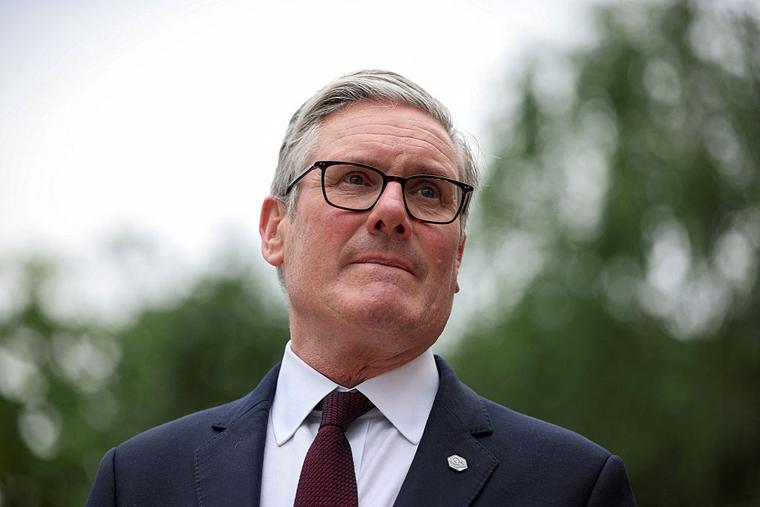
Sir Keir Starmer announced his resignation on Monday as Britain’s prime minister, setting in motion a leadership contest that could elevate Andy Burnham, a lapsed Catholic and outgoing socialist mayor of Greater Manchester, to the highest office in the land.
Starmer confirmed on Monday morning that he would be resigning as leader of the Labour Party — and therefore as prime minister — and leave office within weeks, remaining as caretaker leader until his successor is chosen. Speaking outside 10 Downing Street, he acknowledged that Labour now needs a new figure to lead it into the next general election, less than two years after winning a landslide that gave the party a commanding majority.
Burnham, a 56-year-old married father of three, is widely seen as waiting “in the wings” to take over and openly admitted in recent weeks that he would contest the Labour leadership. He formally threw his hat in the ring on Monday.
Effectively helicoptered in to replace an increasingly unpopular Starmer by winning a parliamentary by-election in his hometown just last week, his chances of becoming prime minister significantly increased on Monday when his main rival to becoming leader, former health minister Wes Streeting, said he would back Burnham’s bid for No. 10.
Under the U.K.’s parliamentary system, the leader of the governing party becomes prime minister. If Burnham is elected Labour leader, he would inherit the premiership with a mandate to govern until the next general election, due by 2029, though he could call one earlier.
Burnham says his politics have been deeply marked by a formative Catholic upbringing, even though he now describes himself as “not particularly religious” and rarely attends Mass. He has long been explicit about his childhood as a Catholic, describing the Church as one of three reference points that shaped him, the other two being Everton Football Club and the Labour Party.
As a child in the 1970s and early 1980s, he served as an altar boy and has recalled reading the Catechism at school. His roots are in the Liverpool and Warrington areas of northern England, parts of the country where Irish immigration, industrial labor and postwar housing estates helped to form dense Catholic communities, parishes and schools over the last century. During his upbringing there, he says he internalized Catholic social teaching as a kind of moral grammar.
A general discontent of wealth and social inequalities among its local population, these northern regions became especially fertile ground for socialism, also among Catholics, despite the Church’s traditional rejection of the political ideology. The Catholic Church in Manchester in particular has therefore long been associated with trade unionism, Labour politics and a strong sense of solidarity among the urban poor, where the language of justice, equality and care for the vulnerable have strongly resonated.
Burnham recalled how the Church of his youth spoke up for “social equality and fairness in its broadest sense,” especially for those who had the least. His children attend Catholic schools because he says he still believes in “the values and the grounding it gives you,” but he takes issue with the Church’s moral teaching in key areas, especially on sexual ethics.
In a 2015 interview, he said he recalled the Church of his youth as “quite forgiving really, quite humane, humorous, irreverent, even the priests,” but that he felt popes later became “more judgmental” and “much more obsessed with sexuality and issues related to sexual behaviour. And in that period, I drifted more and more away.”
He has said he was “proud” of being the first Labour frontbencher to call for the legalization of “same-sex marriage” — legislation that was passed by a Conservative government in England and Wales in 2013. A frequent proponent of “gay rights,” Burnham has expressed his hope the Church would surrender her stance on same-sex-rights issues, contradicting the Catechism, which, while stressing respect and compassion for homosexual persons, teaches that only within marriage between one man and one woman are sexual relations morally good, adding that homosexual acts are “intrinsically disordered.”
Burnham was a strong supporter of Pope Francis, whom he praised as a humble man with “great warmth” and a “fantastic character,” adding that he had “high hopes” he would move the Church to become increasingly “pro-LGBT.” After meeting Francis at the Vatican in 2023, he lauded the late Pontiff as a global voice for equality and compassion. When Francis died, he spoke emotionally about his passing, saying it hit him harder than he expected, and he expressed his hope that cardinals would choose a successor who shared Francis’ values.
If he becomes prime minister, Burnham would likely be the most overtly Catholic figure to hold the office in cultural terms. Boris Johnson, though baptized a Catholic, was confirmed in the Church of England and formed within Anglicanism. Historically, Catholics were barred from Parliament altogether until the Catholic Emancipation Act of 1829, making Burnham’s potential ascent symbolically significant.
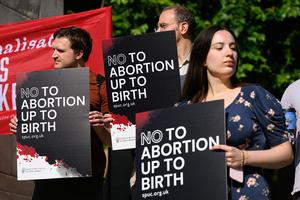
Yet his profile also reflects a broader Western pattern: the rise of “cultural Catholicism” in public life: figures who retain an affinity with the Church’s social vision while rejecting key elements of her moral and doctrinal teaching, particularly in matters of life and sexuality. Burnham, for instance, is firmly pro-abortion and has criticized opponents for seeking to further restrict abortion rights.
His socialism, too, is at odds with the traditional teachings of the Church, notably the papal magisterium of Popes Pius IX, Leo XIII, St. Pius X and Pius XII. While they strongly supported social reforms, workers’ rights and state action for the common good, they taught Catholics to “utterly reject” the political ideology, which, they said, cannot be reconciled with Christian teaching.
The timing of Starmer’s resignation adds a layer of historical irony. His announcement came on June 22, the feast in the General Roman Calendar of St. Thomas More, the 16th century English martyr who died rather than compromise his fidelity to the Church.
The contrast between Burnham’s dissenting Catholicism, one that was formed in the post-conciliar era and is selective of the Church’s perennial teaching, and More’s martyrdom, which uncompromisingly witnessed to the faith handed down by the apostles, could not be clearer.
- Keywords:
- united kingdom
- catholic politicians

Edward Pentin Edward Pentin is the Register’s Senior Contributor and EWTN News Vatican Analyst. He began reporting on the Pope and the Vatican with Vatican Radio before moving on to become the Rome correspondent for EWTN's National Catholic Register. He has also reported on the Holy See and the Catholic Church for a number of other publications including Newsweek, Newsmax, Zenit, The Catholic Herald, and The Holy Land Review, a Franciscan publication specializing in the Church and the Middle East. Edward is the author of The Next Pope: The Leading Cardinal Candidates (Sophia Institute Press, 2020) and The Rigging of a Vatican Synod? An Investigation into Alleged Manipulation at the Extraordinary Synod on the Family (Ignatius Press, 2015). Follow him on Twitter at @edwardpentin.