The Cut Flowers of a Fatherless West
COMMENTARY: The West has long enjoyed the fruits of Christian civilization while severing itself from the roots that produced them.
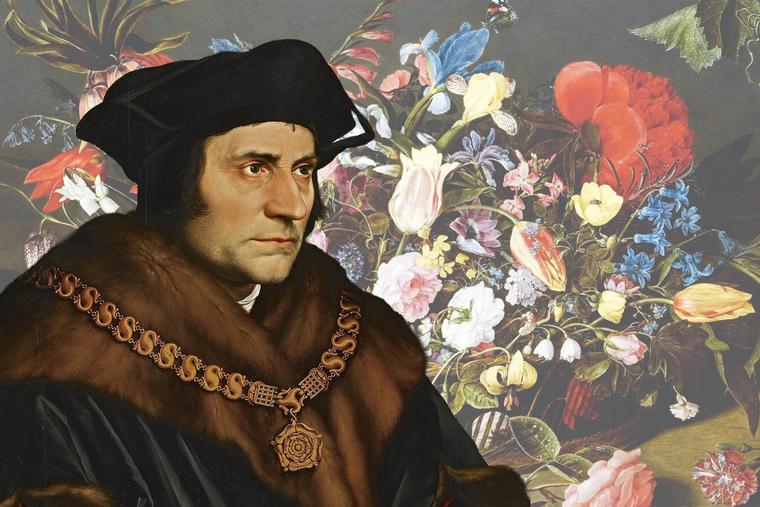
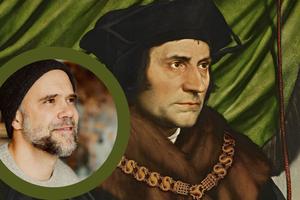
In 1535, standing before the full weight of the English state, Sir Thomas More refused to bend.
Pressed to acknowledge the king as head of the Church in England, More did not offer a dramatic flourish. He did something far more unsettling: he appealed to continuity, to communion, to what had been handed down. He insisted, in substance, that he could not set his private judgment, or even the will of Parliament, against “the general council of Christendom.” In other words, he would not sever himself from the living body of the Church across time.
More understood something we have largely forgotten: to reject that inheritance is not merely to change one’s opinion. It is to estrange oneself from one’s own father. We have spent the better part of five centuries doing precisely that.
A Civilization That Chose Separation
The break with Rome in More’s day was not only a political rupture. It marked the beginning of a deeper shift: truth slowly reimagined as something constructed rather than received, chosen rather than inherited. What began as a crisis of authority became a crisis of belonging.
The modern West learned to define freedom primarily as separation — from tradition, from institutions, from given meanings. We congratulated ourselves on autonomy, even as we lost the language to describe what we were once part of. In this sense, the West has not simply drifted from Christianity. It has, in a profound way, orphaned itself.
As Pope Benedict XVI warned, a culture that cuts itself off from its roots does not become more rational or more humane. It becomes fragile and susceptible to what he famously called a “dictatorship of relativism,” where nothing is binding because nothing is received. We have denied not only doctrines, but lineage.
The Age of Cut Flowers
For a time, it seemed as though this rupture came at little cost. We could sever ourselves from the roots of Christian civilization while continuing to enjoy its fruits: human dignity, moral equality, sacrificial love, the conviction that the weak matter. These were the cut flowers of the Christian tradition — arranged neatly on the table of modern life. They were still beautiful. For a time, they even appeared alive.
But cut flowers do not last.
Detached from the faith that gave rise to them, these moral intuitions begin to thin. We continue to invoke dignity, rights and justice, yet increasingly without any shared account of what the human person is or why he matters. What remains is sentiment without substance — language without a living source.
The vase is almost dry and our flowers have been withering now for some time.
A Generation Looking for Roots
And yet, something unexpected is happening. The rising generation (often described as secular or post-Christian) is also less interested in maintaining these arrangements. They are not content with cut flowers.
They sense, even if only dimly, that beauty without roots is fragile, that moral language without grounding collapses under pressure. And so the question begins to shift:
Where did these flowers come from in the first place?
This instinct has begun to surface even in recent papal reflection. Pope Leo XIV, speaking on the dignity of men and women, emphasized that human dignity is not something we invent or negotiate but something we receive. It was a quiet but necessary reminder: what is given must be grounded.
This is not nostalgia. It is a search for soil.
Replanting: The Work Before Us
To seek the soil is to accept a more demanding task than admiration. It is one thing to appreciate the ethical fruits of Christianity from a distance. It is another to be grafted back into the living tradition that produced them. Replanting requires a recovery of inheritance over invention, a willingness to receive before we redefine, and a recognition that we belong to something we did not create.
This is precisely what More refused to abandon. He did not claim the Church was convenient. He claimed it was his — not by possession, but by participation. He stood within a communion that preceded him and would outlast him.
His witness unsettles us still because it exposes the illusion at the heart of modern autonomy: that we can cut ourselves off from the past and remain whole.
An American Moment of Decision
That illusion now meets a moment of reckoning.
As the United States approaches the 250th anniversary of its founding, we are offered a rare opportunity — not simply to celebrate endurance, but to examine inheritance. The American experiment was never meant to float free of moral and metaphysical foundations. It presupposed them. It depended upon them. The question is whether we still do.
Here, Catholic schools have a particular responsibility. Not merely to preserve cultural memory or transmit moral vocabulary, but to lead students back to the source — to the vision of the human person that makes dignity, freedom and rights intelligible in the first place. If we teach dignity, we must teach its origin. If we speak of freedom, we must show what it is for. Otherwise, we risk handing on cut flowers and calling it formation.
The Return to What Was Given
When More declared himself “the King’s good servant, but God’s first,” he was not choosing abstraction over loyalty. He was choosing a deeper loyalty — one rooted in a reality no political order could manufacture. He refused to deny his father.
The future of the West will not be secured by preserving the aesthetic remains of Christianity while discarding its substance. It will depend on whether we are willing, once again, to be sons and daughters rather than self-creators, and to receive what has been handed down, not as a constraint, but as a gift.
As Benedict insisted, faith is not the enemy of reason but its fulfillment. The path forward is not invention, but reception rightly lived.
The task before us is not to admire the flowers.
It is to replant them.

Brendan Towell Brendan Towell is the Director of Spirituality and Mission for Secondary Schools and Schools of Special Education in the Archdiocese of Philadelphia, where he lives with his family. His interests include Augustinian Studies, Ressourcement Theology and the theological legacy of Pope Benedict XVI. His website is BrendanTowell.com.