St. Benedict Joseph Labre, Like His Master, Had Nowhere to Lay His Head
The world itself became St. Benedict Joseph Labre’s monastery as he wandered Europe on foot, slept among the ruins of the Colosseum and spent countless hours before the Blessed Sacrament.
The beggar traversed the narrow and cobblestoned streets of Rome, making his way toward one of the Eternal City’s many churches on a summer day in 1782. Most people drew aside as he approached, guarding themselves from vermin and the stink emanating from his body.
His was a face quite familiar to those who’d regularly walked the streets near the Coliseum’s ruins, where he slept, or the Church of Santa Maria ai Monti, where he usually worshipped. There were some who recognized him as a living saint, having witnessed him kneeling before the Blessed Sacrament for hours upon hours, or having caught a glimpse of those eyes of his which expressed a joy utterly beyond all worldly comprehension.
But most people simply ignored him, reluctant to acknowledge a penniless man’s existence. And there were those who’d even callously judge him for having lived in such an impoverished state:
“Just a lazy bum.”
“That guy made poor choices.”
“He’s probably crazy.”
It simply didn’t occur to those immersed in the worship of wealth that a pauper is equally made in God’s image as any prince, that tremendous grace can indeed be found in poverty, and that a wanderer isn’t necessarily truly lost.
The beggar stepped inside of the church and made his way into the confessional, where he kneeled. “Forgive me, Father,” he declared, “for I have sinned.”
Father Giuseppe Loreto Marconi’s immediate reflex was to flinch at the odor permeating from the other side of the screen. But he proceeded to patiently listen to the beggar’s confession nonetheless.
The wandering beggar, who’d been plagued with bouts of sorrow for many years, then began his confession. This would be the first of many meetings between himself and Father Marconi.
It was over the course of months that Father Marconi proceeded to learn more about this particular beggar. He was surprised, at first, when the poor man demonstrated a rather strong knowledge of Scripture. This presumably unlearned man likewise demonstrated a remedial understanding of Latin and logic and philosophy, subjects that priests would be expected to master, and so he couldn’t help himself from feeling curious, wanting to know more about the man.
Benedict Joseph Labre hadn’t always been poor, the priest learned. He’d been born to a prosperous family in Amettes, northern France, in 1748, the eldest of 15 children.
His parents had wished for at least one of their sons to be ordained into the priesthood. Benedict was a quiet boy, rather peculiar in certain manners, as well as pious. He’d had difficulty comprehending why so many of his peers embraced certain fashions of the day, or lusted after fleeting things. Naturally, his parents considered him the most likely candidate among their sons to become a priest.
At the age of 12 the boy was sent off to the town of Erin to live in a rectory with his paternal uncle, Father Francois-Joseph Labre, a parish priest, who would educate him in preparation for the priesthood. He proved himself to be a rather mediocre student of Latin, a detriment to his prospects, but demonstrated great enthusiasm for Holy Scripture.
The boy’s peculiarities remained. Occasionally he’d even wander off to parts of town where those of higher stature would reluctantly tread. It was there that he would mingle with the town’s poorest residents, whose company he preferred over “proper” acquaintances, sometimes emptying whatever happened to be in his pockets for them. Even his uncle began to harbor doubts that the boy could become a priest.
Benedict was 16 when he first expressed his desire to become a Trappist monk. He’d consulted his uncle, who relegated the decision to his parents. His parents, considering him still much too young for monastic life, discouraged him.
It was when he was 18 that an epidemic, perhaps cholera, perhaps even the plague, struck Erin. Duties were divided between the uncle and nephew during that trying time. Father Labre, as a priest, courageously saw to the spiritual and material needs of the sick and dying. Benedict was sent off to the nearby farm to tend to the cattle when nobody else could, or would, finding himself quite content to do farmwork. The epidemic was nearing its end when it took Father Labre’s life as well.
Benedict returned to Amettes after his uncle’s death, again expressing his desire to become a monk, but refusing to go without receiving his parents’ consent. His parents refused to give him their blessing, at first, having still considered him unprepared for a life of such discipline and solitude. So he begged, and then begged some more, until they’d finally relented and permitted him to go to La Trappe.
The Trappists, having only recently tightened their restrictions concerning who could be admitted, rejected him. The young man, having lacked any special recommendations, was considered still too young, too frail of health, inadequately educated, and much too mentally unstable to withstand monastic life’s demands.
Benedict proceeded to appeal to the Carthusians, who rejected him as well. He turned to the Cistercians, who likewise refused him. In some cases he was kindly given a trial session, an opportunity to live among the monks for a season, always proving that his vocation most certainly wasn’t in a monastery. His family, of course, did find themselves rather frustrated by his persistent inability to perceive that which was obvious.
It was finally in 1770 that Benedict discerned his own unique calling. He would be a pilgrim, embracing a life of penance and poverty wherever he wandered to, that the world itself would be his monastery.
Benedict did eventually, and appropriately, become a Third Order Franciscan.
He set off on foot toward Rome. It was along the way, in the French town of Dardilly, that the Vianney family offered him shelter for a night. To repay their kindness he agreed to give a blessing to the children of the household, which included a son who would be the future father of St. John Vianney.
His first stop in Rome was the French hospital. He was ill by the time he’d arrived, and his feet were covered with sores, requiring several days of recovery. The following months were spent visiting all of the holy sites he knew of throughout the Eternal City.
Rome became the base for his further excursions in the coming years, pilgrimages on foot to shrines all throughout Europe: Loreto, Assisi, Naples, Bari, Fabriano, Einsiedeln, Santiago de Compostela, Paray-le-Monial.
Benedict traveled without companionship, save for that of God himself. His few possessions consisted of the clothes he wore, a few devotional books and a wooden bowl. He kept perpetual silence for as long as he possibly could. He refused to accept any alms beyond that which would get him through a day, immediately sharing anything considered to be excess with another poor person.
Plenty of his nights were spent sleeping in the open air. Oftentimes his clothes were ragged and he stank. Any insults that happened to be hurled his way, as well as shunning that resulted from his foul stench and vermin infestations, would be received with great joy. He’d embraced the life of a fool for Christ.
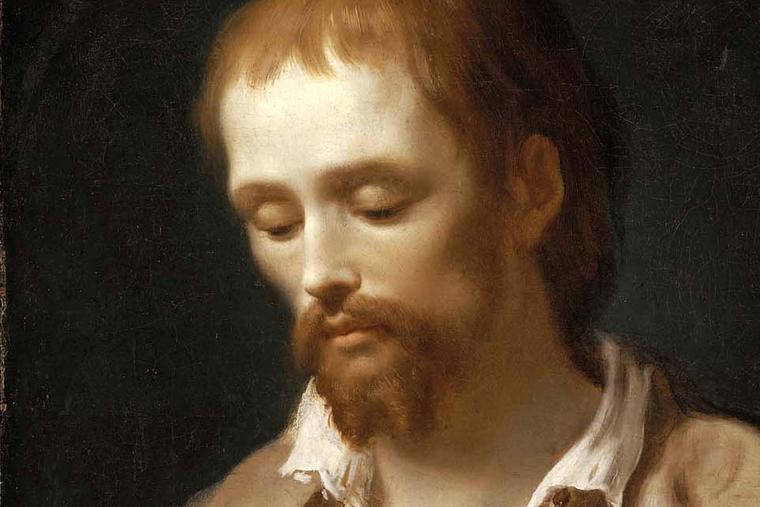
Those who bothered to take notice of the pilgrim witnessed the countless hours he spent before the Blessed Sacrament, with some reports that he even levitated on occasion while in prayer, and his reputation for holiness grew wherever he traveled. Mothers would even request that he bless their children, often to his own discomfort. Painter Antonio Cavallucci even proceeded to paint a portrait of him in his ecstasy.
Finally, he settled in Rome, leaving the city only once a year to yet again visit the Holy House in Loreto. It was in a hole in the Coliseum’s ruins that he’d taken shelter, the closest thing to a home he’d ever known while living there.
And it was in Rome, during the last year of his life on Earth, that he’d providentially met Father Marconi, his confessor who would later become his biographer.
Life as a vagrant is very much exhausting. It was on April 16, 1783, Wednesday of Holy Week, that Benedict, having long already been in frail health, fell on the steps of the Church of Santa Maria ai Monti. A local butcher, having recognized the holy man, kindly brought him into his own house, which happened to be nearby. The beggar was placed upon a bed, the first he’d rested upon in more than a decade, on which he died shortly afterward.
“The saint is dead!” the children who knew of him cried out in the streets, hearing the news. His funeral was well-attended by those who’d recognized him. Within months Father Marconi swiftly reported many miracles attributed to his intercession, that his cultus grew rapidly.
St. Benedict Joseph Labre was canonized in 1881. He is the patron of the homeless and those suffering from mental illness.
St. Benedict Joseph Labre, pray for us!
- Keywords:
- st. benedict joseph labre
- homeless
- mental illness

Zubair Simonson Zubair Simonson, O.F.S., is a convert who was raised Muslim. He grew up in Raleigh, North Carolina, and has also lived in New York. He received his B.A. at the University of Michigan, majoring in Political Science. He is a professed member of the Secular Franciscan Order. He is a contributing author for the website the Catholic Gentleman. The story of his conversion was included in the book My Name is Lazarus, published by the American Chesterton Society. He has several books available on Kindle, including The Rose: A Meditation, a narrative guide through the mysteries of the Rosary, and Stars and Stooges: A Christmas Tale, a humorous take on the three wise men. His website is zubairsimonson.com. Follow on Twitter at @ZubairSimonson.