Too Short, Too Structured? Cardinals Reflect on Synodal Consistory
Participants highlight benefits of collegial exchange but question whether the format allows real and effective counsel to reach the Pope.
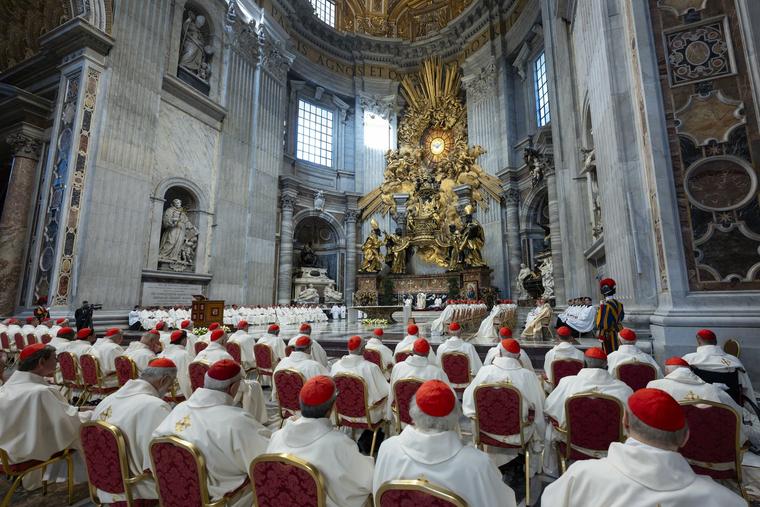
VATICAN CITY — Cardinals who attended Pope Leo XIV’s second extraordinary consistory said they valued parts of the meeting, but found it too brief, insufficiently focused on urgent internal Church issues, and too tightly structured to allow enough free discussion.
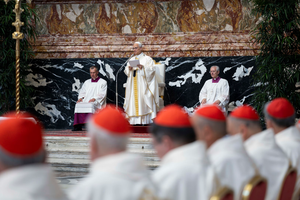
Held at the Vatican June 26-27, the gathering brought together 178 members of the College of Cardinals from around the world. It was the second such meeting convened by Pope Leo after a 12-year hiatus under Pope Francis.
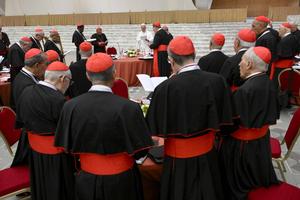
Structured along “synodal” lines, the consistory divided participants into small language groups to discuss pre-set themes, including Pope Leo’s first encyclical, Magnifica Humanitas, the promotion of the common good, and implementation of the 2023-2024 Synod on Synodality.
Broader global concerns such as war, poverty, social fragmentation, and a growing sense of loneliness and loss of meaning featured prominently, while internal Church questions were largely omitted and confined to a brief final plenary session.
Several cardinals told the Register of their general satisfaction with the meeting. “It was very nice that we had the opportunity to share our stories,” said Cardinal Tarcisio Kikuchi of Tokyo. “It was just like a synod, a continuation of the synod.”
Cardinal Antoine Kimbanda of Kigali, Rwanda, said the consistory “was wonderful,” as it “had the spirit of synodality, listening to one another, walking together like the Synod on Synodality.” He said that as far as he was aware, his African brother cardinals were “all happy” with the meeting, adding that the consistory enabled them to get to know one another, especially the retired cardinals, “who have longer experience.” This enabled them to “listen to one another, and learn from one another, and walk together,” he said.
Cardinal Jaime Spengler of Porto Alegre, Brazil, likewise described the consistory as “truly a space and a time, I think, of communion, of fraternity, and at the same time of great transparency.” “It was truly a pleasure,” he said, “to be able to share a bit about the situation, not only of the Church in the world but also to sense the historical moment we’re living through because of wars, polarization, and also inequality, which is a scandal.”
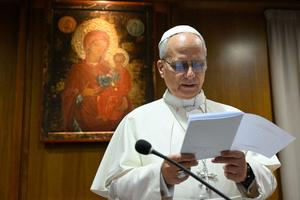
According to Cardinal Spengler, “not only could everyone speak up but had to speak up,” and “no one could say, ‘This or that situation has nothing to do with me.’” He said he was “struck deeply” by Pope Leo’s closing address, calling it a “fantastic summary” of what “really happened over these two days.”
Cardinal Raymond Burke, prefect emeritus of the Apostolic Signatura, said the cardinals are “certainly grateful” to the Pope for convening such meetings again, and he noted that they are speaking more with one another. “We’re getting to know each other more, and that’s very great fruit,” he said.
Cardinal Gerhard Müller, prefect emeritus of the Dicastery for the Doctrine of the Faith, welcomed the fact that the consistory “has returned the College of Cardinals to its proper role: to advise the Pope and to be his first helper.” He said Pope Leo is well informed and educated, yet “not an autocrat or anything above the world, but a human being like anyone else.” This means he must “always be in contact and dialogue with all his brothers in the same mission.”
Concerns Over Synodal Structure
However, concerns were raised about the brevity of the consistory and its “synodal” structure, which some participants thought had stifled discussion about pressing issues, especially within the Church.
Cardinal Burke said that unlike consistories over a decade ago, when cardinals could freely express their concerns to the Pope in plenary sessions, the cardinals were told that the consistory must now be “conformed to synodality.” It was “no longer an open debate,” Cardinal Burke said, but rather was centered around small tables, to follow “this system of questions proposed.”
“We don’t get to the heart of matters in depth,” he told the Register June 29, adding that the reports “are only the reports of what every cardinal agreed upon.” Thus, if a cardinal brings up a topic which others do not agree with, but which “could be very true and important for the Pope to hear, that doesn’t get reported to him,” he said.
Cardinal Müller agreed with these criticisms of the structure, saying that the small tables in a synodal format are “more a form of modern education of young people” or suitable for the Jesuits or Augustinians, but not for consistories. In the past, he said, all cardinals were able to give statements in plenary “that everyone can hear and share.”
“The main thing must be the plenary,” he said, adding that he preferred “prepared, reflected, written statements that are formulated weeks before, not words that come only from the situation.”
“We can serve and help the Pope with our own reflections, not with what is manipulated and controlled beforehand,” Cardinal Müller said. “I do not need a ‘leader’ to prepare what I have to say. We have too much in today’s society of this thinking, where others want to lead us and prepare our words.”
For the cardinal, a “better solution” must be found, one in which synodality is not “exaggerated as a solution for everything.”
Unlike Pope Leo’s first extraordinary consistory in January, the June meeting did include an hour-long “free discussion” session at the end, but each cardinal was allotted only three minutes instead of the five or six that used to be the norm. Cardinal Müller noted that courtesies and greetings already consumed part of that time, leaving very little space for substantive remarks, and Cardinal Burke said he did not have enough time to deliver his prepared intervention (talk).
Consistory Too Short
Cardinal Kikuchi told the Register that dividing the cardinals into small-language groups “actually limited” their discussions because, as a cardinal from Asia, he could not hear firsthand about the situation of the Church in Latin America. He also judged the overall time too short. “There was a suggestion that, next year, we should have at least four days,” he said. “Maybe next time, we’re going to have more time.”
Several cardinals lamented that pressing internal Church matters were hardly raised. The Register has learned that just one cardinal brought up the question of the Society of St. Pius X and its imminent, likely schismatic act of consecrating bishops without a papal mandate — and only because he found a propitious moment to mention it. The topic was not placed on the agenda, and apart from that single intervention, the SSPX issue was not raised at all. Nor, during the rest of the consistory, were other critical matters, such as the highly controversial German Synodal Path or questions about what some cardinals regard as the influence of a so-called gay lobby in the Church.
Cardinal Burke called the SSPX question “the proverbial elephant in the room” and said he believed the cardinals “should be giving the Holy Father our best counsel on how to go forward.” But he and others argued that the synodal format, together with the limited time, precluded such sustained counsel.
Cardinal Kikuchi noted that if the cardinals had begun to discuss the SSPX or other delicate internal issues without proper preparation, the debate might easily have devolved into a clash over whether some cardinals favored or opposed them. Yet the SSPX question, he stressed, is “not based on feelings” but on theological and canonical considerations that require careful study. The cardinals, he said, “do not want to feel like a pressure group,” trying to push the Pope toward a particular course of action, rather than offering reasoned counsel.
Cardinal Spengler said internal Church problems, including clergy sexual abuse and liturgical questions — which had been marked for discussion at both consistories but in the end were omitted — and other internal issues are “situations that concern us” and can be scandalous. He preferred, however, to highlight the “fantastic witness” of the faithful who serve the poor and vulnerable, saying: “These men and women are true saints.”
Cardinal Burke more broadly questioned whether “synodality” is the right concept for addressing the Church’s problems, whether in consistories or in the wider life of the Church. Both he and Cardinal Müller noted that there is still no solid, agreed definition of the term. A cardinal during the consistory remarked that synodality tends to focus on the contemporary situation — the “synchronic” dimension — while neglecting the “diachronic” dimension, that is, its historical context and its relationship to modernism and liberalism.
“I’m confident Our Lord will protect the Church,” Cardinal Burke told the Register, “but we have to do our part and say: ‘No, this concept of synodality, while it may have a good motive in the sense of wanting to address the faith to the contemporary time, is fundamentally flawed.’”
Two Interventions
In his intervention shared with the Register, Cardinal Burke drew attention to the recent Synod Study Group 9’s report for its attempt to normalize same-sex relations in the Church and what he and others have said is a calumny of Courage International and its apostolate to men and women who experience same-sex attractions. Saying the report departed from the Church’s perennial moral teaching, and for unfairly discrediting Courage, Cardinal Burke warned his brother cardinals that such an approach was fostering confusion, division, and what he saw as a politically driven agenda incompatible with the Church’s doctrinal and hierarchical structure. He called for a restoration of the synod’s proper theological foundations, grounded in objective moral truth, episcopal authority, and the Church’s constant teaching, as reaffirmed in Veritatis Splendor.
In his intervention, Cardinal Müller expressed the same concerns about the consistory format as he shared with the Register, while also raising the SSPX and the question of schism. He firmly rejected claims that the Church has deviated from the faith, called for clarity on the canonical status of the SSPX, and proposed a commission to facilitate their return to full communion under the authority of the Pope.
- Keywords:
- cardinal consistory
- consistory of cardinals

Edward Pentin Edward Pentin is the Register’s Senior Contributor and EWTN News Vatican Analyst. He began reporting on the Pope and the Vatican with Vatican Radio before moving on to become the Rome correspondent for EWTN's National Catholic Register. He has also reported on the Holy See and the Catholic Church for a number of other publications including Newsweek, Newsmax, Zenit, The Catholic Herald, and The Holy Land Review, a Franciscan publication specializing in the Church and the Middle East. Edward is the author of The Next Pope: The Leading Cardinal Candidates (Sophia Institute Press, 2020) and The Rigging of a Vatican Synod? An Investigation into Alleged Manipulation at the Extraordinary Synod on the Family (Ignatius Press, 2015). Follow him on Twitter at @edwardpentin.