A Hot Take on Pope Leo’s Second Consistory
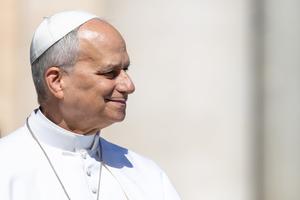
VATICAN DIARY: This June’s consistory didn’t culminate in any dramatic or decisive result, but the mere fact that it took place was significant.
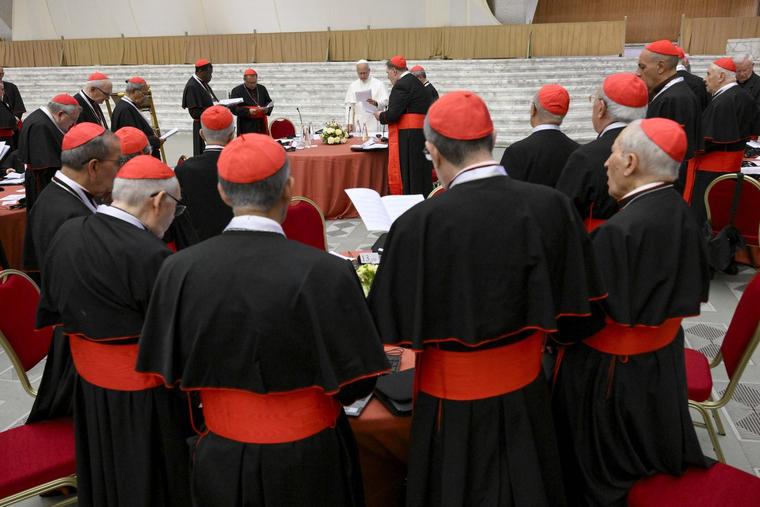
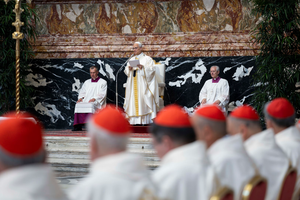
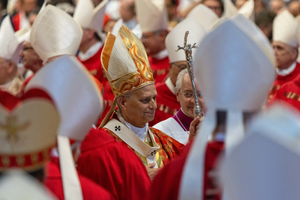
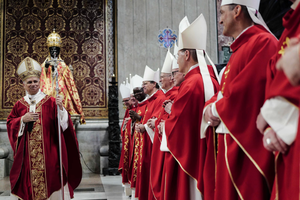
Last week’s consistory of cardinals at the Vatican was not open to the public, and participants were instructed not to speak with the press, so there was a lot of speculation about what the princes of the Church actually said behind closed doors.
But one topic certainly on everybody’s lips, inside and outside the Paul VI audience hall, was the heat wave striking Western Europe, including Rome. On the second day of the two-day meeting, temperatures reached 97 degrees Fahrenheit, and the sun beat down mercilessly on the red-hatted and bare-headed alike. It was a matter of taste whether these conditions were more or less disagreeable than the weather during Pope Leo’s first consistory in January, when temperatures dipped close to freezing, a rarity in the Eternal City.
Some cardinals may have wondered why Pope Leo chose such unpropitious seasons for calling them together. The most reliable months for pleasant weather in Rome are April and October, between the summer heat and the wetter, cooler winter months. The Second Vatican Council (1962-65) met over four autumn sessions, held between mid-September and early December. Perhaps that helps explain why the Council’s documents, despite the controversies some of them ignited among the world’s bishops, ultimately received their overwhelming approval.
This June’s consistory didn’t culminate in any such dramatic or decisive result, but the mere fact that it took place was significant.
Leo has already called the College of Cardinals to Rome for discussions twice in his first 14 months as pope and has pledged to do so every year. Pope Francis, over the course of his 12-year pontificate, did so only three times.
Instead of consulting the College of Cardinals, traditionally known as “the pope’s senate,” Francis established a geographically representative Council of Cardinals, at one point numbering nine and thereafter known as the “C-9,” to advise him on reforming the Vatican bureaucracy and leading the universal Church. (Leo has quietly abolished the council.)
But the most prominent advisory body during Francis’ reign was the Synod of Bishops, which he made the centerpiece of his program of “synodality,” a consultative approach to Church governance that seeks input from ordinary Catholics and, in some cases, non-Catholics.
The synod was established by St. Paul VI in 1965 and began holding assemblies two years later. These were generally predictable affairs, which some criticized for being excessively stage-managed by the Vatican. They were also relatively transparent, with most members publishing their speeches and many talking to the press on the sidelines. For instance, a two-part recording of the future Pope Leo reading his contribution to the Synod on the New Evangelization in 2012 is available online (see [Part I] and [Part II]; the backstory is here.)
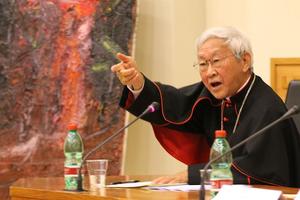
Things got livelier under Francis. I remember well the excitement of his first synod, one of two assemblies dedicated to the subject of the family, in October 2014. A midterm report stirred controversy, to put it mildly, with conciliatory language about divorced-and-remarried Catholics, cohabiting couples and those in same-sex relationships. A few days later, in response to protests that the report had misrepresented the assembly’s views, the synod voted to release summaries of the members’ discussions. Cardinal George Pell, one of the proponents of the move, told me shortly after the vote: “We’re not giving in to the secular agenda. We’re not collapsing in a heap.”
The second Synod on the Family, the following year, was almost as dramatic, featuring a leaked letter to Francis from 13 cardinals, including Cardinal Pell, warning that the assembly’s procedures were “lacking openness” and designed to “lead to a predetermined conclusion.” After the synod’s final document failed to endorse a proposal for leniency in the Church’s practice on divorce, the Pope gave a closing speech lamenting “closed hearts which frequently hide even behind the Church’s teachings, in order to sit in the chair of Moses and judge — sometimes with superiority and superficiality — difficult cases and wounded families.”
It was a thrilling time to be a journalist covering the Vatican, but evidently a little too turbulent for Francis’ taste.
Over the following years, the synod became a more closed and controlled affair. Participants were instructed not to talk to the press, and the rules for communication in the assembly became more elaborate, limiting the topics to be addressed and discouraging anything resembling a debate. Francis explained that these restrictions were intended to protect privacy and ensure the religious, rather than political, nature of the event.
In the meantime, there was dissatisfaction among many cardinals about Francis’ failure to consult with them, a point that came up often at the General Congregations preceding the 2025 conclave that elected Leo. The new Pope has since made it clear that he heard them.
In counterpoint to Francis’ expansion of the synod to include laymen and women, Leo has reemphasized the hierarchy’s leadership role. He has done this not only by meeting with the cardinals, but also by calling the heads of the world’s bishops’ conferences to Rome this October to discuss the implementation of Amoris Laetitia, Francis’ 2016 document on the family.
Yet Leo has at the same time affirmed his commitment to synodality, which was in fact one of the major topics on the agenda at last week’s consistory. The Pope has also imported some of the methodology of the Francis-era synod, including tightly controlled discussions, into the consistory process.
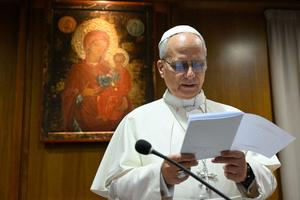
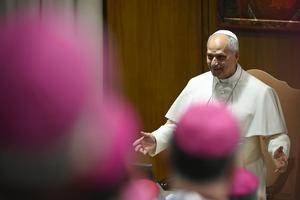
That change inspired complaints from some cardinals, as the Pope acknowledged in his opening speech to the gathering, asking them to trust the new process. It was a disarming request coming from the Supreme Pontiff, as was his appeal earlier in the same speech: “I need your support: strong, explicit, and public. I need to feel sustained by you, as by brothers.”
In this call for unity, as in the mix of continuity and innovation with which he conducted the gathering, the latest consistory was emblematic of Leo’s leadership style. By committing to it as an annual event, he has set himself an important test of his ability to maintain balance in a diverse and often divided Church.