Courage, The Apostolate That I Know Well
COMMENTARY: The synod working group’s document on homosexuality has broader implications for Courage International.
As the hymn O God Beyond All Praising echoes through the church, the atmosphere is bittersweet for marking the end of another annual Courage International conference.
It has been a few years since I attended the annual conference for the apostolate, where I worked as communications director from 2017 to 2021, but I still carry with me the stories of the men and women I encountered: a man who had returned to the Church after a long career as a gay porn actor, sharing his hymnal with another attendee. The talented youth director, fearful for her job if her connections with Courage were to come out, can finally relax and be herself.
Parents, estranged from a child who has chosen a same-sex relationship, can share their grief with other parents who understand; the college-age girl, wise beyond her years, speaks publicly and eloquently about how she navigates the complexities of same-sex attractions and faith.
The former male model, with a history of hundreds of same-sex encounters, prays with enviable reverence; the elderly gentleman, after the passing of his same-sex partner of many years, is faithfully committed to Courage’s mission.
The tight-knit group of wisecracking New Yorkers — devout, affectionate and devastatingly funny — tell stories of the apostolate to which they have belonged for decades.
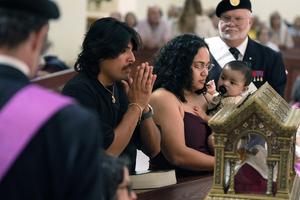
Between lectures by well-known Catholic speakers, community prayer, regular access to the sacraments and plenty of opportunities to rekindle old friendships and forge new ones, conference attendees often shared with me their experiences marked with tears, catharsis and laughter.
When I think of Courage International, an apostolate that offers pastoral support for same-sex-attracted men and women and their families, this is the image that comes to mind — neither white-knuckled, lonely abstinence nor toxic positivity, but freedom.
It was therefore with disappointment, but little surprise, that I read the recent Vatican report from one of the working groups of the 2024 Synod on Synodality.
Featuring testimonies from two men in same-sex “marriages,” including a limited account of an experience with Courage, the Synod Study Group 9 report describes its membership as “problematic.” Meanwhile, while neglecting to consult with the canonically approved apostolate, the synod participants who drafted the report framed these same-sex marriages as a standard towards which the Church should redefine and conform its moral teaching.
More concerning, it perpetuated the falsehood that Courage pushed “for ‘reparative therapy,’” which consequently “had the effect of separating faith and sexuality.”
This isn’t a mere misunderstanding of what Courage offers its members. (It has long affirmed that “it does not provide, refer for, or require any form of therapy for its members.”) On the one hand, when secular critics equate the call to chastity with conversion therapy, it’s problematic, but not unprecedented.
When Church leaders infer not to know the difference, especially when apostolates like Courage are used as the scapegoat by those who reject Catholic teaching on sexual morality, the damage cuts more deeply.
What Is ‘Conversion Therapy’?
Conversion therapy can be broadly defined as the effort to help someone reorient his or her homosexual attractions towards members of the opposite sex. As far as the Catholic Church is concerned, there is nothing wrong with these efforts so long as they are overseen by reputable mental health professionals and those who seek this change clearly understand that the elimination of same-sex attraction is not required for holiness.
(The definition also includes helping those with gender dysphoria live in a way that aligns with their biological sex, but this is too nuanced and complex a topic to explore here.)
So why is it so damaging when voices out of the Vatican mischaracterize Courage’s work the way they did in the Study Group 9 report?
Historically, conversion therapy became more common during the mid-to-late 20th century, first in the medical field (prior to homosexuality’s 1973 removal from the Diagnostic and Statistical Manual of Mental Disorders) and later in faith-based “ex-gay” ministries. Although most of these efforts involved traditional talk therapy, some employed a variety of physically and emotionally traumatic techniques intended to eliminate homosexual attraction through various forms of aversion therapy.
One of the central challenges regarding conversion therapy is the increasing ambiguity with which it has become defined in recent years, owing to a growing number of legislative efforts to prohibit it altogether, especially for minors. When the established social narrative claims that homosexuality is a natural variation of human sexuality, efforts to reassess one’s sexual attractions or simply adapt one’s behavior by living chastely are lumped together with the unethical practices that have become associated with the blanket concept of conversion therapy.
When I was communications director for the apostolate, part of my work involved monitoring conversion-therapy legislation and familiarizing myself with the legalese, especially in jurisdictions where Courage chapters are active.
For instance, a 2017 bill out of Connecticut had in its definition “any effort to change gender expression.” A year later, Delaware included similar language to its own bill, adding “any effort to change behaviors.” With the rollout of these laws, state by state, the language often builds upon that of prior legislation. Most of these laws are directed toward the mental health field, so religious ministries are generally exempt, at least on paper. However, while not in imminent danger of legal ramifications in the U.S., wisdom dictated that we pay attention.
Overseas, legal status was more tenuous.
In a 2018 debate in Ireland’s Seanad Éireann, Courage International was singled out by name, leaning on the claim that it promotes conversion therapy. Ireland’s former prime minister, Mary McAleese, often targeted Courage, as featured in a series by The Times (for which we provided comment), where it was also reported that a journalist had attempted to infiltrate one of its meetings. Members in some other countries where there were active chapters faced similar social and legal pressure.
I felt the stakes every day, both domestically and for our members abroad. Every line shared with a journalist had to be weighed against the chance of it being used out of context (the young Times reporter had tried). Every sentence on the website, every word in a press release, every document had to be meticulously crafted to prevent our words from potentially being distorted and misused.
The Catholic Church’s views on chastity in general, and homosexuality in particular, will always pose a threat to the prevailing narratives around sexual morality. Fully aligned with Church teaching and pastoral practice, this has made Courage a frequent scapegoat for those who object to Catholic moral teaching but who lack the gumption to attack the Church at the institutional level.
What Does Courage Do?
In addition to providing pastoral support for same-sex-attracted men and women, Courage, through its EnCourage apostolate, also supports families of those who have chosen to pursue same-sex relationships or embrace a transgender identity.
Overseen by its international headquarters in Trumbull, Connecticut, it is the bishop, not the headquarters, that decides to open a chapter, and he is responsible for assigning a priest or deacon to serve as chaplain. Each chaplain, provided with a detailed handbook, is encouraged to receive training from the headquarters director, although not all do.
The main “activity” of most chapters comes in the form of meetings, a practice going back to the early days of the apostolate. With the evolution of technology, not to mention the generational differences of some members, this has expanded to include online meetings and even group chats. Retreats and days of recollection are also an integral aspect in many regional chapters.
Although Courage often refers to those taking part in its activities as members, their commitment to privacy means there is no database of membership, nor any fee to join.
Why It All Matters
It would be disingenuous to claim that Courage’s members are never “lonely, hopeless, and often depressed,” as the unnamed American witness featured in the Vatican report observed. The single life can be devastatingly difficult for all chaste men and women wishing to be married, and the experience of same-sex attractions brings its own complexities to that heartache. But that is far from the whole story.
As I said in the beginning, the report left me disappointed but not surprised. Prior to working for Courage, I had lived nearly nine years in Rome as a graduate student at a pontifical university and journalist for the Vatican and other news agencies. I’ve seen variations of this kind of thing before — heterodox or anti-Catholic figures granted access and influence within Vatican dicasteries or sponsored events. Scandalous, yes. Unprecedented? Hardly.
Catholics who support same-sex unions will likely use the public existence of such a report as leverage for their cause. Worse, secular detractors, with a Vatican document in hand, could feel more empowered to be a thorn in the side of the Courage apostolate by trying to discredit it.
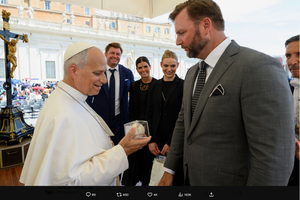
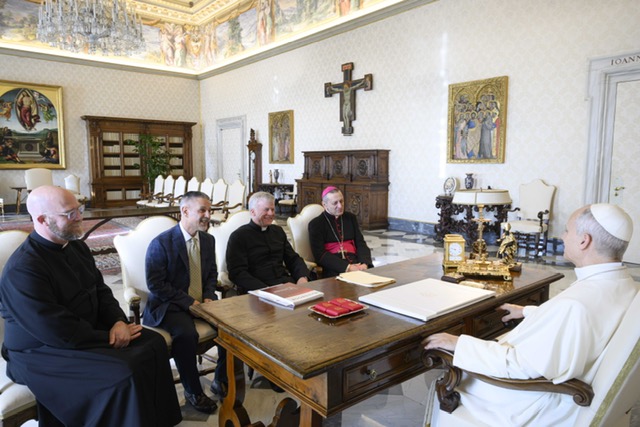
Beyond this, the report will likely have little if any adverse impact. Pope Leo XIV’s meeting with the apostolate early this year is a strong indicator of his appreciation for Courage’s mission. Moreover, it is well beyond the purview of any synod to enact any doctrinal change, especially one so fundamental to the Catholic understanding of what it means to be human.
Pope Francis famously expressed a desire to “make a mess.” A consequence of this is that, under his pontificate, those within the Vatican with heterodox leanings felt freer to show their true colors than they had under Benedict XVI. The optimist in me hopes that this is a good thing, and this synod report is no exception.