What ‘My Sacrifice and Yours’ Means at Mass
COMMENTARY: The Second Vatican Council illuminates the meaning of the priest’s and the faithful’s sacrifices in the ‘Orate Fratres’ at Mass.
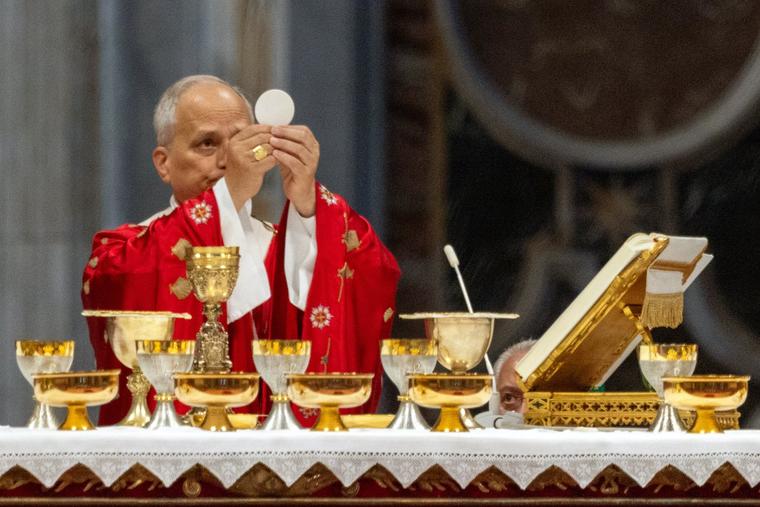
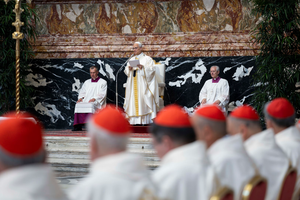
During every Mass, a dialogue takes place between the priest and the faithful in the pews. This dialogue is known as the Orate Fratres and takes place following the preparation of the altar and immediately before the start of the Preface, which will lead into the Eucharistic Prayer. As he finishes preparing the altar, the priest faces the faithful and says to them:
Pray, brethren (brothers and sisters), that my sacrifice and yours may be acceptable to God, the almighty Father.
To which the faithful answer:
May the Lord accept the sacrifice at your hands for the praise and glory of his name, for our good and the good of all his holy Church.
These words speak of sacrifice. The priest asks the faithful to offer their own sacrifice together with his, and to pray that God find them acceptable. The faithful respond by placing, as it were, the sacrifice into the hands of the priest, unto the glory of God and the good of the entire Church.
My Sacrifice and Yours
When the priest invites the faithful to pray that God accept ‘my sacrifice and yours,’ it is fairly clear that the sacrifice of the priest is the Eucharist itself. The priest is standing at the altar, having just received the gifts of bread and wine from the faithful themselves in the offertory, and has placed the host and chalice on the altar. In short order, the priest will repeat the words of consecration, and the Eucharistic Lord will be present upon the altar. As Lumen Gentium no. 10 affirms:
The ministerial priest, by the sacred power he enjoys … acting in the person of Christ, he makes present the Eucharistic sacrifice, and offers it to God in the name of all the people.
The priest, however, does not speak only of his sacrifice when he addresses the faithful. My sacrifice and yours, he tells them. What is the sacrifice offered by the faithful?
The same paragraph from Lumen Gentium offers guidance. After noting that the priest offers the Eucharist in a unique way, since he stands in persona Christi, the document notes, “But the faithful, in virtue of their royal priesthood, join in the offering of the Eucharist.” That is, the faithful are also agents in the offering of the Mass. They are not mere spectators looking on from afar. The faithful also offer a sacrifice. It is worth pausing to ask about the sacrifice offered by the faithful at Mass.
Lumen Gentium 34
A paragraph from Lumen Gentium can help us out. When the document turns to consider the nature of the sacrifices offered by the laity, it says this at paragraph 34:
For besides intimately linking them to His life and His mission, He also gives them a sharing in His priestly function of offering spiritual worship for the glory of God and the salvation of men. For this reason the laity, dedicated to Christ and anointed by the Holy Spirit, are marvelously called and wonderfully prepared so that ever more abundant fruits of the Spirit may be produced in them. For all their works, prayers and apostolic endeavors, their ordinary married and family life, their daily occupations, their physical and mental relaxation, if carried out in the Spirit, and even the hardships of life, if patiently borne — all these become ‘spiritual sacrifices acceptable to God through Jesus Christ.’ Together with the offering of the Lord's body, they are most fittingly offered in the celebration of the Eucharist. Thus, as those everywhere who adore in holy activity, the laity consecrate the world itself to God.
The high dignity and holy calling of the faithful is captured in that last sentence: the vocation of the laity is to consecrate the entire world to God. They are able to do this in a way different from that of ordained ministers of the Church. Whereas the lives of priests and bishops are circumscribed by the local parish or diocese, the faithful go out into the world of commerce, of education, of marriage and family life. Lumen Gentium is clear that all the endeavors of the laity, whether of work or of relaxation and leisure, whether of hardships or of the joys and delights of life, all these are most fittingly offered in the celebration of the Eucharist.
When the priest asks the people to pray that ‘my sacrifice and yours,’ the ‘and yours’ refers to all the sacrifices of the faithful listed in Lumen Gentium 34. It refers, in other words, to the entirety of life. The laity at Mass bring with them their whole lives, all that has happened since the last Mass, both the good and the bad, both the joys and frustrations, to be united and offered together in the Eucharist. As the priest will say to the people shortly thereafter, ‘Lift up your hearts.’ The faithful come to Mass to offer the sacrifice of their entire hearts, and in this way bring with them into the Eucharistic sacrifice the whole of their lives and occupations.
The Sacrifice at Your Hands
The response of the faithful to the priest, however, is worth quoting again. Whereas the priest speaks of two sacrifices, his own and that of the faithful, the response of the laity speaks of a single sacrifice:
May the Lord accept the sacrifice at your hands for the praise and glory of his name, for our good and the good of all his holy Church.
Even as Christ is the Eternal High Priest, so also he offers the only sacrifice that is acceptable, the gift of his Body and Blood. This sacrifice is offered by the ministerial priest in persona Christi, and in this way the Mass makes present to us the very sacrifice of Christ himself.
The faithful, however, also join in offering this sacrifice as they bring the entirety of their lives, and with them that portion of the world that God has entrusted to them. By uniting it to the one sacrifice of Christ offered at the hands of the priest, they sanctify the world itself to God.
Father Michael Johns is a priest of the Diocese of Little Rock, Arkansas.