Armenia at a Crossroads: The Church-State Rift Is Testing the Nation’s Future
ANALYSIS: What is fueling the widening tensions between the government and the Armenian Apostolic Church, and how dangerous could this division prove for the country’s long-term stability and prosperity?
Editor’s Note: The Register’s Europe correspondent visited Armenia Sept. 20-26, 2025, with the U.S. advocacy organization Save Armenia as part of a delegation working to highlight the existential challenges facing the world’s oldest Christian nation. This series examines how Armenia, still reeling from its recent war with Azerbaijan and caught between regional instability and expansionist pressures, struggles to secure its survival and spiritual heritage.
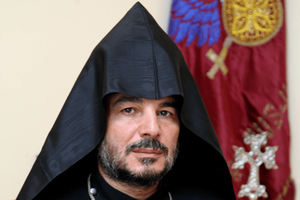
YEREVAN, Armenia — The Oct. 3 sentencing of Archbishop Mikael Ajapahyan to two years in prison has revealed a stalemate in the conflict between Prime Minister Nikol Pashinyan’s government and the Armenian Apostolic Church, one of the most sensitive issues in Armenia today. In recent months, this case has become emblematic of a broader struggle for power, identity and influence in a country still scarred by the Nagorno-Karabakh war. Pashinyan regularly accuses the church hierarchy of turning the church into “a state within a state” and clinging to structures dating back to the Soviet era that are resistant to any reform.
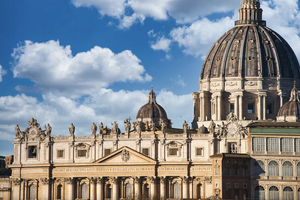
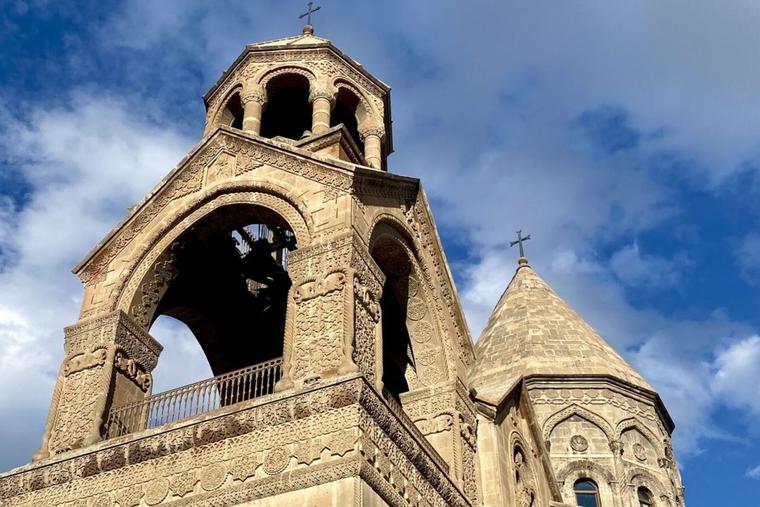
The Armenian Apostolic Church, to which more than 90% of Armenians nominally belong, is among the world’s oldest Christian communities and a cornerstone of national identity since Armenia adopted Christianity as a state religion in A.D. 301. As part of the Oriental Orthodox family, it differs from the Roman Catholic Church in theology and structure. In 1996, Pope John Paul II and Patriarch Karekin I signed a joint declaration reaffirming their shared Christian roots — a milestone that strengthened dialogue and cooperation between the two churches. Deeply embedded in Armenia’s history, the Church enjoys special constitutional status. Its influence still extends well beyond religion, shaping much of the country’s cultural and political life.
According to observers, the crisis risks further destabilizing the world’s oldest Christian nation, already threatened by Azerbaijan’s irredentist views.
The condemnation of Archbishop Ajapahyan, the head of the Shirak Diocese known for his outspoken criticism of the government’s post-war policy, marks the latest episode of an escalating confrontation. He was found guilty of inciting unrest after calling for a military coup — charges he denied. Church leaders denounced the verdict as politically motivated, warning that it sets a dangerous precedent for religious freedom in the post-Soviet republic.
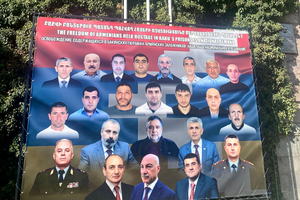
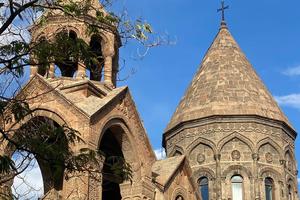
His conviction, following the June arrest of Archbishop Bagrat Galstanyan of Tavush on similar accusations, has brought relations between Yerevan and Etchmiadzin — the Church’s spiritual center — to their lowest point since Armenia’s 1991 independence. The government’s open clashes with Catholicos Karekin II, the head of the Armenian Apostolic Church, have only deepened tensions.
Prime Minister’s Campaign Against Church Leadership
In a series of social-media posts these past months, Prime Minister Pashinyan accused parts of the church’s hierarchy of turning the institution into a state within the state, claiming that it resists change and continues to operate through Soviet‑era structures.
Pashinyan went further in late May 2025, alleging that Catholicos Karekin II had violated clerical celibacy and that he should be removed from office. The prime minister also insisted that his criticism was not directed at religion itself but at what he described as the misuse of Christian values for political ends. Pashinyan has presented himself publicly as a believer, stating that the 2018 Armenian Revolution that brought him to power was inspired by Christian values and that his faith guides his political outlook.
As national and international outlets have been voicing concern over religious freedom in the country in the context of this escalation, a September 2025 report by U.S. advocacy group Save Armenia maintained that government action against outspoken clergy stemmed from political disputes rather than a campaign of persecution and argued that freedom of worship remains intact, presenting the conflict as part of Armenia’s attempt to reinforce constitutional order after decades of post-Soviet reliance on external powers.
Competing Visions for Armenia’s Future
Behind the immediate controversies lies a broader struggle over Armenia’s geopolitical and moral orientation. Observers largely concur that the widening rift between the government and the national church reflects deeper disagreements over how and where Armenia should position itself on the international stage. After Moscow’s failure to defend Armenia during its war with Azerbaijan (2020-2023), Pashinyan has pivoted toward Western partners — most visibly through the ongoing peace treaty being negotiated with the Trump administration, part of the broader “Trump Route for International Peace and Prosperity” (TRIPP) initiative — in an effort to reduce dependence on Russia’s unreliable protection.
At the same time, he has sought rapprochement with Turkey, pursuing the reopening of borders and trade routes, seeing normalization as essential for regional stability. Yet this pragmatic approach has drawn criticism for appearing to sideline the greatest historic sensitivities, such as the recognition of the Armenian Genocide — a stance that has further alienated church leaders and diaspora communities. The church’s hierarchy, by contrast, tends to remain culturally closer to Moscow, upholds traditionalist and nationalist views, and regards the ongoing peace treaty with deep suspicion — especially because it entails a definitive renunciation of Artsakh (the Armenian name for the long-disputed enclave of Nagorno-Karabakh conquered by Azerbaijan in 2023).
For many clerics, such concessions amount to a betrayal of Armenia’s historic mission and moral duty to the displaced people of Nagorno-Karabakh.
A Test of National Resilience
This church–state confrontation is unfolding amid a sharp decline in public confidence in Armenia’s institutions. A U.S.-funded survey by the International Republican Institute (IRI) recently revealed record-low trust in Pashinyan’s government, with most respondents saying the country is on the wrong track. By contrast, the army (72%) and the Armenian Apostolic Church (58%) remain the nation’s most trusted institutions. The poll was released shortly before the June 18 arrest of Russian‑Armenian billionaire Samvel Karapetyan, who had announced plans to form a new opposition movement.
Diplomat Eldar Mamedov warned on The American Conservative that the situation has already exacted a serious economic cost, citing the state’s seizure of the Electric Networks of Armenia (ENA) following Karapetyan’s arrest. He linked the move — widely viewed as retaliation for the billionaire’s criticism of Pashinyan — to Moody’s downgrade of the utility’s credit rating, warning that such actions undermine investor confidence and cast doubt on the government’s commitment to the rule of law.
For a nation already strained by territorial losses, economic uncertainty and demographic decline, the church-state standoff has become a test of resilience. Whether government and church leaders can rebuild mutual trust — or allow their rift to deepen — will determine Armenia’s ability to maintain unity and sovereignty in a volatile, predominantly Muslim region. With national elections approaching in 2026, the outcome of this crisis will shape the country’s future for years to come.
- Keywords:
- armenia