Rebuilding Roots: Displaced Armenian Families Forge a New Community Near the Artsakh Border
The beginning of a long journey for a people who still bear the deep scars of the ethnic cleansing and who still harbor an unquenchable desire to return home.
Editor’s Note: The Register’s Europe correspondent visited Armenia Sept. 20-26, 2025, with the U.S. advocacy organization Save Armenia as part of a delegation working to highlight the existential challenges facing the world’s oldest Christian nation. This series examines how Armenia, still reeling from its recent war with Azerbaijan and caught between regional instability and expansionist pressures, struggles to secure its survival and spiritual heritage.
SVARANTS, Syunik, Armenia — For more than two years, thousands of Armenian families displaced from the Nagorno-Karabakh region, known to Armenians as Artsakh, have been seeking stability after being driven from their ancestral lands during the resumption of conflict with Azerbaijan (2020-2023). Many have been scattered across Armenia, struggling to rebuild their lives in temporary housing or subsisting on modest state aid.
Amidst this climate of hardship and uncertainty, the promise of a new beginning is on the horizon for them.
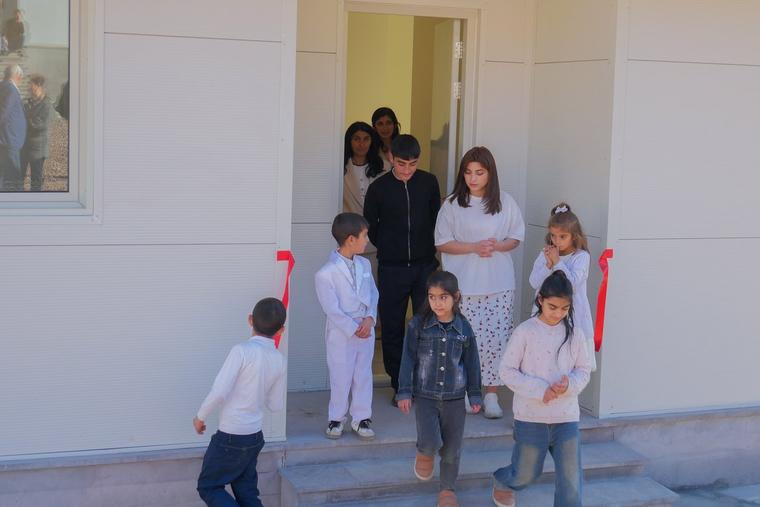
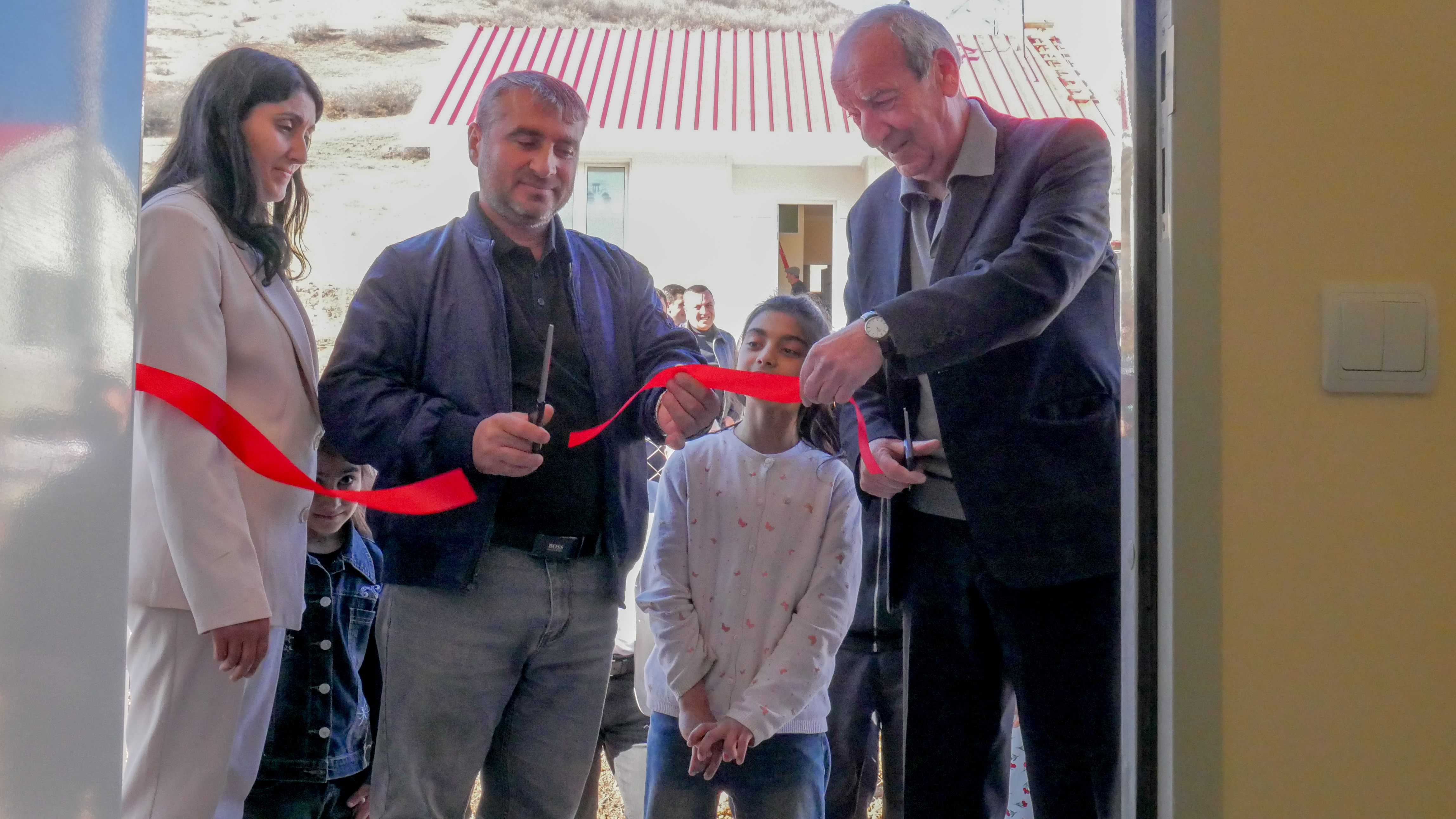
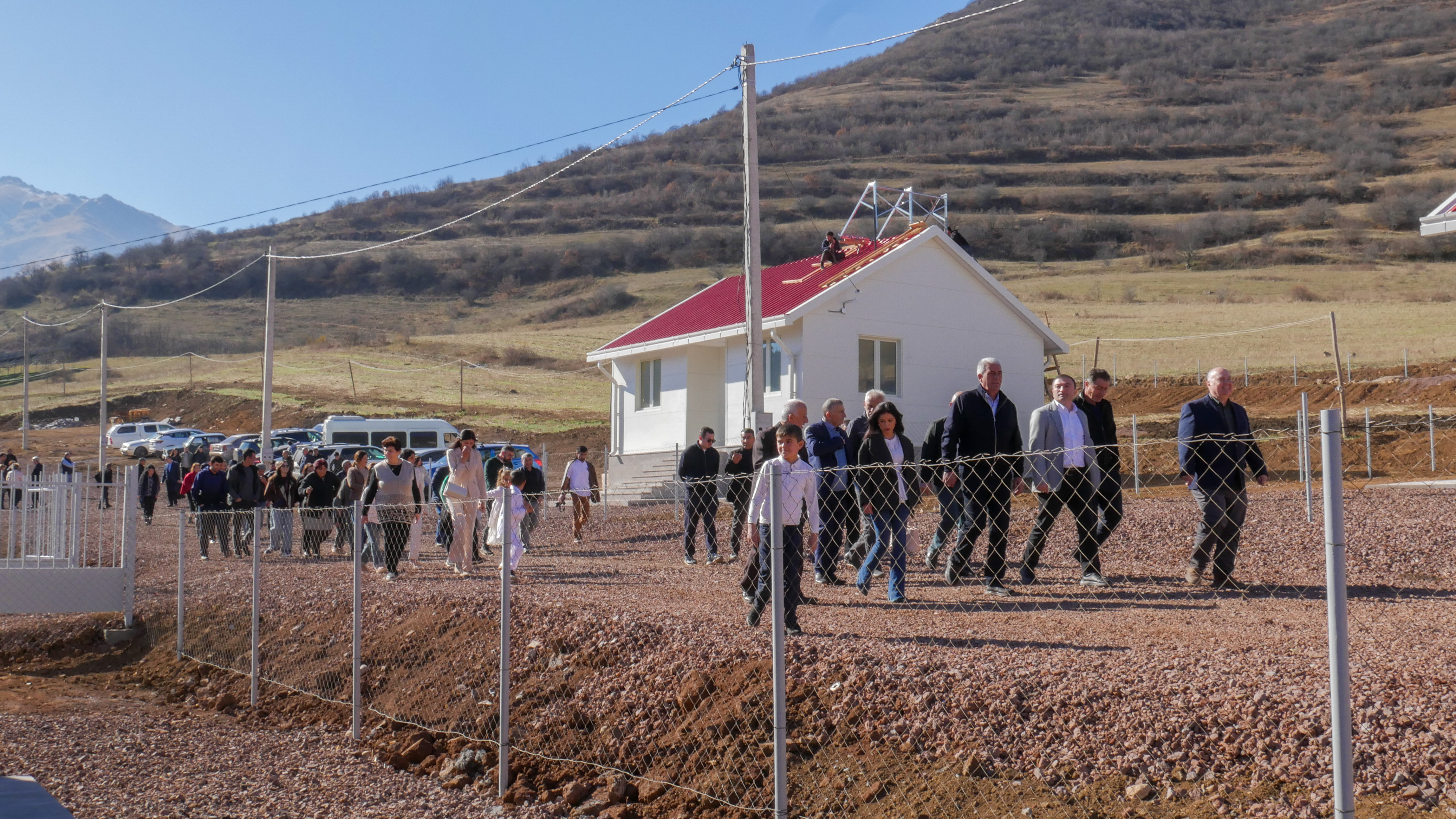
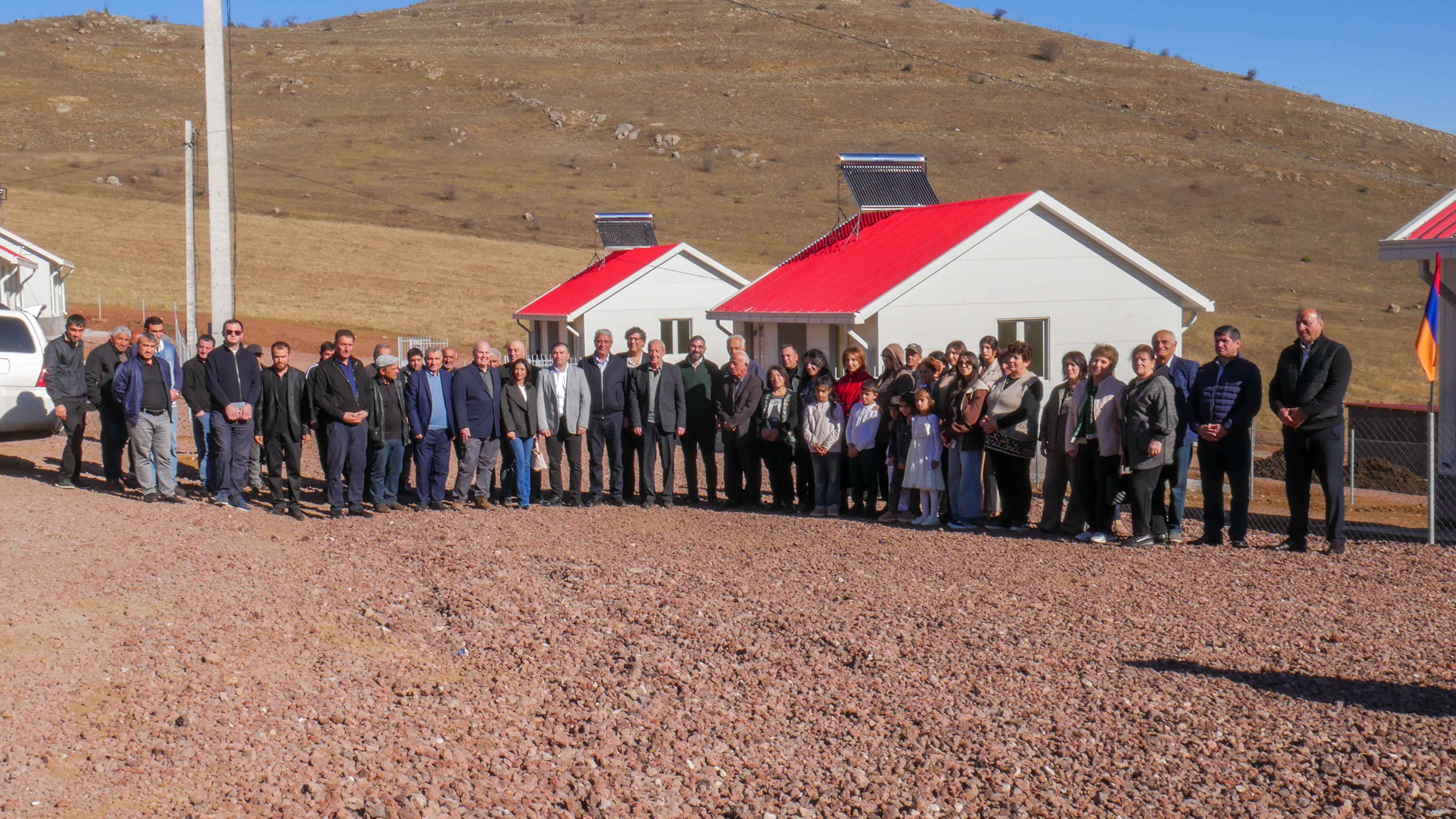
On Nov. 18, in the small village of Svarants, located in southern Armenia, about 40 miles from the disputed enclave of Nagorno-Karabakh, several displaced families received the keys to newly built homes. This initiative is part of a broader community recovery effort to help them rebuild their lives. Led by the Tufenkian Foundation, it aims to provide not only shelter, but also sustainable restoration: sturdy, winter-ready homes with barns, farmland and a school where children can once again play, learn and envision a prosperous life.
However, this step is only the beginning of a long journey for a people who still bear the deep scars of the ethnic cleansing they recently endured and who still harbor an unquenchable desire to return home.
Rebuilding Roots in Syunik
Located in Armenia’s southernmost province, bordering both Iran and Azerbaijan, Syunik has long been viewed as the country’s strategic frontier and its last land bridge to Artsakh. The initiative in Svarants seeks to revive the rhythms of traditional rural life by creating a self‑sustaining community. Each family will receive a well‑insulated home, a barn, a plot of land, livestock and farming tools to restore their independence.
A second phase foresees a school, kindergarten and small business grants so families can build livelihoods instead of depending on aid. Solar heaters, clean‑water systems and farmland restoration are part of the plan to ensure sustainability and resilience.
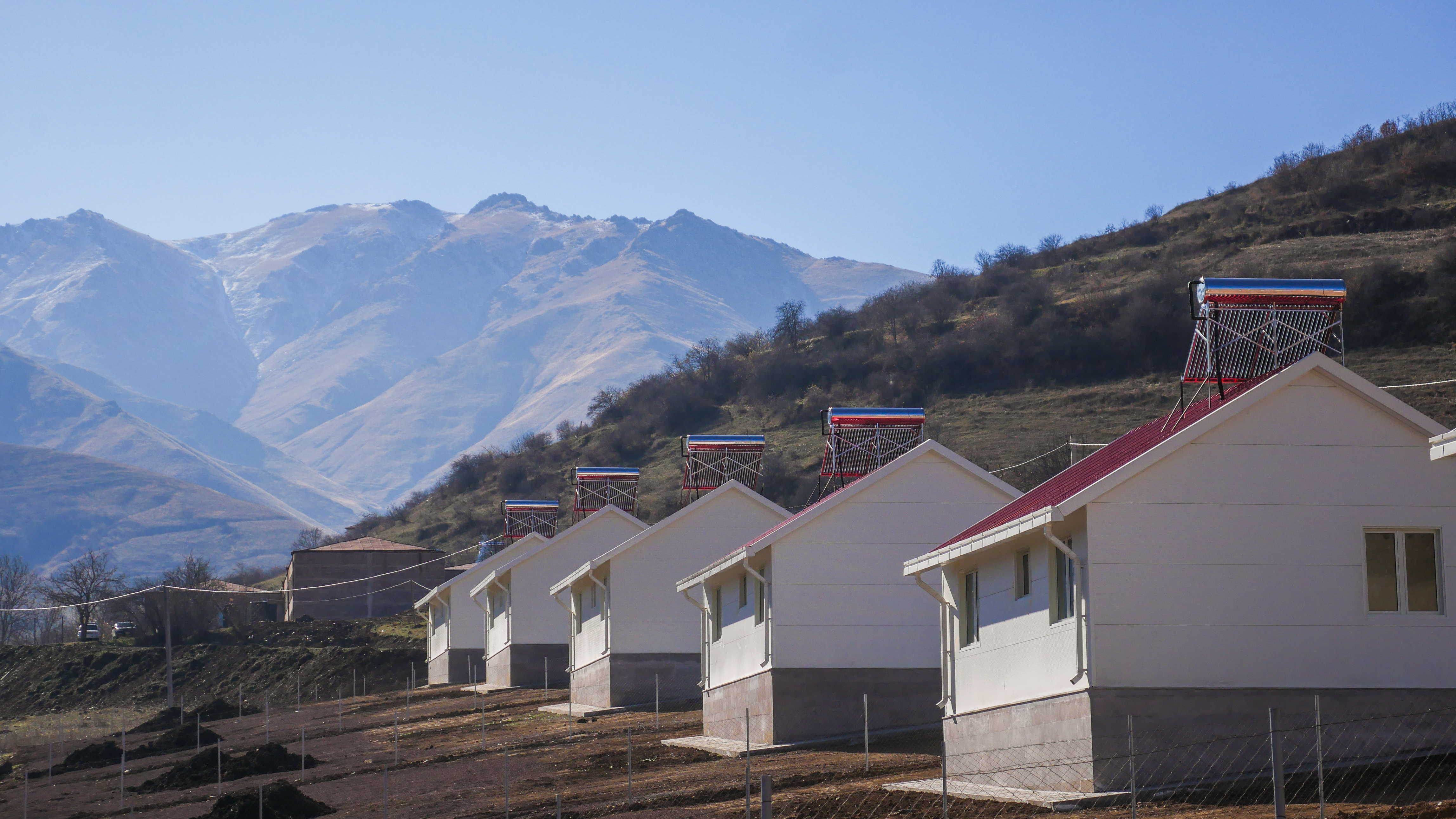
“In this community in Syunik, several villages are in decline, and Svarants was one of them,” said Vigen Gasparyan, head of the community and himself displaced from Stepanakert, during a Sept. 22 briefing attended by the Register. “We are trying to breathe new life into this village and bring it out of this impasse. The 20 new houses and three new neighborhoods will give Svarants a new rhythm and the promise of a future.”
“If we can secure jobs here, within the next five years, we will flourish like nowhere else in the region.”
The project is part of a broader effort to strengthen life along Armenia’s fragile southern border, where depopulation and economic hardship have long threatened entire communities. Founded in 1999 by Armenian-American entrepreneur James Tufenkian, the Tufenkian Foundation has become one of Armenia’s most trusted charitable institutions, known for rebuilding border villages and helping war-affected families regain stability.
“Today, we held a ribbon-cutting ceremony for the families — many of them with young children — who will soon call this place home,” Greg Bedian, director of operations of the Tufenkian Foundation, said during the Nov. 18 inauguration ceremony. “This marks a new beginning for families from Artsakh as they rebuild their lives in Armenia. Beyond constructing homes, we are creating real opportunities on the ground to support these families and strengthen the entire village,” he said, adding that the foundation’s efforts are carried out in partnership with international development agencies, the Armenian government, the Syunik regional administration and the local municipality.
Living Under Fire
While Svarants symbolizes a much-needed sign of hope, many communities farther east remain trapped in fear. Refugees from Armenia’s eastern border describe a life overshadowed by gunfire and deep uncertainty.
“Every morning and every night we live at the mercy of the armed forces of Azerbaijan,” Hrayr, a villager from Khoznavar (a border community surrounded on three sides by Azerbaijani positions), said during a Sept. 24 meeting in Yerevan promoted by the Center for Truth and Justice (CFTJ).
Despite the ceasefire, he said, shooting continued almost nightly until mid‑July. “The goal was to intimidate people, especially children,” he added, recalling a 14‑year‑old girl who dressed each night in panic, fearing her family might have to flee suddenly.
CFTJ observers confirmed his account, reporting that Azerbaijani troops fired “almost daily” at civilians. “At exactly 10:20 every night, we heard and recorded the shots,” they said.
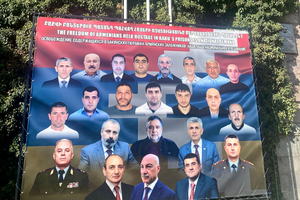
A young Armenian soldier, captured in December 2020, recounted being ordered not to return fire because Russian peacekeepers were said to be nearby. “There were no peacekeepers,” he recalled. Encircled, his unit was forced to surrender. He spent 11 months in detention near Baku, enduring beatings, deprivation and humiliation. “We were only in our underwear during winter, with no heating,” he said. “We prayed by a small window where the sunlight came in.” Many former prisoners reported that guards cut or burned their crosses, taunting them that they would “become Muslim in a few months.”
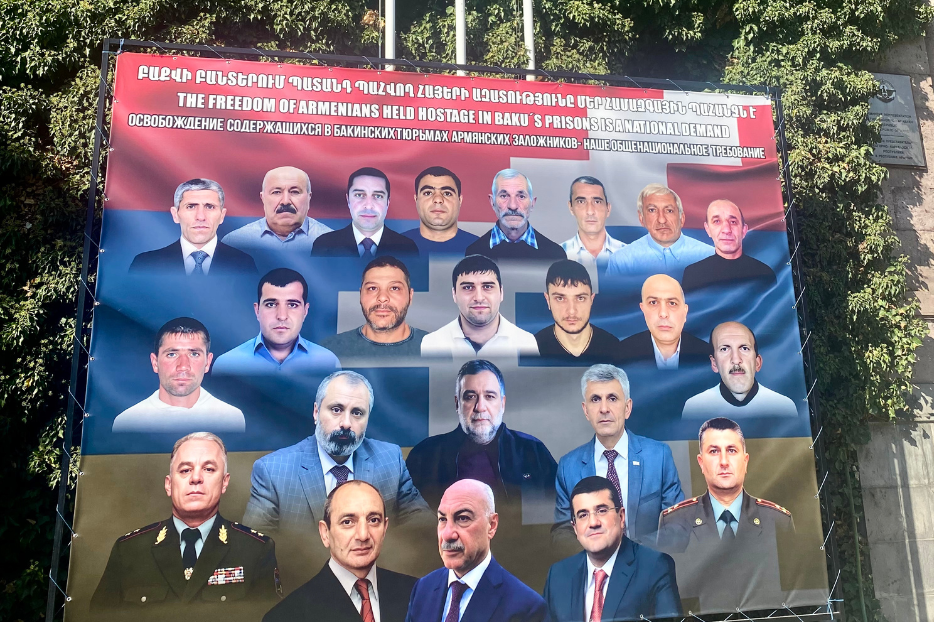
A young woman whose brother disappeared during fighting in October 2020 said that online videos show Armenian captives being tortured and mutilated, yet her brother remains officially listed as missing. She appealed for diplomatic pressure, noting that 23 Armenian hostages are still held in Bak
‘Don’t Close the Artsakh File!’
This information was confirmed by the Permanent Mission of the Republic of Artsakh in Yerevan, that confirmed that dozens more are still missing. “The No. 1 problem for us is being ignored at all levels,” Artak Beglaryan, former human rights ombudsman of Nagorno‑Karabakh and president of Artsakh Union, told the Register. His successor, Gegham Stepanyan, urged the international community not to “close the Artsakh file,” insisting that justice and the release of hostages must precede any lasting peace.
Some 120,000 Armenians fled Nagorno‑Karabakh in September 2023 after the region’s takeover by Azerbaijan. Around one‑third live below the poverty line, and many hesitate to apply for Armenian citizenship, fearing that relinquishing their Artsakh documents would weaken their right of return.
The two representatives also recalled that in November 2023, the U.N. International Court of Justice reaffirmed the right of displaced Armenians to return to their homes “safely and promptly.” Yet implementation remains stalled, and Azerbaijani authorities continue to erase Armenian cultural and religious heritage, damaging churches, cemeteries and ancient monuments.
“Please care about the hostages, about the churches, the cemeteries, the return of the Artsakh people, ultimately, to our Christian home,” said Beglaryan, acknowledging that “return is not something that happens overnight; it comes step by step, with visas, dialogue and time.”
In this context, the new homes in Svarants stand as a visible act of faith. They bring together Armenians who refuse to surrender memory or hope, offering a place to heal and live with dignity, a sign that exile was not the end.
The Nov. 18 inauguration ceremony expressed the resilience of a people who, though uprooted, still believe in God’s providence. For the world’s oldest Christian nation, survival has never been merely political — it remains a testament of faith and perseverance.
- Keywords:
- armenia
- displaced people