Altar Rail Gets Reprieve at North Carolina Church
It will stay indefinitely at St. Mark Catholic Church, while the Diocese of Charlotte awaits liturgical changes from the Bishop Michael Martin.
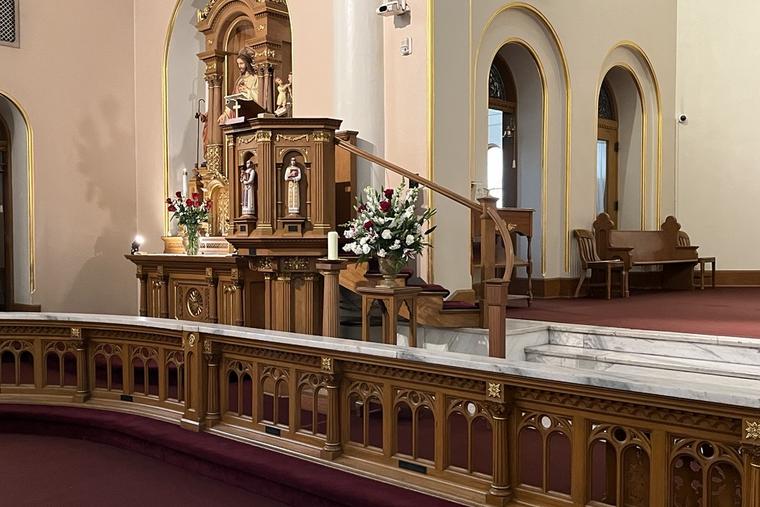
A North Carolina pastor has decided to keep using altar rails to distribute Communion during Mass instead of stopping the practice.
The decision flips his announcement of about a month ago, when he said the church would stop using altar rails as of the first Sunday of Advent last weekend, as the Register reported in mid-November.
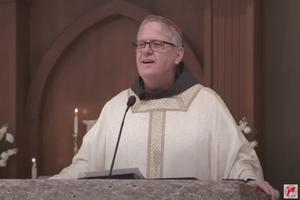
Father John Putnam, pastor of St. Mark Catholic Church in Huntersville, about 15 miles north of Charlotte, told the Register he received requests from parishioners he believes had consulted a canon lawyer, as they used Church law language in their communication with him.
“I had lots of parishioners who asked that I reconsider my decision or suspend my decision, as an administrative recourse. My choice was I’m fine with that, and let things stay as they are,” Father Putnam said in an interview Friday. “And if something happens from a higher authority, we’ll deal with it when it happens.”
Altar rails are one piece in what some call the “liturgy wars” in the Diocese of Charlotte.
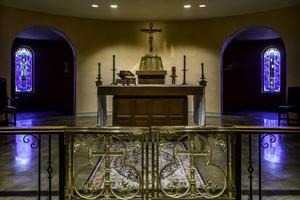
Father Putnam put in removable altar rails at St. Mark’s around the time the church first started offering the traditional Latin Mass in 2017.
On Nov. 7, he announced he had decided to stop using the altar rails, partly to stay in harmony with Charlotte Bishop Michael Martin, who after taking over in May 2024 has moved against certain traditionalist practices.
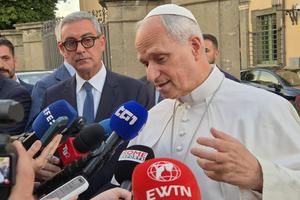
Effective Oct. 2, Bishop Martin banned the traditional Latin Mass at parish churches, in line with rules issued by Pope Francis in his July 2021 apostolic letter Traditionis Custodes (Guardians of the Tradition). Instead of the four parishes in the diocese that previously offered the traditional Latin Mass, now only one nonparish chapel offers it.
The traditional Latin Mass typically uses an altar rail for the distribution of communion. A draft document leaked this past May (but not implemented) called for banning altar rails in the diocese, among other changes.
Father Putnam told the Register last month that while the bishop didn’t order him to stop using the altar rails, he expects a decree banning them is coming, and he said he wanted to implement the change on his own schedule instead of waiting for a top-down rule for the entire diocese. He planned to remove the altar rails, which are not permanent structures in the 2009 church, late last month, before reconsidering.
Also known as a Communion rail, an altar rail separates the altar and the rest of the sanctuary from the nave, where laypeople sit. They are used to mark the sanctuary as sacred space and also provide a structure for people to use if they wish to kneel while receiving Communion.
Critics of the altar rail say it needlessly divides priests from laypeople, creating an air of superiority of the clergy. Supporters say it promotes reverence for the Eucharist.
The use of the altar rail fell out of favor after the Second Vatican Council. The vast majority of churches built after the Council ended in 1965 don’t have them, and in many pre-Vatican II churches they have been removed.
Observers in the Charlotte Diocese expect the bishop to use a new set of liturgical rules sometime next year.
- Keywords:
- communion rail
- altar rails
- diocese of charlotte
- bishop michael martin
- traditional latin mass