‘The Price of Love’: One Woman’s Escape From Islam and Her Warning to the West
In an interview with the Register, Sabatina James explains why assumptions about Islam and Christianity as being broadly similar faiths are dangerously misleading — and why understanding Sharia, jihad, and religious freedom is now a matter of urgency for Western societies.
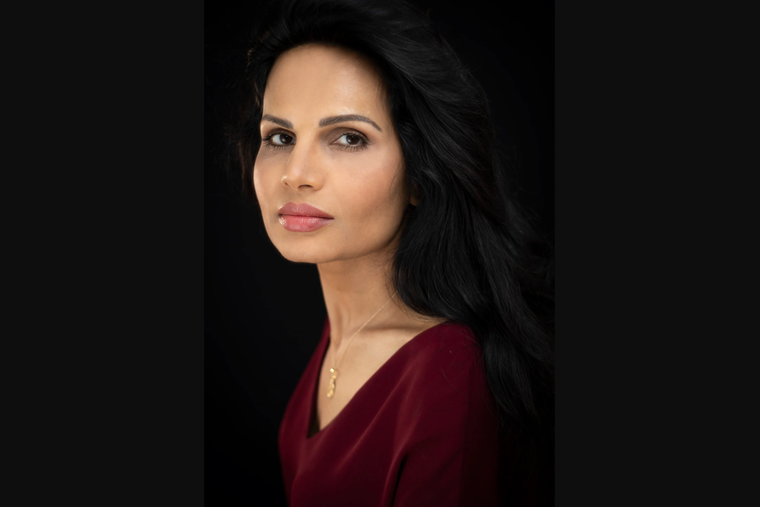
Church leaders and Western politicians have for too long failed to confront the harsh but true realities of Islam and Islamic culture and instead have beaten a retreat, allowing Sharia law and Islamism to grow.
This is the view of Sabatina James, author of a new book called The Price of Love: The Fate of a Woman — and a Warning to the West, which details her own experiences of forced marriage and then violence and persecution for leaving Islam to embrace Catholicism.
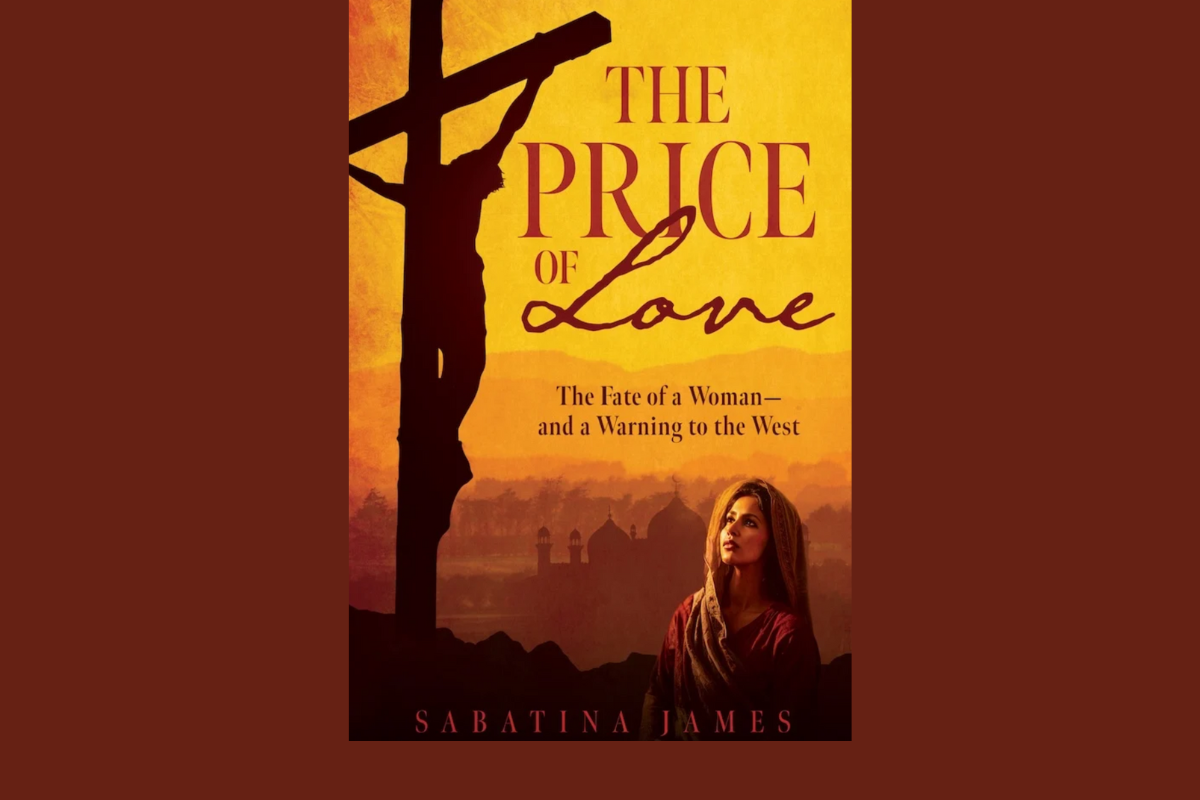
Born into a devout Muslim family in Pakistan, James resisted a forced marriage, leading her to suffer brutal consequences. She then converted to Christianity, causing her to be condemned for apostasy from Islam, to receive death threats, and flee Pakistan for safety.
In a chapter of the book called “The Retreat,” James draws particular attention to the silence of ecclesial institutions in the face of Christian persecution, lamenting that in recent years they have chosen to focus on political activism instead of defending the faith and coming to the aid of their suffering brothers and sisters.
In her Dec. 23, 2025, interview with the Register, James explains why assumptions about Islam and Christianity as being broadly similar faiths are dangerously misleading — and why understanding Sharia, jihad, and religious freedom is now a matter of urgency for Western societies.
Mrs. James, you have written in the past about your traumatic journey from Islam to Christianity, forced marriage, and the clash between Islamic law and Western legal cultural norms. What made you want to write this new book?
I believe it is essential for Christians to understand what Islam teaches about them. Too many Catholics, especially in America, rely on comforting and naïve assumptions, but truth matters — especially when religious doctrines carry real social and legal consequences for nations and communities.
I also believe the wider world deserves an honest comparison between the two belief systems. I have lived in both the Muslim and the Christian worlds. Christianity, at its core, presents a message centered on love, forgiveness and freely chosen faith. By contrast, Islamic doctrine, as expressed through Sharia and jihad, emphasizes law, authority and compulsion. These differences are not marginal; they shape societies, legal systems, and the treatment of those who do not belong to the dominant faith.
Acknowledging this is not an act of hatred, but an act of honesty — and honesty is the necessary starting point for any meaningful conversation about coexistence. This is what my new book seeks to address as it recounts my conversion from Islam to Catholicism and the violence that followed.
Cardinal Robert Sarah, who has also faced a similar death threat, but from a Marxist-Islamist dictator, has praised The Price of Love, calling it “a wake-up call to the West.” What do you think our leaders and many of the general public in Western countries, particularly in Europe, are not understanding about the threat of Islam?
Political leaders in the West appear either unable or unwilling to confront a difficult reality: that Islam according to Muhammad, together with the system of Sharia built upon it, stands in fundamental tension with democracy, modern human rights, and the Christian understanding of faith. Some leaders may also find it personally convenient to overlook this problem, especially given the immense financial influence exerted by extremely wealthy actors from the Gulf. In doing so, they ignore the long-term consequences for Western societies, their cultural inheritance, and future generations.
At the core of classical Islamic doctrine lies a claim to universal dominance. Muhammad was not only a religious figure but also a political and military leader, and his message included the subjugation of non-Muslims, at times through force. This ambition does not always present itself in openly violent terms. When Islam exists as a minority, it is often expressed through softer language — such as calls to migrate to Europe or North America, to influence educational institutions, or to promote higher birth rates — with the stated aim of “Islamizing” societies from within.
Do you see this as a clash of civilizations that is worsening, especially in Europe?
Samuel Huntington was widely criticized in Europe for his book The Clash of Civilizations. Yet the differences he described remain highly relevant today, particularly in the context of large-scale Islamic immigration. The contrast between the teachings of Jesus and those attributed to Muhammad is not a minor theological disagreement but a profound civilizational divide.
In Islamic theology, Jesus is denied both divine sonship and crucifixion. The Christian religion is described as a falsification, and belief in it is said to lead to eternal punishment, with conversion to Christianity seen as a crime deserving death.
Christians who refuse to submit politically or to accept a subordinate legal status are, according to Islamic texts, denied protection. Their inferior status is inherited by their descendants, in a system comparable to hereditary slavery.
The question this raises for Westerners is simple but uncomfortable: Do we intend to preserve the democratic freedoms, religious liberty and prosperity we inherited, or are we prepared to relinquish them in ways that will permanently shape the lives of our children and grandchildren?
To what extent do you consider a growing threat from Islam to be a reaction to secularism and the decline of Christianity in the West?
While unbelief, moral confusion, and the Church’s reluctance to bring the Christian message to Muslims remain serious challenges, Islam itself cannot be understood as a reaction to secularization. Secularization has not occurred in the Islamic world in any meaningful sense. On the contrary, Islam continues to grow more rapidly than any other religion worldwide.
The increasing influence of Sharia in the West has been possible only because European societies have permitted it — most notably by encouraging large-scale immigration from Muslim-majority countries where religion remains closely intertwined with law, politics and public life.
When acts of violence are committed against Christians, Jews, atheists or others and are justified with reference to Sharia, the response from Western political, media and religious leaders is often muted or hesitant. Yet when citizens call for stricter immigration controls or the deportation of convicted offenders, the reaction is immediate and fierce.
At the same time, powerful political and religious institutions — including elements within the Catholic Church — remain largely silent when Christianity itself is under pressure. Senior politicians in countries such as Germany and Austria have called for the removal of Christian symbols and have openly suggested that native populations should become minorities in their own countries through sustained immigration from predominantly Muslim regions. This is not neutrality, but a dangerous imbalance — one tradition retreating, while another advances with confidence.
In the U.K., there were the well-publicized cases of Pakistani grooming gangs in Rotherham, Rochdale and Telford. The establishment, mainstream media and Muslim leaders denied linking these crimes with Islam, one argument being that such crimes are also committed by white Europeans. What is the truth, in your view? Is there something inherent in Islam that perhaps makes such crimes, and other forms of violence too, which you know of well, more likely?
The media deliberately shielded the public from the reality of the situation. It was truly striking how these gangs were often described merely as “Asian,” even though they were almost exclusively composed of Muslim men of Pakistani origin. The fact that the victims were targeted because they were non-Muslims was rarely acknowledged. If this had been merely a case of sexual abuse, one would expect Muslim girls to have been among the victims as well — but they were not.
The perpetrators were, in effect, doing to British girls what thousands of Christian girls suffer in many Muslim-majority countries, where they are kidnapped and sexually exploited by Muslim men and frequently denied justice because local laws based on Sharia permit or excuse such treatment. This pattern traces back to the life of Muhammad, who possessed female captives taken in war. From this perspective, sexual access to enslaved non-Muslim girls is treated as religiously justified, with Surah 4:24 often cited as the textual basis.
Such doctrines embed hierarchy and domination into religious law itself: man over woman, Muslim over non-Muslim. Viewed in this light, the crimes committed by these gangs in Rotherham are not random aberrations, but the logical outcomes of the Islamic ideology they claim to follow — outcomes we enabled by accommodating it.
- Keywords:
- islam
- converts to catholicism
- western culture
- religious freedom
- christian persecution
- sharia law

Edward Pentin Edward Pentin is the Register’s Senior Contributor and EWTN News Vatican Analyst. He began reporting on the Pope and the Vatican with Vatican Radio before moving on to become the Rome correspondent for EWTN's National Catholic Register. He has also reported on the Holy See and the Catholic Church for a number of other publications including Newsweek, Newsmax, Zenit, The Catholic Herald, and The Holy Land Review, a Franciscan publication specializing in the Church and the Middle East. Edward is the author of The Next Pope: The Leading Cardinal Candidates (Sophia Institute Press, 2020) and The Rigging of a Vatican Synod? An Investigation into Alleged Manipulation at the Extraordinary Synod on the Family (Ignatius Press, 2015). Follow him on Twitter at @edwardpentin.