The Catholic Church’s Summer of 1776
COMMENTARY: What were some of the events and trends that preoccupied leading Catholic statesmen and churchmen in that notable summer?
As the bestseller status of Vice President JD Vance’s book Communion testifies, Catholics are in a much stronger position in the United States — politically, culturally and demographically — than they were on the day of the nation’s birth.
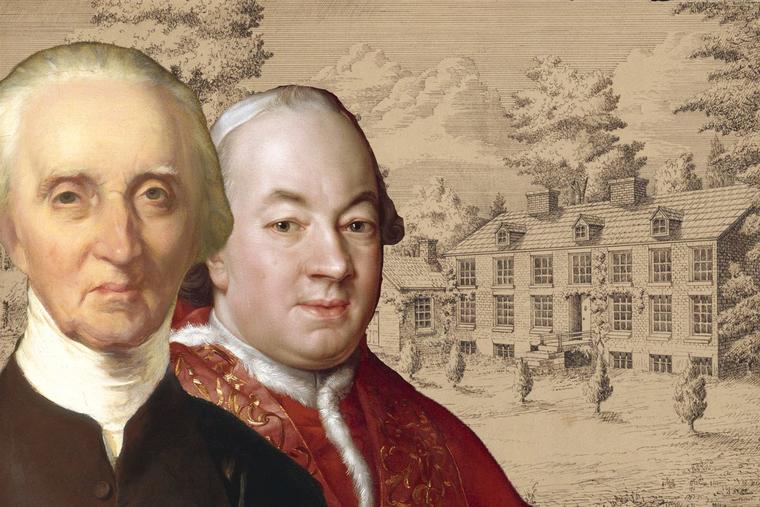
On July 4, 1776, when the Second Continental Congress adopted the Declaration of Independence, there wasn’t a single Catholic present in the Assembly Room of the Pennsylvania State House. Up to that day, anti-Catholic, British-colonial laws prevented Catholics from holding public offices, even in Maryland, where they could worship freely. It was on Independence Day itself that Charles Carroll of Carrollton was elected to travel to Philadelphia to represent his state.
Carroll, the only Catholic to sign the Declaration, did so on Aug. 2, 1776. At that point and throughout the Revolutionary War and the lead-up to the Constitutional Convention, Catholics made up only about 1% of the population of the 13 original states. They were a small minority even in Maryland.
And, despite legal protections afforded them by the eventually adopted First Amendment of the Bill of Rights, they would face much discrimination in the young United States, especially after their numbers began to swell due to immigration from impoverished corners of Industrial-era Europe.
Carroll and other Catholics who became American revolutionaries were, in short, outlying figures within the Church of their era. And while some Catholic statesmen in other countries took note when Britain’s rebellious Atlantic Seaboard colonies declared their independence, Carroll’s role was minor news in the larger Catholic world at the time.
What were some of the events and trends that, by contrast, preoccupied leading Catholic statesmen and churchmen in the summer of 1776? Let’s take a look and put the beginnings of Catholic America’s story in a more global Church-historical perspective.
Rome
The pope and ruler of the Papal States in this period was Pius VI. Occupying the chair of St. Peter for barely a year by the summer of 1776, he was preoccupied with crises connected to the recent suppressions of the Jesuit order both by Europe’s Catholic crowns and by his predecessor.
Among these was a wave of emergency appeals from dioceses all over the world after numerous, learned Jesuits had to step down from seminary and university teaching posts, as well as the anger directed at Rome by France and Spain after Pius appeared to bless Jesuits harbored in Empress Catherine the Great’s Russia as if the order still existed.
Pope Pius solved the Jesuit faculty issue, at least, by backing new secular, diocesan and pontifical educational bodies that could employ ex-Jesuits within localized royal, legal frameworks. The former Jesuit college in Liège, Belgium, for example, was, in its new existence as a pontifical seminary, free to employ ex-Jesuits who continued training missionaries for the underground Church in England and Wales.
Pius VI also faced a diplomatic crisis that summer with the Kingdom of Naples after it refused to honor an ancient ritual of feudal submission to the Papal States, resulting in a bitter standoff. Naples kept nominating candidates for vacant bishoprics who were unfriendly to the Curia, and the Pope kept refusing to approve and consecrate them, thus leaving many episcopal sees unoccupied for years.
Europe
Elsewhere in Europe, absolute monarchs who were baptized members of the Church were attempting to subordinate all ecclesiastical administration and religious houses to their centralized state power.
In the Habsburg Empire, as part of an Enlightenment-inspired program, Emperor Joseph II established a commission to audit and seize the assets of contemplative religious orders that were deemed insufficiently “useful” in social, charitable and educational terms.
The French government of the young and devoutly Catholic King Louis XVI was engaged in similar efforts — a prelude to the ecclesial nationalization program to come in the French Revolution that, ironically, would result in the same king’s execution. And in the British Isles, persecuted Irish and Scottish Catholic communities were leveraging the new conflict between the British Crown and the American rebels by offering to recruit Catholic men to fight for King George III in exchange for relaxations of anti-Catholic laws that had been on the books for centuries.
Asia
The Catholic world in the 1770s was, of course, much bigger than Europe and outposts such as Maryland across the Atlantic. The Church had been growing across Asia as a result of trade, diplomacy, and missionary activity since the Renaissance. The Jesuits had played a major role in all of this, so Catholic communities across Asia were rocked by the Jesuit suppressions of the preceding years.
Because the crowns of Spain and Portugal were, in the face of many great local powers such as Qing China, limited territorially as colonial powers in South and East Asia and could not effectively govern the sprawling network of missions throughout the continent, Rome was able, through its 150-year-old missionary arm, Propaganda Fide, to take direct control of many former Jesuit missions.
In the summer of 1776, for instance, the Holy See authorized the jurisdictional transfer of the former Jesuit Malabar mission in India to the Société de Missions Étrangères de Paris, a French organization unusually loyal to Rome that had been operating elsewhere in Asia since the mid-17th century.
At the same time, in areas of Asia where European colonial power was strong, religious orders were forced to make way for diocesan clergy answerable to bishops who were more loyal to monarchs in Europe than to Rome. This was not always a bad thing for local Catholic populations, as this resulted in the Spanish Philippines, at least in the short term, in bishops ordaining more indigenous men as priests than had previously been the norm, to care for churches taken from the regular clergy.
Africa
The Church had a presence in various parts of Africa, too, in 1776. In the Portuguese-controlled territories of Angola and Mozambique, the expulsion of the Jesuits had left a pastoral vacuum that the increasingly secular-minded Portuguese state failed to fill — abandoning many Catholics in these areas that were being ravaged by the Atlantic slave trade.
In the small but growing French areas off the coast of Senegal and in the colonial settlements in what is today Mauritius and Réunion Island, Louis XVI’s government entrusted former Jesuit missions there to secular clergymen and Holy Ghost Fathers, whose spiritual descendants in time would play major roles in the evangelization of French-colonial Africa long after the French state abandoned its Catholic commitments.
In Egypt and the Horn of Africa, Rome financed Franciscan and Capuchin activity that, in the summer of 1776, met with local resistance from Coptic and Ethiopian Christians who were trying to preserve a hard-won equilibrium as subjects of the Ottoman Empire.
Latin America
The Church’s missionary and colonial expansion in this era was most dramatic across the Atlantic in the Spanish and Portuguese empires and their borderlands. While the suppression of the Jesuits here, too, caused problems, many parts of Latin America by the mid-18th century already had developed diocesan infrastructure and extensive networks of monastic houses and other orders’ missions. In some places, such as Mexico and Brazil, the Catholic populations even rivaled those of European countries.
A new Spanish, Franciscan mission commenced among the Ohlone people in the summer of 1776 in what would eventually become the city of San Francisco in California. Among its leaders was Father Francisco Palóu, a student of St. Junípero Serra, who was himself hard at work that same year at the mission of San Carlos Borromeo to the south near Monterey Bay.
North America
Returning to Eastern North America, the Catholic population there in 1776 included many more than the English-speaking Catholics in Maryland and the other newly independent states. The French had been active with Catholic missionary activity, trade, and empire-building for a century and a half before the British took most of Canada near the end of the Seven Years’ War.
Many French-speaking Catholics — including various populations of Native American Catholics of Huron, Iroquois and other indigenous ancestries — now faced the difficult decision of whether to support George III against the colonial rebels, to join the rebels and fight for their own independence, or to remain as neutral as possible.
Charles Carroll of Maryland, as it happens, had partaken in a failed diplomatic mission in the spring of 1776 to secure support in Quebec for his compatriots in the Continental Congress. To the frustration of the mostly Protestant revolutionaries in the 13 new states, most North American Catholics chose to remain at least nominally loyal to the British Crown. This was partly thanks to the religious freedom they enjoyed in Canada as a result of the Quebec Act of 1774, one of the decisions made in London without their input that had enraged many American Founding Fathers on the eve of the Revolution.
It was thus with a heavy feeling of isolation from most of his coreligionists in North America that Carroll traveled to Philadelphia in July of 1776 and signed the Declaration of Independence. He joined in with the revolutionaries, including Benjamin Franklin, who said they would “all hang together, or … all hang separately,” knowing that, without the support of Quebec or any other neighboring colonies or powers, the odds of winning a war against the mighty British Army and Navy were stacked against them.
The Catholic Legacy of 1776
As we know in hindsight, the new United States of America would — with decisive help from Catholic France — emerge victorious in the Revolutionary War. It would also, in time, become a haven for Catholics from diverse countries who sought religious freedom, economic opportunities and chances to reorient their lives that were denied them in their homelands.
In the summer of 1776, however, Charles Carroll could foresee none of this, let alone the prominent role his family members would have in building up the Church in the young nation. Among them was his cousin John, who would be appointed the first bishop of Baltimore in 1789 by the same Pius VI who was pope at the start of the Revolution.
And no one in the wider Church could have predicted, in 1776, how much the Catholic world itself would change in ways connected to such an outlying, peripheral context of Catholic life as the Carrolls’ — a politically rebellious, mostly Protestant republic where Catholics were a disadvantaged, tiny minority.
The American Republic would outlast almost all the Catholic monarchical states of Europe — including Bourbon France, which had come to its aid, as well as the Papal States, which were dissolved amid the liberal, anti-clerical Italian Risorgimento. And American Catholics would also become one of the most substantial and politically powerful demographic groups in the United States, as well as one of the Church’s wealthiest national populations, coming to the aid of the Vatican and the world’s Catholics on numerous occasions while also being resented for this power and influence — and for their independent streak.
As American Catholics participate in celebrations and conversations surrounding the nation’s 250th birthday, they can highlight the uniqueness of the Catholic experience in this country, from the time of Charles Carroll up to this era of a Catholic-convert vice-president and a Chicago-born pope. But they can also honor and better understand that very uniqueness by studying their own history in its fuller, Church-historical context — by paying greater attention to the always richly diverse, complicated and international character the Church in every stage of her life on earth.
- Keywords:
- america at 250
- charles carroll
- pope pius vi
- american revolution
- independence day
- united states

Bronwen McShea Bronwen McShea is a historian, contributor to many journals and magazines, and author of three books, including Women of the Church: What Every Catholic Should Know. Based in New York and affiliated with the Institute for Advanced Catholic Studies at USC, she has held academic posts at Loyola Chicago, Princeton and Columbia, among other institutions. She holds a Ph.D. in history from Yale and an M.T.S. and B.A. from Harvard.