For Gen Z Women, It’s the Summer of Silence
A few years ago, Harvard University found that growing numbers of adults from Generation Z were identifying as Catholic. In the spring, waves of Gen Z converts flocked to the Catholic Church. Now, this summer, silent retreats are proving popular.
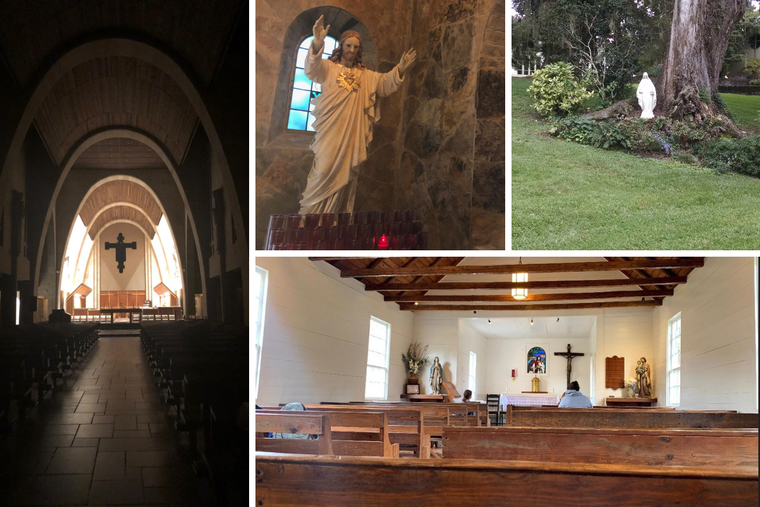
This summer, Gen Z women are headed to monasteries and convents, calling it their “vow of silence summer.”
The buzz started on TikTok, with a video that has racked up nearly a million views, with a comment thread that keeps growing, as, ironically, Vice reported. A young woman posted that when she went to schedule another silent retreat with nuns this summer, they were booked for three months. A TikToker in Europe chimed in that she’d tried to book one in Italy, but by February they were already full.
Silent retreats offer wonderful opportunities for young women to discern God’s direction in their lives.
Margot Tucker, 26, a speech language pathologist in Atlanta, has already been on four silent retreats and is planning a fifth. She went on her first during sophomore year of college while attending the International Theological Institute in Austria. A three-day silent retreat at Stift Heiligenkreuz, the second-oldest Cistercian monastery in the world, was part of the curriculum. But Tucker admitted she was annoyed and restless, wanting to hang out with her friends. Then escaping from a hurricane landed her at St. Bernard Abbey in Alabama for a week. And while visiting friends, she stopped at Casa Maria, also in Alabama, for three days.
Despite attending those retreats mostly out of necessity or convenience, all this time the Lord was working in her heart. By the time she booked her fourth retreat at Ignatius House, her soul desperately longed for silence. “I was burned out and overwhelmed by life and just felt the need to go somewhere and be silent with Our Lord,” she told the Register.
How would she describe her journey? “It’s like a medicine you felt you needed and it tasted bad at first and then it begins to heal you and you develop a taste for it,” she said. “It was the missing piece of my spiritual practice,” she said, adding that she’d always had a lot to say to God, but she finally learned to listen.
Joye Lane-Hill, administrator at Mepkin Abbey’s retreat center, in Moncks Corner, South Carolina, told the Register the center has seen an uptick in Gen Z women inquiring since COVID. And the abbey is again booked throughout the summer.
Why Such Interest?
A few years ago, Harvard University found that growing numbers of adults from Generation Z were identifying as Catholic. In the spring, waves of Gen Z converts flocked to the Catholic Church. Now, this summer, silent retreats are proving popular.
Convents and monasteries are scattered across the United States. Find good selections here and here. Calling a local Catholic church is another option, but you don’t have to be Catholic to attend. One TikToker said to simply look for nuns with Instagram accounts and send them a direct message.
Sarah Burress, a 26-year-old stay-at-home mom from Louisiana, had been struggling about her own path during her senior year in college. She was dating her now husband, and they had plans for marriage and a family. But after praying fervently, she chose first to spend a year doing mission work in an intentional Catholic community with other women.
While at Covecrest, in Tiger, Georgia, Burress participated in an eight-day silent retreat, each day consisting of at least four Holy Hours. Former missionaries had a saying, she said: “There is your life before an eight-day retreat and your life after.”
So what changed for her? Profound healing. “The Lord was walking me through old woundedness I hadn’t realized was there about struggles my family had gone through,” she told the Register.
But why in the world are Gen Z women opting to spend summer vacation in silence with monks, nuns and priests? Tik Toker @mc667868 said it’s a lot of fun. Other women noted the obvious — peace and quiet and time to think. A recent study found that both Gen Z individuals and young millennials have nearly twice the stress level as older adults. Life is literally far noisier than ever before.
News reports suggest career burnout is also a factor. Indeed, burnout has escalated for young women post-pandemic, which coincides with the increase in registrations and waitlists.
Listening for God doesn’t necessarily mean not opening your mouth whatsoever on retreat, but speech is generally reserved for only when necessary for prayer or work. For example, some establishments offer instructional periods or appointments for one-on-one spiritual counseling. Singing the Psalms during services is often encouraged. Meals are generally taken in silence, although some places like the Abbey of Gethsemani provide a small room where retreatants can converse in soft tones. But otherwise, ditch the computer, cellphone, earbuds and chitchat.
Many young women still struggle with the pressure of having it all — love, money, families and career. According to author Suzanne Venker, many Gen Z women want to prioritize marriage and family, but simply don’t know how, having been groomed to focus on careers and not view marriage and motherhood as fulfilling. Venker — a wife, mother and career woman — believes having it all is possible, but not all at the same time. Venker acknowledges changing course can be difficult and suggests women tune out peers, the media and pop culture in order to examine their own minds. Silence facilitates just that.
As one young TikTok woman, keybo362, observed: “Women have reached the logical conclusions of feminism and realized ‘rights’ are not worth the loneliness and moral emptiness. Therefor[e] true values like Christian ethics are rising again because they bring real value to a person’s life.”
Listening for God
This practice of listening for God dates back to the early Christian Church. In the third century, the Desert Fathers began to formalize the practice by removing themselves to the desert where they adopted a contemplative way of life.
Monasteries and convents eventually sprang up and most often adopted the sixth-century Rule of St. Benedict, structuring their days around a balance of prayer and worship, reading sacred texts, and work, interspersed with specified times for meals and rest. Today, monks and nuns sustain themselves financially with a variety of work — harvesting mushrooms, making fudge and fruitcakes, brewing beer, canning jam and honey, etc.
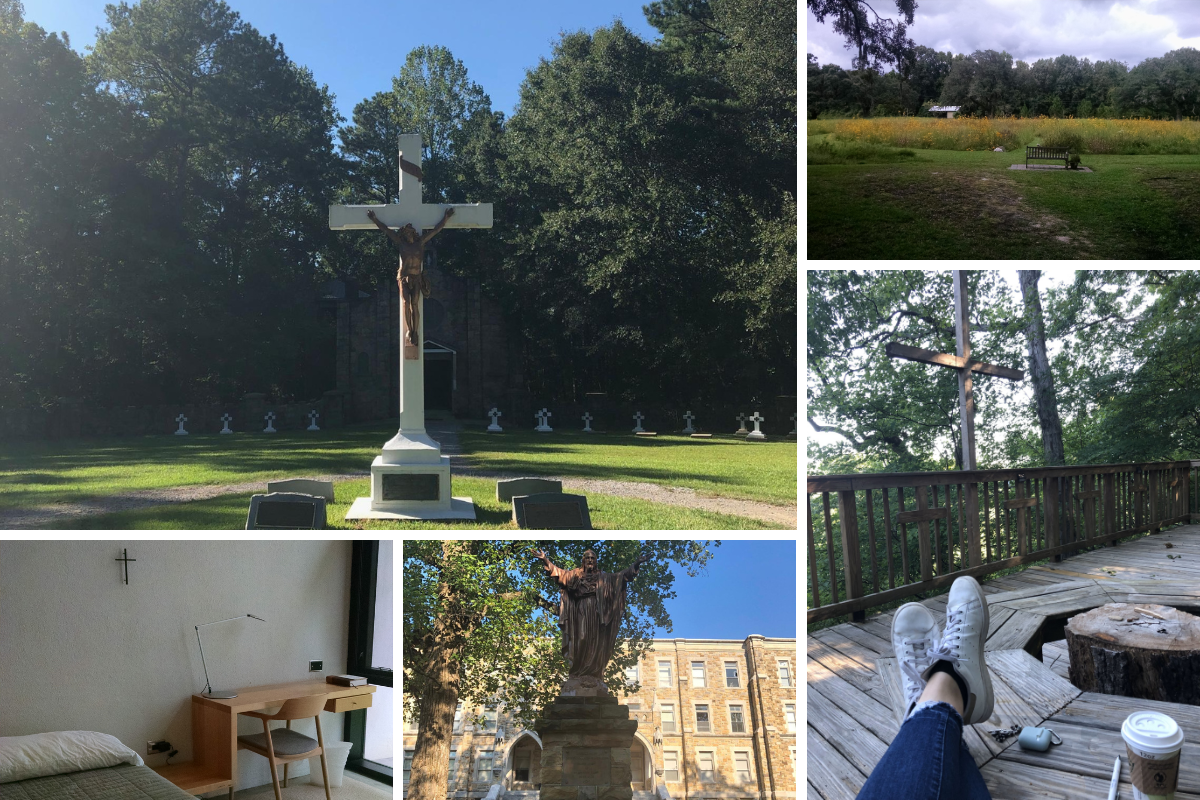
At self-directed retreats, retreatants devise their own schedules around fixed times for meals and optional services. Other retreats have a more structured framework. In either case, on their own, retreatants can pray, attend services, meditate, journal, hike and rest. Some facilities have labyrinths. Others have world-class libraries. At the Monastery of Bethlehem, young women can join nuns in gardening and painting pottery. At Covecrest, which Burress attended, retreatants can spend time alone playing piano or guitar in a music room.
Hospitality is an integral part of St. Benedict’s rule, hence the reason why so many religious orders open their doors to strangers. And although furnishings are simple, monasteries and convents provide everything you need. Some places request a fixed fee, while others accept freewill offerings. Some are free.
This year marks the 20th anniversary of the award-winning, mostly silent, documentary Into Great Silence about monastic life at the 1084 La Grande Chartreuse monastery in the French Alps.
After the death of his friend, a paralyzed French monk unable to speak, Cardinal Robert Sarah spent time at Chartreuse. While there, he was inspired to write The Power of Silence. As he explained, we “encounter God only in the eternal silence in which he abides.”
As Jeremiah wrote in I Kings 19, the Lord was not in the wind or the earthquake or the fire. But once all was quiet and Elijah removed himself to the entrance of a cave, he heard Our Lord’s “still small voice.”
Going away isn’t absolutely necessary to reap the benefits of silence with God.
Stephanie Ugarte, another young woman on TikTok, has never been to a monastery or convent. But silence has become integral to her spiritual practice, whether it’s during her work commute, while taking a walk, or sitting at home with an open Bible.
“As a full-time working wife and mom, I realized I was constantly pouring out but rarely sitting still long enough to really listen for God,” she told the Register. By regularly tuning in to silence, “I’ve come to recognize his peace, his nudges, and his correction,” she said.
Looking back at her days of communing with God, Burress recalled to the Register, “The Lord stooped to my level and touched my wound and brought peace and healing.”
- Keywords:
- retreats
- gen z
- catholic young people
- young women