Kneading Faith into Summer: Lessons From Pope Leo and Sourdough
COMMENTARY: 'Man is born to work as the birds are born to fly...'
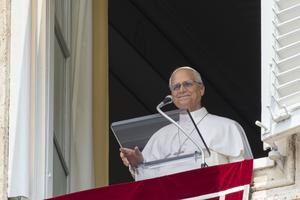
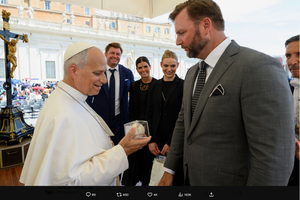
Summertime changes the rhythm of our lives. Pope Leo XIV aptly observed this past Sunday that “during the summer, we have more free time in which to gather our thoughts and reflect, and also to travel and spend time with each other.” He advised that we “make good use of this, by leaving behind the whirlwind of commitments and worries in order to savor a few moments of peace, of reflection, taking time as well to visit other places and share in the joy of seeing others.”
For many families like mine, during summer, school and after-school activities are replaced by shuttling children to summer jobs, playdates, road trips and camps. Professional work shifts, too — there is often an initial surge as people prepare to take time off, followed by a lull. This season feels different from our “ordinary” life, but the work we do during it still matters. It, too, is work to be sanctified.
The Catechism of the Catholic Church (2428) teaches that “in work, the person exercises and fulfills in part the potential inscribed in his nature.” It continues:
“The primordial value of labor stems from man himself, its author and its beneficiary. Work is for man, not man for work. Everyone should be able to draw from work the means of providing for his life and that of his family, and of serving the human community.”
The previous paragraph addresses our duty to work, citing St. Paul’s stark warning to the Thessalonians: “If any one will not work, let him not eat.” This may feel hard to swallow for anyone who is fortunate enough to spend part of summer relaxing at the beach or hiking in the mountains.
St. Josemaría Escrivá, whose feast day we celebrate at the end of June, offers nuance and a touch of poetry to our understanding of labor. He wrote that work “is an indispensable means which God has entrusted to us here on this earth. It is meant to fill out our days and make us sharers in God’s creative power. It enables us to earn our living and, at the same time, to reap ‘the fruits of eternal life,’ for ‘man is born to work as the birds are born to fly.’”
The Council fathers in Lumen Gentium echo this, explaining that the laity’s mission is to sanctify the world “from within like leaven,” striving to bring a Christian spirit to work, to human institutions, and to social structures.
Work, of course, extends far beyond what we do from 9 to 5. For many of us, it includes turning a house into a home, raising children, and serving our local and parish communities. Yet even with this broad understanding, it’s easy to forget in summertime that we are always at work — and that all of it can be offered to God.
Sanctifying work is intentional. That truth came home to me recently through one of my daughters’ hobbies: baking sourdough bread.
Two summers ago, while vacationing in the Midwest, we received a sourdough starter from dear friends. It had originated in San Francisco, traveled to Texas, then to Michigan — and, finally, into our care. Our friends are expert bakers, and my daughter bravely decided to give it a try. The shared starter became a beautiful reminder that our work is a continuation of what others have done before us. Even when we believe our work is “cutting-edge” or brand new, we are building on foundations laid by others.
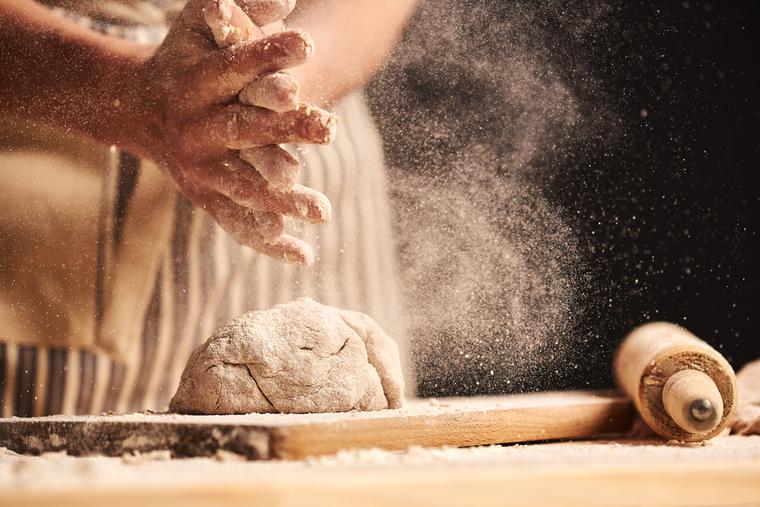
Anyone who has baked sourdough knows that you have to feed the starter and let it rest before using it. Feeding activates it so it can serve as a leavening agent. If you don’t feed it — or don’t feed it well — you get a brick loaf. (We made several of those early on.)
Just like a sourdough starter, we need to “feed” the starter of our work. That means professional development, yes — but also rest, exercise, good nutrition and sabbath time. Feeding the starter requires both nourishment and patience.
Summer is an ideal time to do this: to feed our professional and personal “starter” by taking a class, reviewing the basics, or learning how to better use the tools of our trade — and, also, to rest.
Another baking trick is to add a bit of yeast to the sourdough. This may offend sourdough purists, but it produces a lighter loaf than using starter alone. Where am I going with this? It’s a reminder of the value of collaboration. We don’t have to go it alone. When we join our sanctified work with the efforts of others, the result can be far greater than anything we might produce on our own.
Finally, a brief caution — one not about bread. For the perfectionist or workaholic, it’s worth remembering: Our work is meant to sanctify us, not consume us. If our efforts start to hinder rather than help our interior life, or if our drive to excel makes us uncharitable — even to our own family — then it’s time to reassess.
We’re about halfway through summer. There’s still so much more to do — so much “work” to be done. If we remember that all our efforts are for God’s glory, then summer 2025 will be well-lived.
- Keywords:
- 'pope leo xiv'
- summer