Pray Like a Monk: ‘Monasticamp’ Prompts College Students to Pray and Ponder
Young adults spent last Saturday immersed in the rhythm of monastic life.
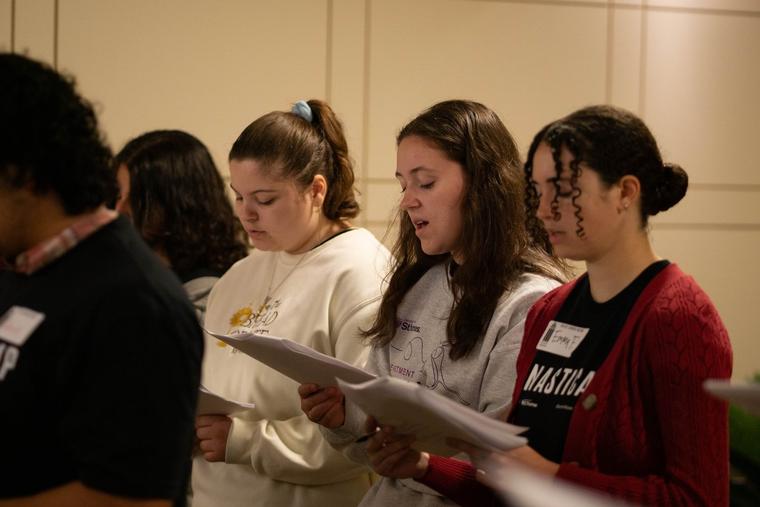
While for many students at the University of St. Thomas (UST) in St. Paul, Minnesota, a recent warm September Saturday meant a break from classes, college seminarian Sean Czaplewski and 35 other students spent the day immersed in the rhythm of monastic life.
Between prayers, participants attended Mass celebrated by a Benedictine priest and workshops given by UST faculty and Benedictine monks and nuns on prayer, illuminated manuscripts, monastic life and vows, social justice, and monastic authors — plus, Gregorian chant.
Welcome to the university’s first “Monasticamp,” held Sept. 13.
Czaplewski, 18, who is in his first year at St. John Vianney College Seminary located on the St. Thomas campus, learned about living in a monastery as he prayed the “hours” of the Divine Office with other students, university faculty and religious from nearby Benedictine monasteries.
Although Czaplewski, who is from the Joliet Diocese in Illinois, regularly prays some of the Liturgy of the Hours with the seminary’s roughly 110 seminarians, he appreciated the change of pace. “I think it’s been nice to just kind of immerse myself into it and open myself up more to just, what does it really look like?”
The Divine Office, also known as the Liturgy of the Hours, consisting of Psalms, other Scripture and prayers, is the daily prayer of the Church.
Canon law requires clergy and members of religious communities considered official representatives of the Church to pray some of the hours, but many in the laity also pray it. Religious in monastic life often pray additional “hours” throughout the day.
Czaplewski said after attending “Monasticamp,” organized by UST adjunct faculty member Kathryn Wehr, he’d like to schedule a longer visit at a Benedictine monastery in Illinois as he continues to discern his vocation.
“Just getting this opportunity to meet some more Benedictines [in Minnesota] and to hear more about their daily life and their convictions in that, I think has been super helpful,” he said.
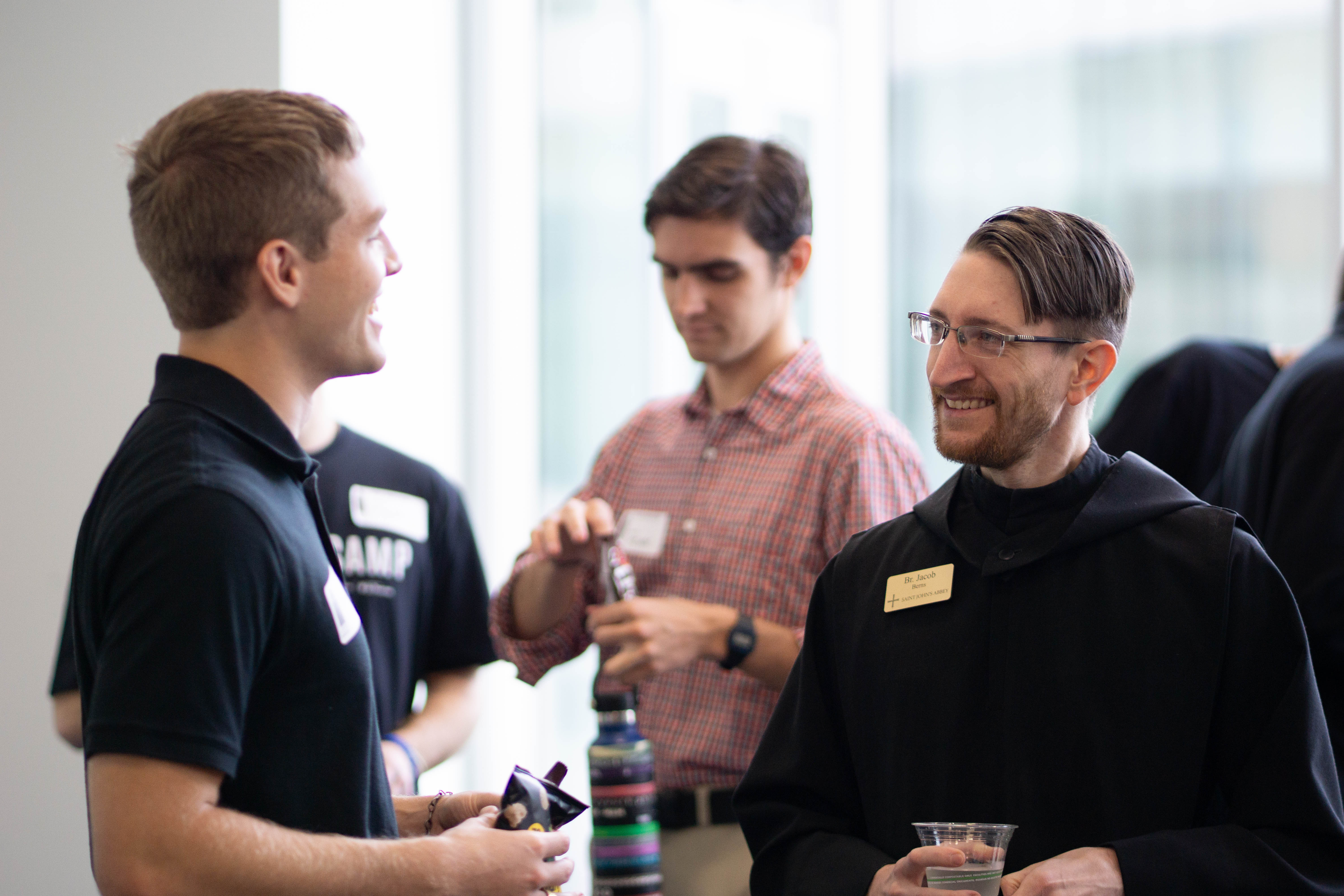
Monasticamp was designed, in part, to give students exposure to an entire monastic day, praying together the distinct periods of prayer in the Liturgy of the Hours, something not always possible for most busy students, including those attending Wehr’s Catholic Studies Department course this fall, “The Spirit and Art of the Medieval Monastery.”
Along with teaching, Wehr is managing editor of the university’s Logos: A Journal of Catholic Thought and Culture.
Benedictine monks from St. John’s Abbey in Collegeville, Minnesota, and Sisters of the Order of St. Benedict at St. Benedict’s Monastery in St. Joseph, Minnesota — communities both located about 80 miles north of the university’s St. Paul campus — participated in prayer and conversation with the students and gave talks on aspects of life in their communities.
About half the participants were St. John Vianney college seminarians, and the remainder were University of St. Thomas students.
Wehr, who is also an oblate of a female monastic community of Cistercians in Wisconsin, planned the “camp” to give students more visibility to monastic vocations and introduce them to the Rule of St. Benedict and how these Minnesota Benedictine communities live it.
While “Monasticamp” wasn’t intended to be a formal day of vocational discernment, Wehr explained that students are hungering for authenticity, and vocational questions come to mind as they are seeking God’s will for their lives. “Maybe it’ll spark something in and feed someone and maybe [prompt them to] want to go on a retreat or think maybe [about] religious life,” she said.
Wehr noted that some aspects of students’ lives in the secular world, such as social media, are not part of monastic life.
“Experiencing this kind of life can be very intriguing because … all those things are kind of stripped away,” Wehr said. “I could find out who I really am as a person and before God. It’s a radical kind of way of life, yet people are continuously attracted to it.”
The Monastic Rhythm
Following a welcome from Wehr, student participants wearing their modified “habit” for the day — black T-shirts emblazoned with “Monasticamp — began their monastic day with one of the “hours” in a university chapel, seated in two halves facing each other as in a monastery.
After prayer, Elena Zolnick, director of sacred music at St. Paul Seminary in St. Paul, gave participants the first of two lessons on Gregorian chant tones they would chant during later prayer hours. While each religious community has its own way of praying the Divine Office, the use of chant makes the prayer more deliberate and community based, Zolnick said.
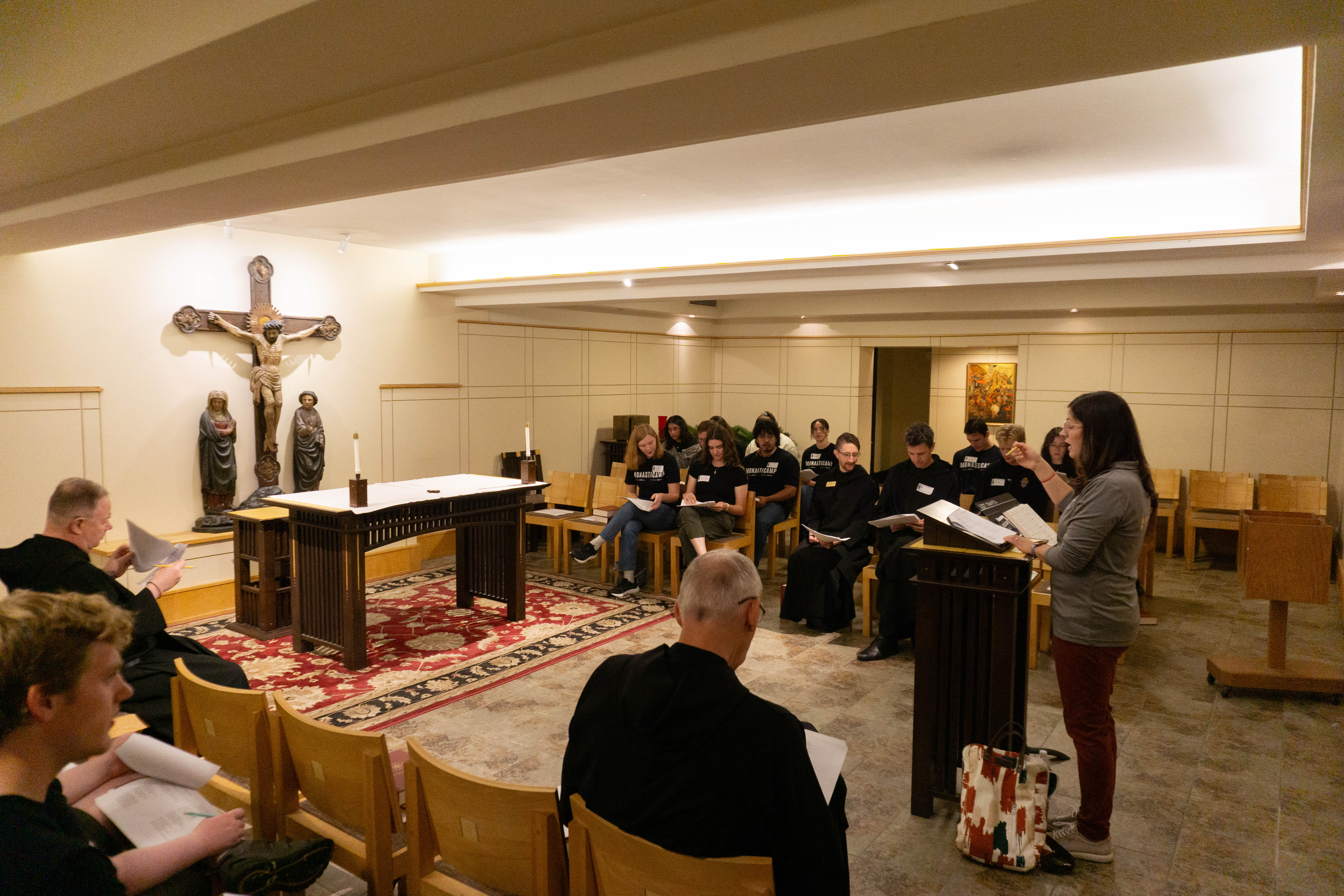
“Singing will always enhance prayer, as long as it is based on beauty,” she told the Register. “One of the things I talked about was how we need beauty because it can open the door of a closed heart to the Lord. That’s very important. And so the singing that we do must be based in beauty. Not everybody has the same gift or the same talent, but that must be the intent, and it must be based in that.”
Learning the chant was somewhat challenging for UST junior Stephanie Rash, 20, who decided to attend Monasticamp after taking one of Wehr’s courses last year.
Rash said she wasn’t familiar with the Liturgy of the Hours before the camp but sees it as part of the rhythm of monastic life.
“I’m not a very musically inclined person, so that’s been just a little tricky and interesting to see how that works and kind of get a feel for monastic life.”
Mass was celebrated by Benedictine Father Lew Grobe, who spoke in his homily about fourth-century Church Father St. John Chrysostom, whose memorial was that day.
“Let us put in the mind of the two foundations our capital of faith,” Father Grobe said. “First, that we receive God’s mercy, never thinking that we are beyond Christ’s image. And, second, to let that mercy that we receive shape how we live, how we speak, and how we live our lives as Christians; so that our life itself, not just our words, proclaims in the world our faith and trust in God.”
Monastic Life and the Benedictine Rule
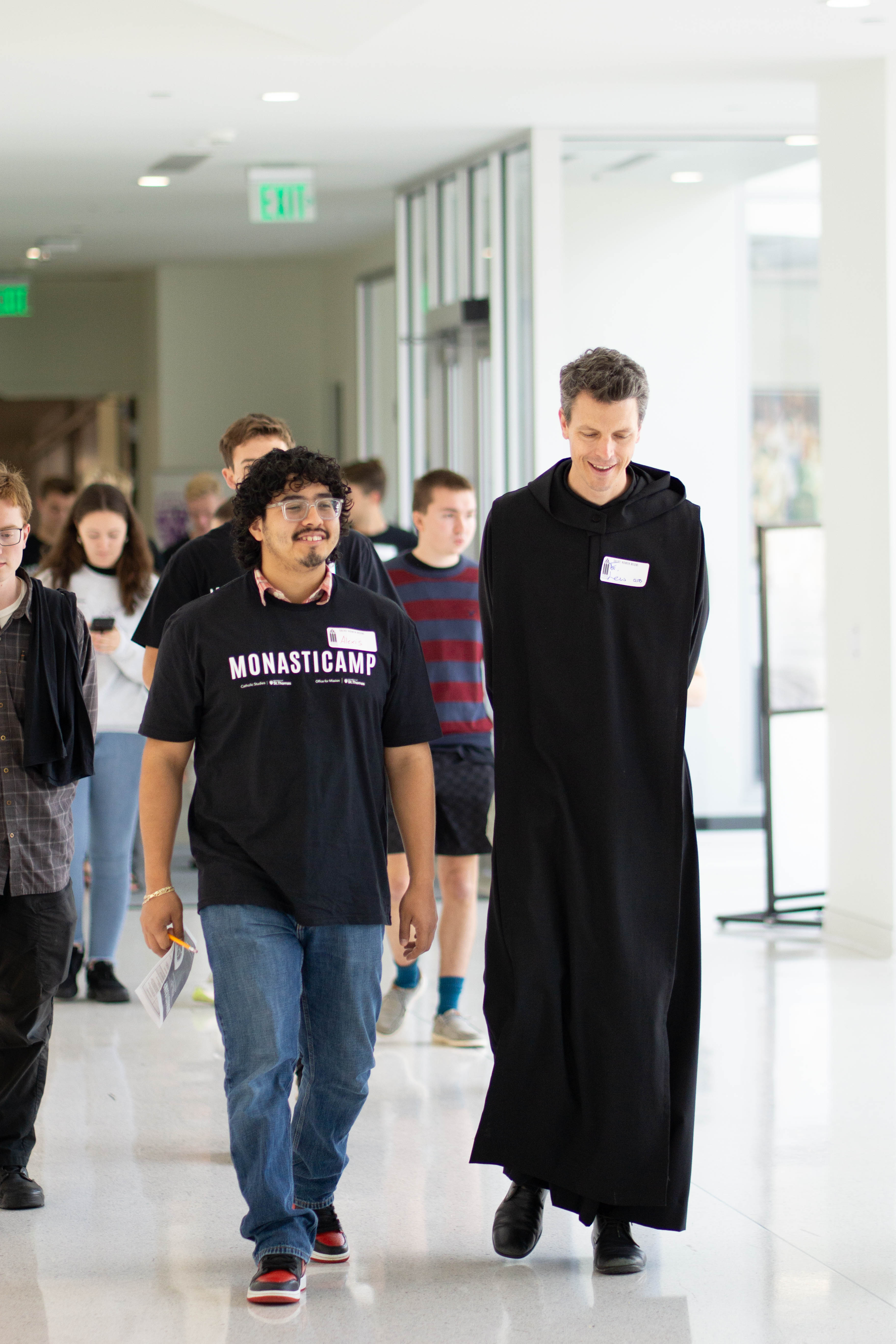
After Mass, Monasticamp participants learned about a foundation of monastic life, the Benedictine Rule, from Benedictine Father John Klassen, who joined the St. John’s Abbey community in 1971.
Father Klassen told the Register he appreciated students’ interest, receptivity and engagement in learning about monastic life and in his talk on the Rule developed by St. Benedict of Nursia in the sixth century that emphasizes balanced principles of prayer, manual labor and community life.
Father Klassen, abbot emeritus of the St. John’s community, which was founded near St. Cloud, Minneosta, in 1856, previously taught at several universities and now does formation work in the community, which in 2017 had 110 professed monks.
Father Klassen shared with participants how the Rule, which he described as a Christocentric path for spiritual transformation in monastic life that promotes respect of individual members, flexibility and moderation, has worked as a flexible document, guide and pathway for life.
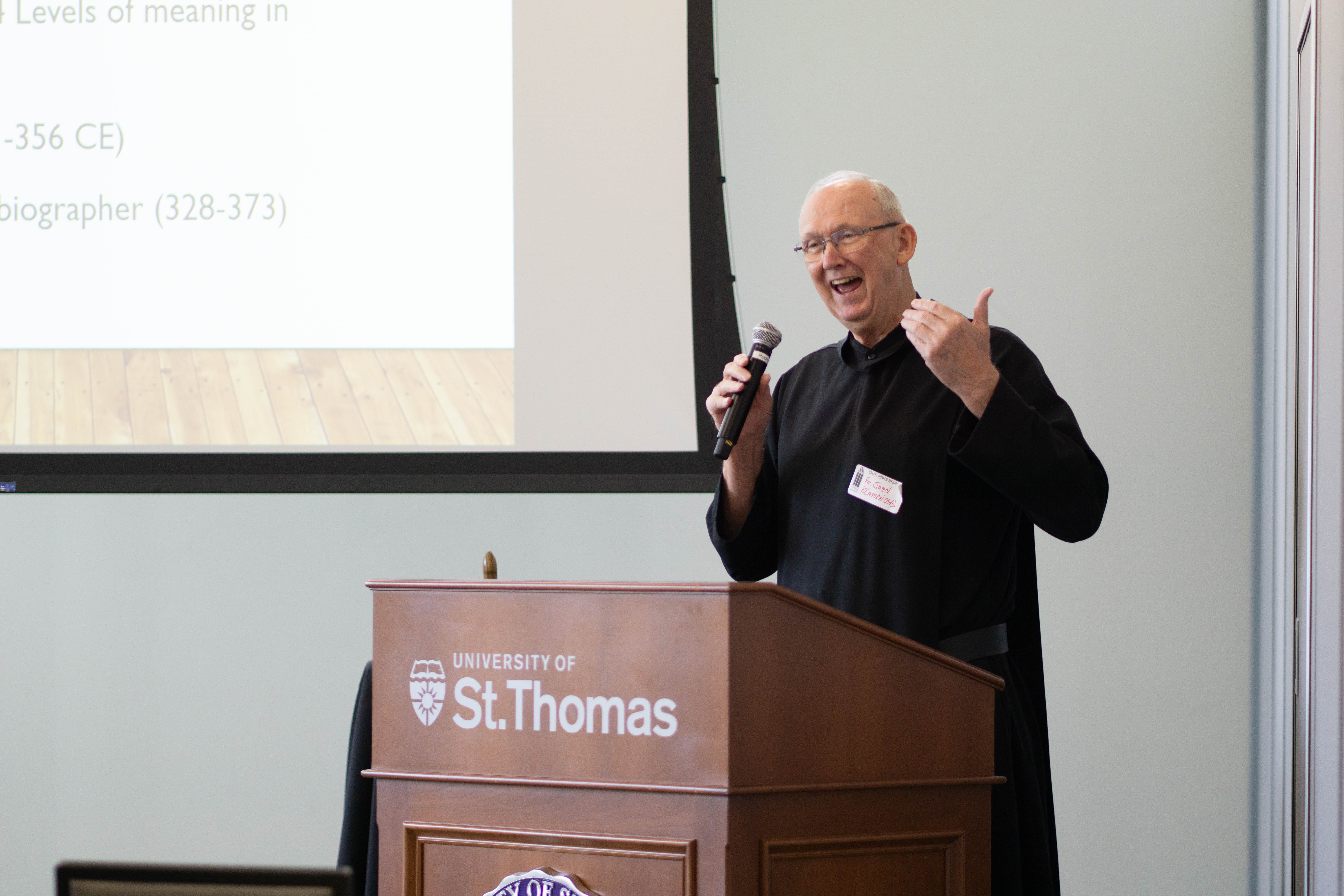
“Fifteen hundred years [after its introduction] it is still being used,” he said. “You get a sense … this has to be a pre-tested, durable way of thinking about living a human life.”
“Benedict is convinced that as you live the life, go to prayer, do your work, live in community, and you’re paying attention, that, in fact, you are gradually changing,” Father Klassen said. “You’re becoming more aligned with the meaning and message of the Gospel. Both individuals and communities can make real spiritual progress on this side.”
Benedictine Sister Hélène Mercier has sought to live prayerfully and in community in the Sisters of the Order of St. Benedict in St. Joseph, which since its founding in 1857 has served in education, health care and other ministries, according to its website. Sister Hélène, previously a member of the Benedictine Priory of Montreal, led a Monasticamp workshop on prayer with Scripture through the prayer technique of lectio divina (“divine reading”).
For Benedictine Sister Eunice Antony, it was the opportunity to teach, not participate in monastic life, that drew her to the community in St. Joseph; but she said through her 71 years as a professed sister, God has gradually showed her the life isn’t only about work. She said the community now places more emphasis on monasticism after a period of focusing more on apostolic work.
“We were much more apostolic, but we regained our charism to become, to live in community, to pray, work and live together, she said. “And that’s not a big seller for a lot of people, but that’s who we are, and who God calls to this way and life will come.”
The laity are now better equipped to take on some of the apostolic work the sisters did, she said, “so I think we can much more claim our monasticism and say we have something to offer as prayer and work and community, and to work through our differences — and what does the world need more than ever before? How to live together.”
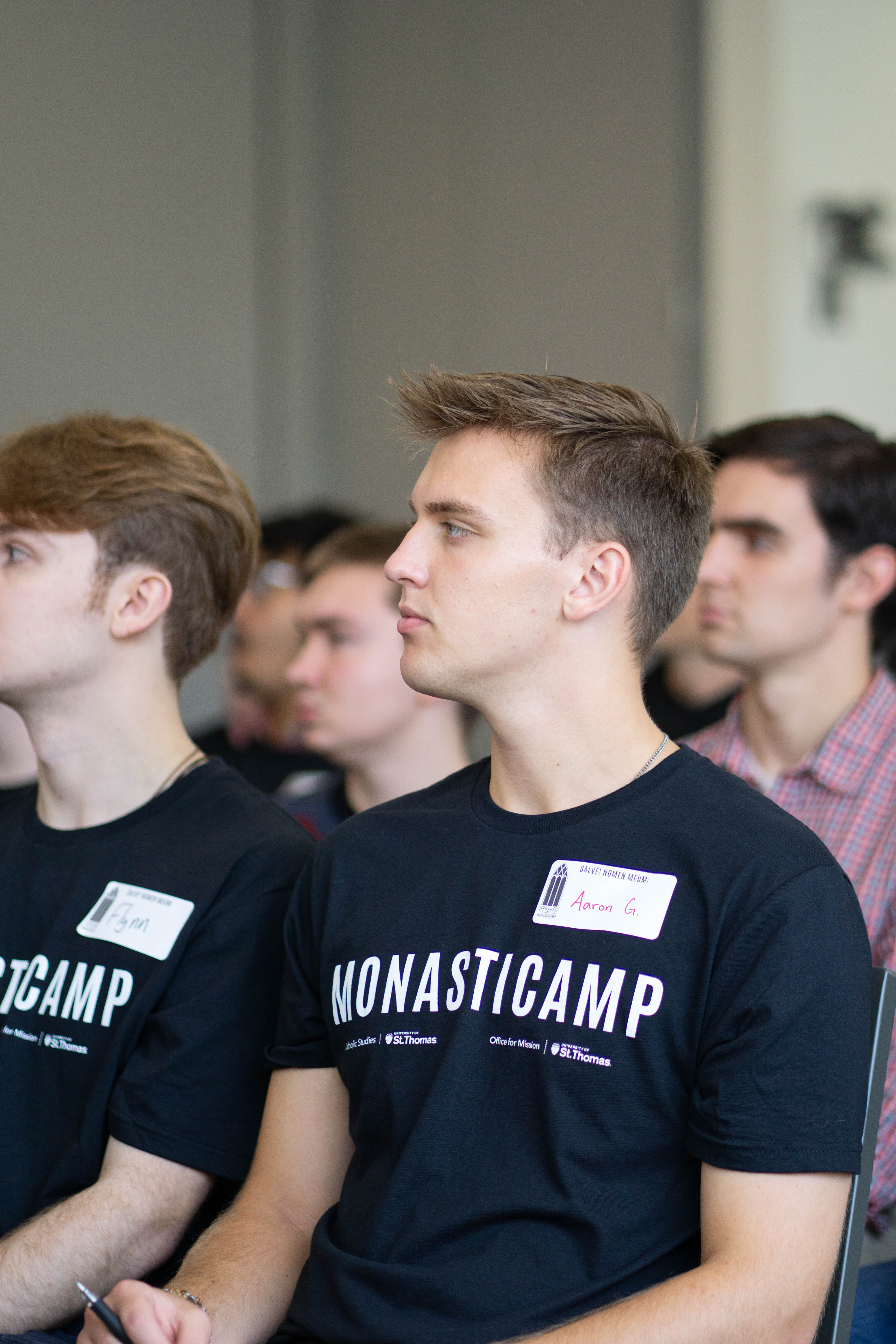
Rash said she isn’t now sensing a call to religious life, but she enjoyed learning at Monasticamp about the lives of Benedictine sisters and monks. As she is completing a degree in Catholic studies and digital media arts, Rash said she hopes to use what she’s learning to make her own contribution to the Church.
“I think even as a person who isn’t going into religious life, it’s helpful and good to know how religious make their lives,” she said, adding that “anything where it’s learning how to pray in a different way, I think it’s a worthwhile day.”
- Keywords:
- monastic life
- catholic life
- catholic college students
- st. benedict
- benedictine monks
- Benedictine convent