‘Sacred Wine’: How Monks Built Europe’s Wine Culture
Catholic author Emily Stimpson Chapman offers a personal glimpse into the colorful world of monastic wine, journeying through monasteries in Italy, France and Spain as windows into Europe’s spiritual and cultural heritage.
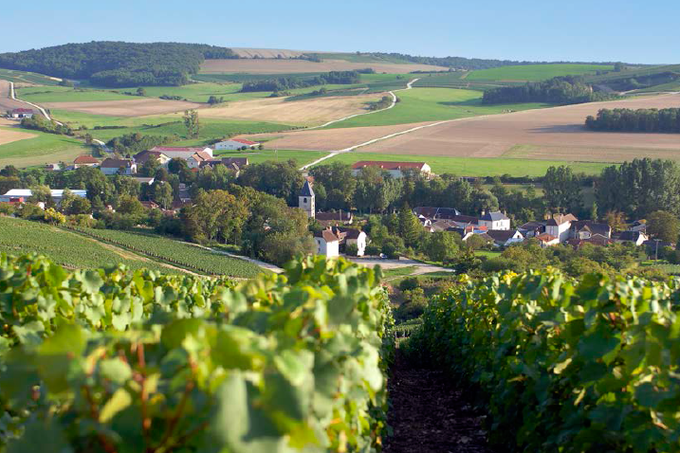
Wine is one of the few realms in which Catholic civilization still speaks in a tangible way. Across Europe, vineyards first cultivated by monks continue to bear fruit, often within monasteries that have been revived after periods of upheaval. Bottles are aged today in cellars shaped by centuries of monastic life, with saints’ names still inscribed on labels, linking contemporary wine culture to a Christian worldview that once structured all aspects of daily life, from work to earthly delights.
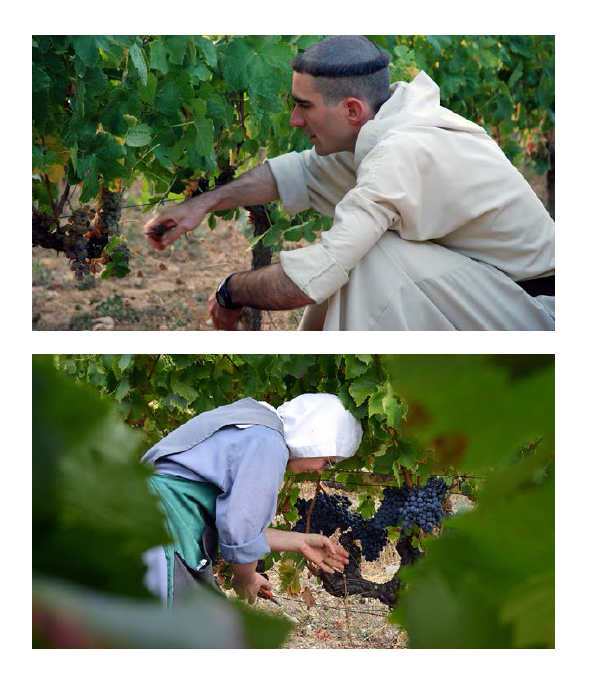
This reminder lies at the heart of Sacred Wine: The Holy History and Heritage of Catholic Vintners (Marian Press), Emily Stimpson Chapman’s meditation on the Church’s role in the formation of European viticulture. The book unfolds through 12 monasteries, each the basis for a story through which the most luminous and troubled chapters of the last centuries are told: from knighthood to revolutions, from secularization to renewal.
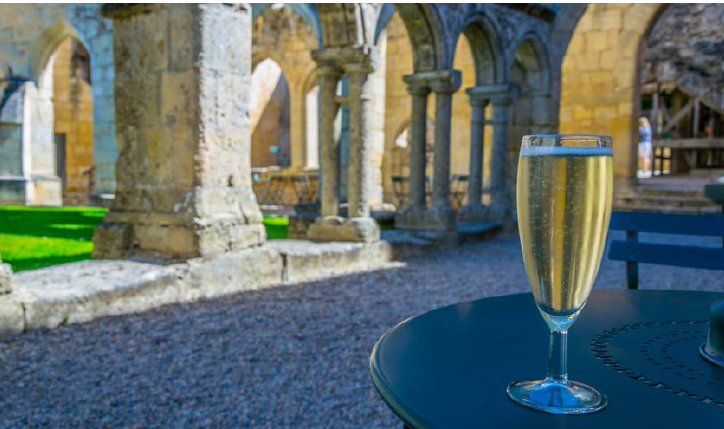
The itinerary is deliberately European, centered in Italy, France and Spain, where much of the classical monastic wine tradition was forged. Although their iconography invites reverie, these houses are not treated as picturesque destinations but as living witnesses through which Europe’s spiritual and cultural drama can be read.
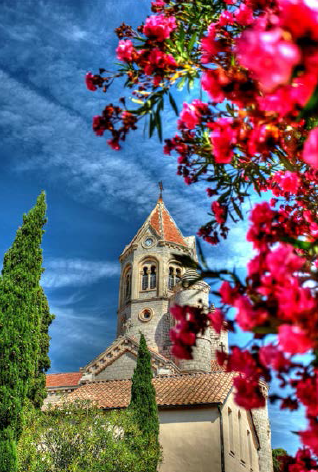
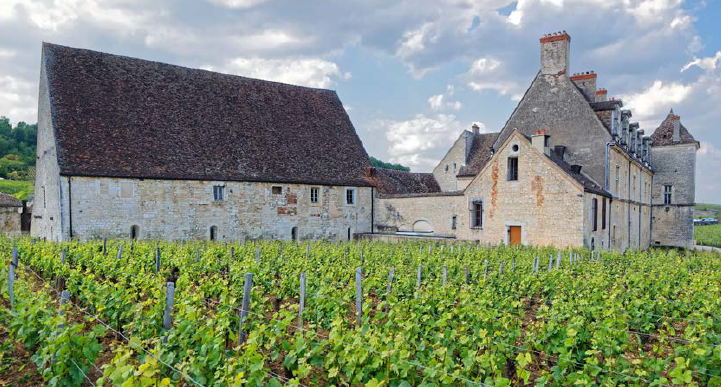
The journey begins at the Abbey of Lérins, off the coast of Cannes in Southern France. Tradition traces vines there as far back as the late fourth century, to the era of the hermit St. Honorat, who settled on the island that now bears his name. A testament that what later centuries would come to regard as exceptional was the most natural activity in Christian Europe.
Chapman then shows how wine’s meaning moved from the simple joy in the Psalms to the Real Presence in the Eucharist and how monastic communities helped shape the very architecture of European wine culture.
From Blessing to Presence
In Chapman’s telling, what we notice first — landscapes, labels and taste — are only the visible surface of a deeper spiritual reality that gives them life.
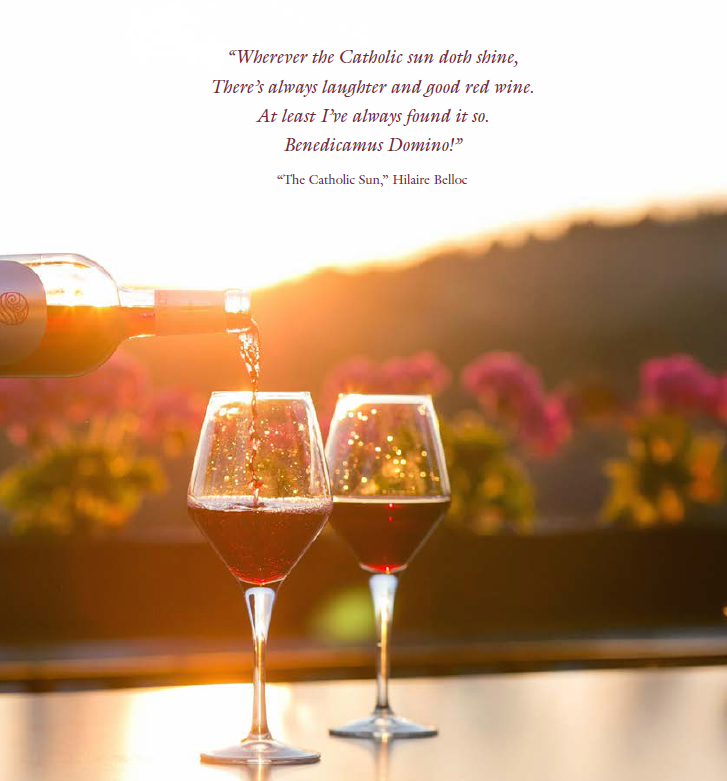
She insists that wine is first a sign before it is a product. It “bore witness to God’s love,” she writes in her book. A God who wanted his children to know “joy, laughter, and peace.” In the Old Testament, wine “gladdens” the heart. In the New Testament, it becomes something immeasurably more. In the Mass, every drop is transfigured: It becomes not merely a sign of blessing, but blessing itself, Body, Blood, Soul and Divinity.
Hence her claim that “the sign becomes the thing signified. The symbol becomes reality.” Wine’s capacity for this is in her view not accidental; it is how God intended wine from the very beginning. For that reason, “something of the sacred lingers about every grape and every glass,” a hint of a greater transformation yet to come.
Wine thus becomes one of the strongest metaphors for human life. It is “a bit like us — made for more,” pressed by sorrow, maturing in hidden places, changing with age, and above all “destined for glory.”
Chapman sets this Catholic sensibility against a certain Protestant suspicion of alcohol, which often rejects wine because of its potential for abuse. By contrast, Catholics receive it “as a gift to treasure, not an evil to fear.” This passage also becomes a timely reflection in an age of confusion about alcohol, when many younger people either shun wine as unhealthy or, at the other extreme, turn to alcohol only to dull their restlessness.
Monks as Innovators, Stewards and Civilizers
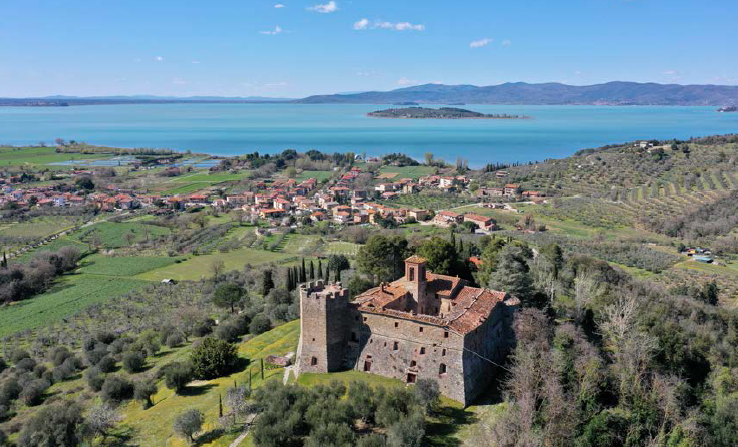
From this sacramental vision of wine, Chapman explores the communities that turned this vision into lived practice — among them the iconic Benedictine Abbey of Monte Oliveto Maggiore in Tuscany, where the Renaissance frescoed cloister stands beside working vineyards and where monastic life, hospitality and winemaking still form a single fabric. The site was also listed by National Geographic among the world’s 25 best places to visit.
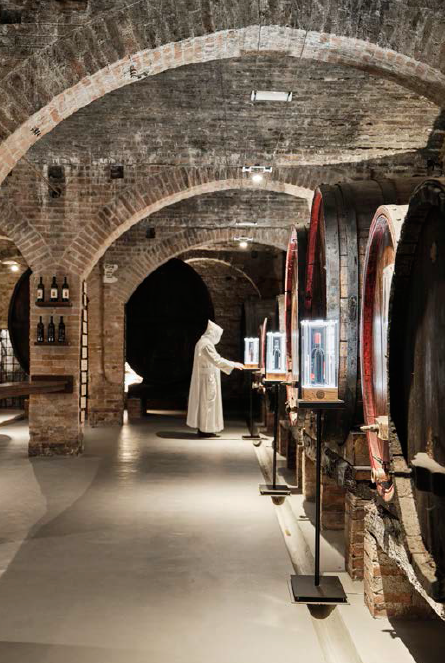
The 12 profiled monasteries represent, in this sense, engines of cultural formation. They show how monks and nuns developed the extraordinary knowledge that made monasteries the ultimate fabrics of excellence. They compared soils, tested grapes, refined presses and perfected barrels and corks. They transmitted knowledge across houses and generations, using the gift of time that religious life uniquely afforded.
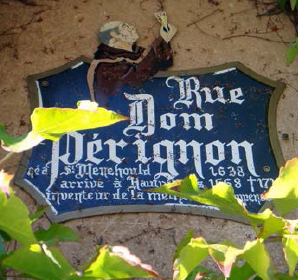
The result was nothing less than a revolution in winemaking. Châteauneuf-du-Pape, Chablis, Champagne, Chenin Blanc, Clos de Vougeot — some of the greatest wines in history, along with decisive technical advances — owe their origins to Catholic religious communities. The pattern even crossed the Atlantic, since the first vineyards in the Americas were planted by missionaries, most famously by St. Junípero Serra in California.
Yet Chapman avoids easy romanticism by situating each monastery within the full drama of European history: knighthood and crusades, royal patronage and confiscations, revolution and secularization — forces that could both imperil and sustain monastic life. Some houses were suppressed; some were restored. Important vineyards were lost, then replanted, relying on the techniques that survived the test of time.
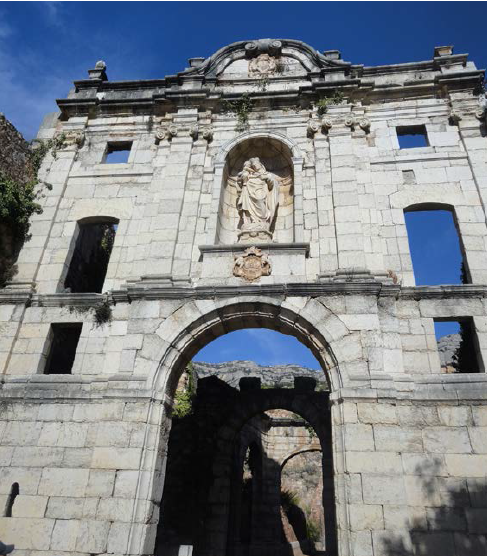
This is clear at the Cellars de Scala Dei in Tarragona, Spain: After the 1835 Mendizábal confiscations — when the Spanish state dissolved monasteries and seized their lands — five lay families kept the Priorat vineyards alive by reviving the old Carthusian plots; in 1974, the Cellars de Scala Dei moved back into the former monastery stables to cultivate the historic clay and schist vineyards.
Across these sites, soil and climate reward patience and fidelity. Pruning and harvest echo the rhythm of prayer and liturgy. The author repeatedly shows that wine was always ordered simultaneously toward the altar and hospitality. It was never simply a private luxury, but a gift meant for worship and community.
With each glass poured, Chapman suggests, we are not merely tasting history — we are participating in it. The wine we contemplate, smell and taste bears witness to the work Christ is doing in us: “caring for us, cultivating us, transforming us, maturing us day by day, often imperceptibly.” Every vineyard, like every soul, carries a promise: that what is tended with patience can, in the end, bear fruit for glory.
- Keywords:
- monastic life
- wine
- catholic books