Beata Home Adorns Catholic Houses With Beauty
Giving beauty permission to reside within the domestic church initiates a deep imprint within the heart.
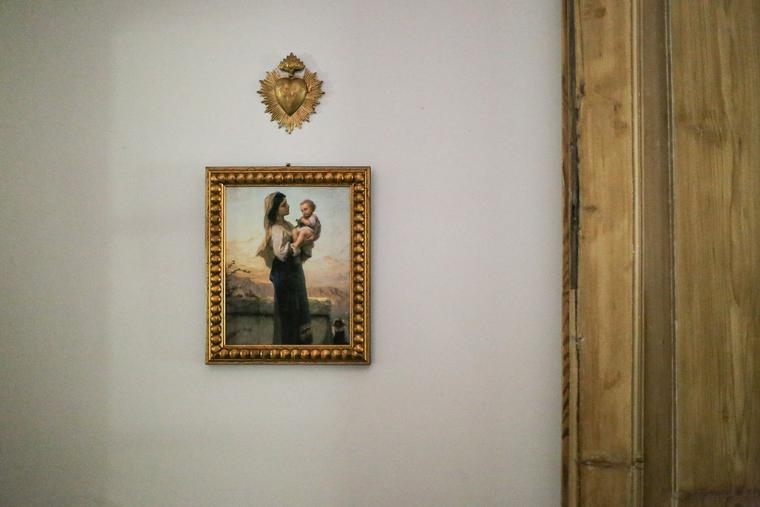
My breath caught in my chest as I uncovered a delicately wrapped package to reveal one of the most striking images I have ever seen of the Madonna and Child, painted by Adolphe Jourdan. It was not just the subject that stopped me in my tracks, but the vibrancy of the color and dimension of the brushstrokes.
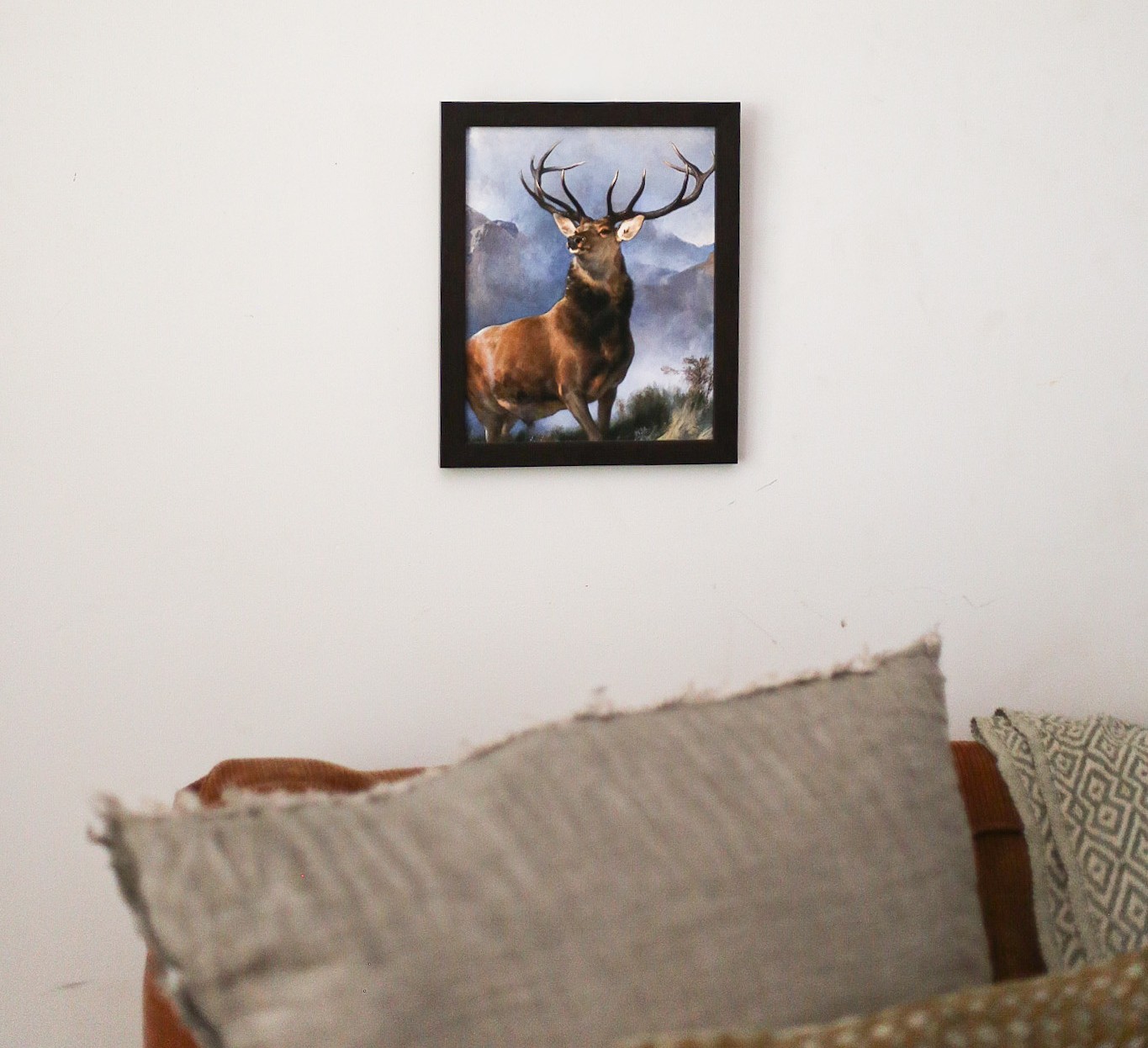
I quickly recognized the quality of this print — and The Monarch of the Glen by Sir Edwin Landseer, which I had also purchased.
Both prints are from the newly opened Beata (“Blessed”) Home, which offers a breadth of beautiful artwork that facilitates contemplation in the domestic church. The quality prints have been mistaken for original artworks.
Beata Home, with an online presence and based in Kansas City, Missouri, was founded by Katie Murray this past spring. The mother of four was inspired by museum art while living abroad. She felt that the curated beauty that exists in museums and churches should be available for the home; quality being the obvious difference. Murray’s attention to detail in finding a partner company that specializes in fine art printing and framing shines through.
Using archival inks and museum-grade paper that provide a rich painterly finish, Beata Home sells striking prints with multiple framing options. Murray says giclée paper produces high-quality, long-lasting prints with exceptional color accuracy and detail, making her prints stand apart.
“It’s known for its archival properties, meaning it resists fading and yellowing over time,” Murray described the paper for the Register.
Beata Home offers a wide range of subjects, from sacred to vintage art that consists of seasonal themes, beautiful landscapes and animals.
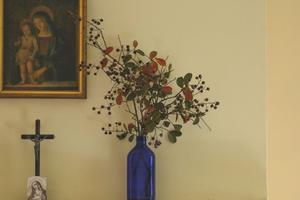
Author Megan Madden acquired a prayerful Madonna print from Beata Home. Intentionally placing beautiful images within the Madden home is a priority, she said, owing to its ability to aid in “remembering to pray and serve our families well.” When speaking of Beata Home, Madden told the Register that it is “more than a small Catholic shop; it is a movement to evangelize through true beauty, which always points to God himself,” adding that the strategic placing of sacred art throughout the home is a “quiet way to remind ourselves of the reality of heaven.”
Giving beauty permission to reside within the home initiates a deep imprint within the heart.
“What we surround ourselves with matters,” Murray said. “It shapes our imagination and forms our hearts. I truly believe that beauty in the home can reorient us to what matters most — it sets our minds on things above.”
That’s exactly what home should do.
Among the countless sayings regarding the home, the phrase “home is the nicest word there is,” attributed to author Laura Ingalls Wilder, awakens the imagination. “Nice” certainly comes to mind when contemplating the place that invokes sighs of relief upon entering. While there are less saccharine and more sophisticated ways to describe the home, one is hard-pressed to find a better word.
Late English philosopher Roger Scruton said that “we are needy creatures, and our greatest need is for home … [which we] achieve through representations of our own belonging, not alone but in conjunction with others. All our attempts to make our surroundings look right — through decorating, arranging, creating — are attempts to extend a welcome to ourselves and to those whom we love.”
Our inherent neediness for home, and the work we undergo to make our mark upon it, is what evokes this sense of “nice” referred to by Wilder.
The effort to enkindle beauty stems from a longing to care for the place that shelters and shapes us.
An entire industry seeks to satisfy this innate desire; queuing within any store draws attention toward racks brimming with home decor magazines. Yet we intuit that there is more to beauty’s necessity than the superficiality showcased in print.
Home is more than a means to impress others; it is a vessel for beauty that is a source of life, forming the imagination and conscience.
It is the sanctuary within which we shape our children and our lives by the joys and challenges of family life.
As Scruton points out, we are extending a “welcome to ourselves and to those whom we love.” Tending to the home is a complex form of creative work. It is a work both practical and supplementary. The recognizable labors are found in upkeep and maintenance so that when it rains, the water stays outside, and provisions for nourishment are ready when hungry.
Making one’s home aesthetically pleasing and cozy is the most obvious example of supplementary work. Laboring does not stop there. Rather, the home requires spiritual tending, as it is the place for formation and sanctification. These spiritual needs mirror those physical needs: resistance of the bad elements, nourishment for the hungry soul, and aesthetics to ignite the imagination to ponder the Divine. One method for spiritual formation is through exposure to beauty.
Employing beauty to create aesthetically pleasing places also nourishes the soul.
Scruton says that beauty matters, that “it is not just a subjective thing but a universal need of human beings. If we ignore this need, we find ourselves in a spiritual desert.”
An opportunity for evangelization is available in every home, reserved not only for guests, but also for those who live there.
Beauty beckons the onlooker to contemplation and prepares the soil to receive the seeds planted by the Lord. Therefore, it is crucial to make a distinction between dressing up a home for the sake of impressing outsiders and enkindling beauty to form and bless our families.
Touchstones of beauty within the home transcend the present reality by touching the imagination and awakening the senses to ponder God. It is in this way that the home serves as a prefigurement for eternity.
As Murray emphasized, “Sacred art speaks quietly but powerfully to hearts. It teaches reverence, invites wonder, and reminds what is true and good and eternal.”