‘Wintering’ the Catholic Way
What the saints have shown us ...

Online searches at this time of year turn up books and stories about wintering, that is, resting in the winter months, referencing phrases like the permission to pause and power of rest.
God, of course, commands us to rest.
The saints know how to live well in the seasons God gives us, including wintertime.
There is indeed something so restful about being inside a warm home on a cold day.
Did you know St. Thérèse loved snow? As she recalls in her autobiography:
The time for my reception of the Habit had arrived. ... The wait had been long, but what a beautiful celebration it was! Nothing was missing, not even the snow. I don’t know if I’ve already told you how much I love snow? When I was small, its whiteness filled me with delight, and one of the greatest pleasures I had was taking a walk under the light snowflakes. Where did this love of snow come from? Perhaps it was because I was a little winter flower, and the first adornment with which my eyes beheld nature clothed was its white mantle. I had always wished that on the day I received the Habit, nature would be adorned in white just like me. The evening before, I was gazing at the gray skies from which a fine rain was falling every now and again, and the temperature was so mild I could no longer hope for any snow. The following morning the skies hadn’t changed. The celebration, however, was wonderful. ... I entered the cloister once more, and the first thing that struck my eye was the statue of “the little Jesus” smiling at me from the midst of flowers and lights. Immediately afterward, my glance was drawn to the snow, the monastery garden was white like me! What thoughtfulness on the part of Jesus! Anticipating the desires of his fiancée, He gave her snow. Snow! What mortal bridegroom, no matter how powerful he may be, could make snow fall from heaven to charm his beloved?
In the footsteps on the Little Flower, take a restful walk during a light snow or head out after a snowfall to enjoy its loveliness. And then maybe delve into her own words.
St. Gianna, an avid skier, contemplated God amid his creation too.
As she wrote to her husband Pietro before their marriage, “Yesterday and today, splendid sunny days. [ . . . ] It’s wonderful. When you are at the very height, with a clear sky, the very white snow, how you enjoy and praise God. Pietro, you already know it, I feel so happy when I am in contact with such beautiful nature, that I would spend hours contemplating it” (An Exemplary Couple).
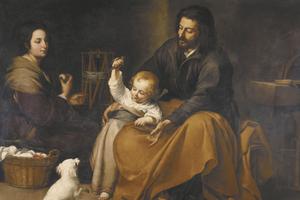
Let us take full advantage of the comfort and coziness winter affords us to embrace home and hearth, too.
“Ah! There is nothing like staying at home, for real comfort.” So says Mrs. Elton in Emma by Jane Austen. (Quick aside: The hero of that novel and my favorite Austen hero, Mr. Knightley, is more endearing for moving into the home of his father-in-law, who worries about wintry weather as the novel unfolds.)
So if the weather is inclement, get out that knitting project, return to journaling, try out that new recipe and read or read that novel you love (if you need ideas).
Slow down. Have dinner by candlelight. Keep up the twinkle lights. Enjoy hot chocolate or a steaming cup of coffee or tea. Cheer up your space with some fresh blooms.

Do so at a restful pace.
Thomas Aquinas’ “five remedies for pain and sorrow” can be helpful for the winter blues and as an aid to wintering (background).
- Do something you like, perhaps baking (I suggest scones) or doing a preferred activity.
- Maybe have a good cry.
- Seek out friends.
- And contemplate truth.
- Also, consider sleep, an afternoon nap (even Jesus reminds us to “rest awhile”). Aquinas also recommends baths, if you’re so inclined.
Such seasonal moments of prayerful pause are good for us.
As St. Edith Stein reminds Catholic ladies in particular so well, “Every woman, in the way most suitable to her, should try to find ‘breathing spaces,’ moments in which she can return to herself and rest in God.”
- Keywords:
- winter
- catholic saints
- theology of home
- catholic living
- st. therese
- st. therese of lisieux
- edith stein
- st. thomas aquinas

Amy Smith Amy Smith is a Register senior editor who edits devotions and features for print and online. Fueled by prayer and coffee, she enjoys writing about everything from Jane Austen to saints for the Register. She is the author of The Plans God Has for You: Hopeful Lessons for Young Women (Emmaus Road Publishing). Her writing has also appeared in various other Catholic publications. She has a master’s degree in journalism and a B.A. in English.