The Home of the Easter People
The Easter home is a sacramental home, one that dedicates the week and the rhythms of daily life to proper spiritual preparation for Sunday Mass.
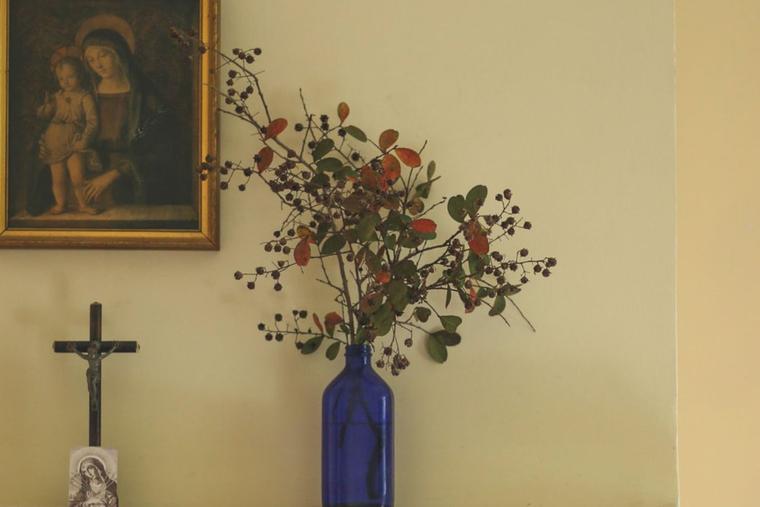
In his 1986 Angelus address in Australia, St. John Paul II famously declared, “[Catholics] are an Easter people and alleluia is our song!”
This statement has become a widely recognized slogan, frequently displayed in Catholic homes. Its repeated use, however, causes us to overlook its deeper significance. What does it truly mean to be an “Easter people”?
Life’s experiences challenge what is often perceived as a saccharine phrase. By examining the earlier portion of the same address, we discern a richer meaning in the Holy Father’s words: “We do not pretend that life is all beauty. We are aware of darkness and sin, of poverty and pain. But we know Jesus has conquered sin and passed through his own pain to the glory of the Resurrection. And we live in the light of his Paschal Mystery — the mystery of his Death and Resurrection.” Ah, there it is.
To be an Easter people is to embrace crucifixion, not only through the sufferings of life which undoubtedly come, but primarily by the daily dying to self in order to will the good of others, as Christ modeled. The beauty of belonging to the Church Militant lies in experiencing cycles of both crucifixion and resurrection, as earthly life is marked by both hardship and triumph. The initial battleground is within the will, and the primary theater is the home, raising the ultimate question: What distinguishes the home of the Easter people? It is characterized by the deliberate cultivation of the interior life.
The home serves as the foundational school for learning to love. As St. Thomas Aquinas stated, “to love is to will the good of the other.”
Our initial understanding of love is shaped by our conception of God. By deepening our understanding of the Blessed Trinity and humanity’s relationship to it, we establish a foundation that enables love to flourish.
Within this context, we discern the purpose of life. Furthermore, by cultivating the interior space of our souls, we allow this transformation to permeate our homes.
The development of a domestic culture is comparable to cultivating a garden. This process begins with preparing the soil, which must be cleared and revitalized to support growth. Subsequently, seeds are planted, nurtured and shielded from external dangers. Initially, progress is gradual; however, with sustained faith, patience and effort, tangible growth becomes apparent. Ongoing attention to maintenance is essential to prevent invasive weeds from depleting vital nutrients. And, ultimately, from the garden comes a bountiful harvest.
The culture established within a home profoundly influences its inhabitants and prepares them for their divinely ordained mission beyond its walls. Establishing this requires deliberate effort. The spiritual life forms the foundation of the home, as a soil. Considerable discernment is needed to guarantee a strong foundation while ensuring that nothing enters the home that will disrupt formation. The Easter home is a sacramental home, one that dedicates the week and the rhythms of daily life to proper spiritual preparation for Sunday Mass. The seeds that we plant during the week bear fruit, and any weeds are pulled through the graces available through the sacraments. Structuring life in this manner establishes a path toward growth in holiness, culminating in self-sacrifice and love. We do not live for our own desires, but rather seek to fulfill God’s will, resulting in an Easter-filled joy at home.
Maintaining a domestic culture is not contingent upon an individual’s stage of life or employment status. However, it does require the consistent presence of people within the home. Establishing a meaningful domestic life is challenging without regular presence, which underscores the disorientation frequently experienced when living out of a suitcase. Being intentionally present at home enhances its significance within our lives. Modernity often draws individuals away from the home at unsustainable rates, resulting in a pervasive culture of unnecessary busyness and activity. This trend undermines both personal development and the cohesion of the family. We have to realize that when we say No, we make room for a greater Yes.
An Easter home is characterized primarily by prayer. This is not a call to monasticism, but rather an invitation to orient the household toward the life of the Church. Prayer, both as a family and as individuals, remains essential. Father Patrick Peyton’s well-known saying, “The family who prays together stays together,” encapsulates significant wisdom. Taking time to pray the Rosary or to make simple acts of faith throughout the day revitalizes and fosters a sense of interior peace during periods of difficulty.
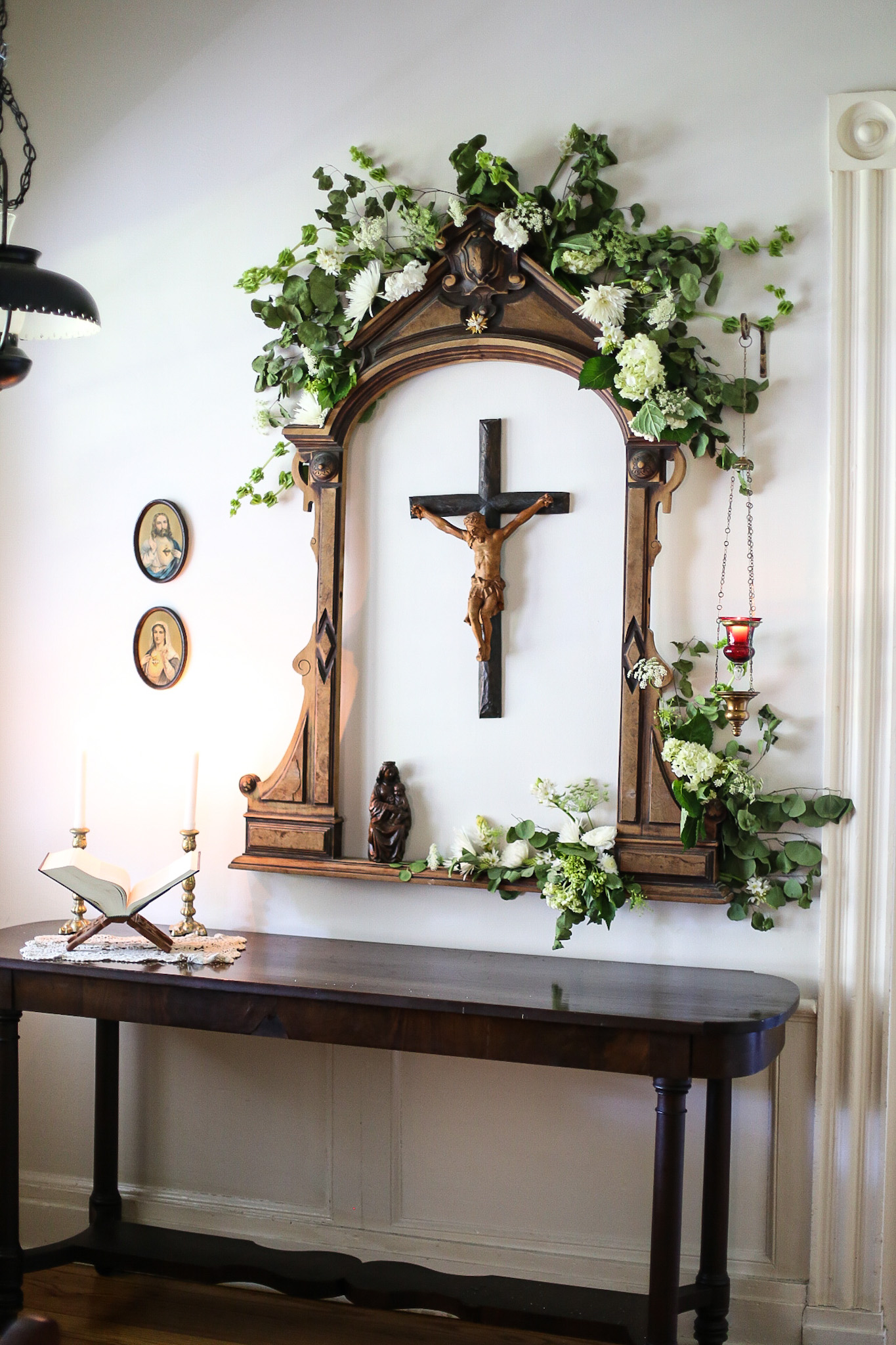
The presence of sacred art within the home exerts a lasting and profound influence by inspiring the imagination to contemplate the Divine. In drawing our gaze toward God, it foreshadows our eternal home.
The spiritual practices observed within the household shape its visual character, as specific devotions influence the overall aesthetic. This approach results not only in meaningful reminders of faith that promote mindfulness of prayer during daily activities, but also in a diverse expression of beauty from one home to another, reflecting each family’s unique spiritual life.
An Easter home embodies the fullness of the Passion. To appreciate the Resurrection, we must embrace our own crosses and persevere through sacrifice. As we strive to shape our homes as places of sacramental life, alleluias resound throughout our halls.