‘Mater Populi Fidelis’: A Vision of Mary as Mother and First Disciple
The Vatican’s new doctrinal note moves beyond title debates to restore Mary’s role where Vatican II placed her — in perfect transparency to Christ and at the heart of the Church’s life.
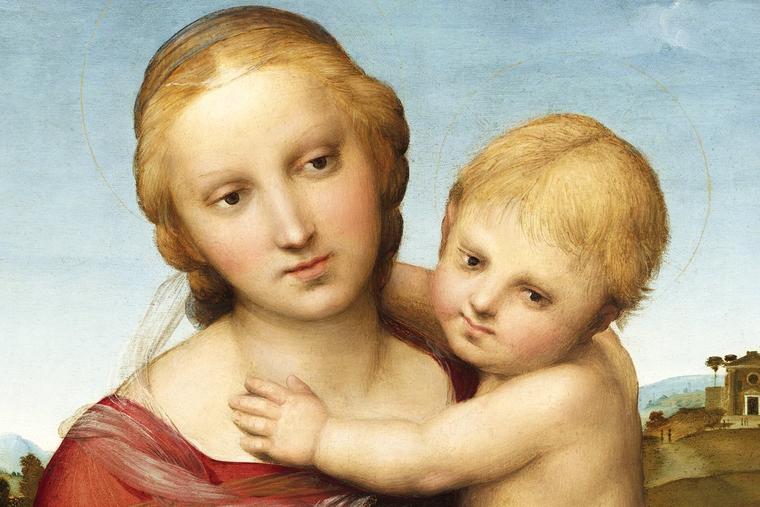
When the Dicastery for the Doctrine of the Faith released Mater Populi Fidelis on Nov. 4, many headlines reduced it to a single takeaway: the Vatican has rejected the title Co-Redemptrix for the Blessed Virgin Mary. That’s accurate, but incomplete.
In the hours that followed, commentators quickly divided into camps — some lamenting a perceived departure from tradition, others celebrating a move toward ecumenical simplicity. Both overlook the deeper point. While earlier popes occasionally employed the title Co-Redemptrix in devotional contexts, the Church never defined it as dogma. The new doctrinal note, approved by Pope Leo XIV, doesn’t diminish Mary’s place in salvation history; it situates her in her proper theological orientation within the mystery of Christ and the Church.
In essence, Mater Populi Fidelis accomplishes what Vatican II intended but never fully realized. It reaffirms that every authentic Marian doctrine must be both Christological and ecclesial — that Mary’s greatness shines not in competition with her Son, but in complete transparency to him.
“When we strive to attribute active roles to her that are parallel to those of Christ,” the document says, “we move away from the incomparable beauty that is uniquely hers.” Far from a downgrade, this is an invitation to rediscover Mary’s distinctive humility as the model of redeemed humanity.
From Maximalism to Motherhood
This reflection also unfolds within a remarkable anniversary year for the Church, marking the 2025 Jubilee, which commemorates 60 years since the close of Vatican II, 30 years since the death of Yves Congar, and 25 years since the passing of Pope St. John Paul II. Those converging milestones remind us how deeply intertwined the Council’s Mariology, Congar’s theology and John Paul’s devotion remain.
In my own scholarly work, Mary as Mediatrix: Harmonizing Yves Congar’s Caution and John Paul II’s Enthusiasm, published earlier this year in Maria: A Journal of Marian Studies, I argued that the Church’s next Marian renewal would depend on recovering the harmony between Congar’s theological prudence and John Paul II’s personal devotion. Mater Populi Fidelis does precisely that.
Yves Congar, the Dominican theologian whose careful work helped shape Lumen Gentium 8, urged the Council Fathers to avoid Mariological language so expansive that it could blur Christ’s unique mediation. Pope St. John Paul II, however, believed that post-conciliar caution had gone too far. His Redemptoris Mater and Rosarium Virginis Mariae re-centered Mary in the Church’s devotional life without losing sight of her subordinate participation in the Redeemer’s work.
Between them lies the golden mean: Mary as Mother and first disciple, the perfect human transparency to grace. The new Vatican note lands squarely there.
Why Words Matter
The DDF’s decision to clarify the proper meaning of Co-Redemptrix and Mediatrix of All Graces is not semantic minimalism, but rather pastoral realism. Words form devotion. When a title requires constant disclaimers to maintain its orthodoxy, it ceases to serve the faith of the people. The note’s preferred language (Mother of God, Mother of the Faithful People of God) is Scriptural, patristic and widely intelligible. It anchors Marian doctrine where it belongs: in the Incarnation, not abstraction.
A Marian Moment, Not a Recession
Some have read Mater Populi Fidelis as a setback for popular piety. Yet the document explicitly praises Marian devotion as the “spiritual breath of the faithful,” while cautioning against devotional expressions that risk obscuring sound theology. In this sense, the note functions more as a catechesis than as a reprimand. It reminds us that Mary’s incomparable beauty lies in what she has received, in her total receptivity to grace.
This is why Mater Populi Fidelis fits seamlessly within Pope St. John Paul II’s legacy. His motto, Totus Tuus, never implied co-redemption. It meant that belonging wholly to Mary was the surest way to belong wholly to Christ. His Marian devotion was, at its core, Christocentric.
Beyond Controversy, Toward Contemplation
The actual fruit of this document will not be in quieting debate but in deepening prayer. It invites us to contemplate the Blessed Mother in the place where the Second Vatican Council situated her, and where she has always stood: in the very heart of the Church, leading us to her Son.
Mater Populi Fidelis invites us to re-enter that posture of wonder where theology yields to worship. Its restraint is not dryness but reverence — the reverence that keeps mystery intact. The Church is reminding us of what the faithful have always known: When Mary is most herself, Christ is most visible.
Titles may vary across history, but the title that matters most — the one Jesus himself spoke from the Cross — remains: Mother. From that sacred word echoes her final command to every disciple: “Do whatever he tells you.”
- Keywords:
- mater populi fidelis
- blessed virgin mary
- mediatrix

Brendan Towell Brendan Towell is the Director of Spirituality and Mission for Secondary Schools and Schools of Special Education in the Archdiocese of Philadelphia, where he lives with his family. His interests include Augustinian Studies, Ressourcement Theology and the theological legacy of Pope Benedict XVI. His website is BrendanTowell.com.