This Fourth of July Offers a Time for Gratitude, Not Sentimentality
COMMENTARY: The nation we celebrate this July Fourth is where God has chosen for us to keep his work alive.
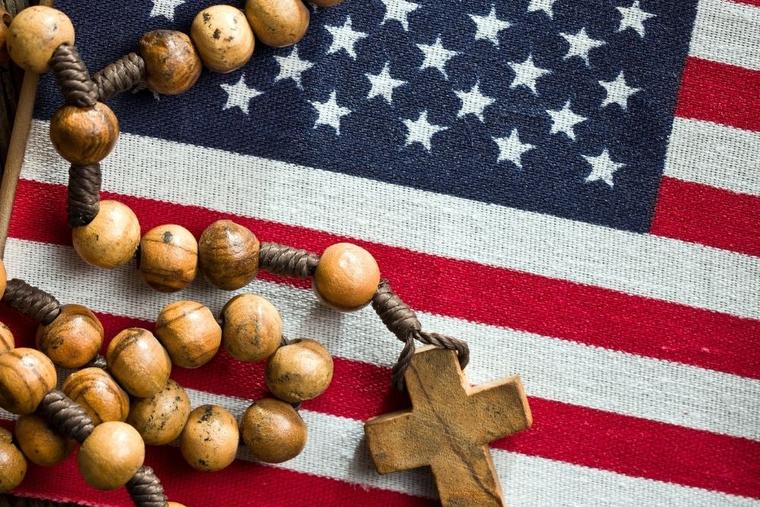
I will admit to a particular excitement about America’s 250th birthday. And as someone who came of age waving red-white-and blue streamers through my bicycle spokes during the Bicentennial, I know what it feels like when a nation’s anniversary stirs something genuine in the chest — not sentimentality, but gratitude.
This Fourth of July, U.S. Catholics have every reason to feel that gratitude. We celebrate not merely as citizens proud of our country, but as members of the universal Church who have found in America soil extraordinarily fertile for the flourishing of the faith.
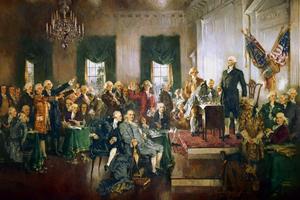
The Declaration of Independence, with its proclamation that all men are created equal and endowed by their Creator with unalienable rights, is not a merely secular document. The Constitution, ratified 11 years later, gave that promise its legal framework; the First Amendment, added three years after that, enshrined its most essential guarantee: that the rights of conscience are not granted by governments but are prior to them.
And the First Amendment’s guarantee that Congress shall make no law prohibiting the free exercise of religion has provided the legal architecture within which the Catholic Church in America has been able not merely to survive, but to thrive and evangelize. It is worth recalling that the Second Vatican Council’s declaration Dignitatis Humanae affirmed that the right to religious freedom is grounded in the dignity of the human person — the very principle the American founders encoded in law.
Consider what that framework has made possible. The Church’s internal governance — the autonomy of her dioceses, parishes, and schools — operates with a freedom that Catholics in many parts of the world can only imagine. American courts have repeatedly recognized what is known as the ministerial exception: the principle that the government may not interfere in a church’s selection of its own ministers and leaders. It is a recognition that the internal life of the Church belongs to the Church.
Beyond governance, America has historically recognized the Catholic Church’s charitable works as a genuine and indispensable part of the social fabric. Catholic hospitals, schools, charities, and adoption agencies are pillars of the social safety net, serving millions animated by the love of Christ and the Church’s centuries-old commitment to the corporal works of mercy. The legal and cultural space that America has carved out for faith-based service reflects a recognition that the state cannot and should not try to do alone what communities of faith do naturally.
Most importantly, the free exercise of religion has given Catholics the freedom to evangelize. This is not a small thing. The Great Commission to “go and make disciples of all nations” is not an optional suggestion. It is the marching order of every baptized Catholic.
In a nation that protects the right to speak, to gather, to build institutions, to form consciences, and to transmit the Faith across generations, that mission can actually be carried out. For all its imperfections, America has been extraordinarily accommodating of that vocation.
A word of clarification is in order, however, because gratitude can be misread. The patriotism and appreciation we feel for this constitutional order are not “Americanism” that Pope Leo XIII warned against in his 1899 apostolic letter Testem Benevolentiae Nostrae. We are not celebrating America because we believe the Church must conform herself to it. We are celebrating America because, at its best, it has had the wisdom to get out of the way and let the Church be the Church.
Nor does our gratitude counsel the opposite error. Catholics who are rightly alarmed by the moral drift of our culture must resist the temptation to reach for state power as the remedy. The siren calls of Integralism and Christian Nationalism share a common impulse to use the coercive machinery of government to impose a religious or moral order.
Our calling, by contrast, is to ready ourselves daily through prayer, the sacraments, and works of mercy for the great task of spreading the Gospel and inviting others into the joy of the sacramental life.
None of this means the path has been smooth. American pluralism has sometimes been less welcoming in practice than in principle. The history of anti-Catholic bigotry in this country is real and documented: the Know-Nothing movement of the 19th century, the systemic discrimination that made Catholic immigrants second-class citizens in cities they were building with their own hands, the whisper campaigns that dogged Al Smith and even John F. Kennedy about where their ultimate loyalties lay. That suspicion has never fully died, and the work of defending Catholic institutions against secular pressure continues.
Challenges will continue. Our Lord never promised otherwise. But the nation we celebrate this July Fourth is where God has chosen for us to keep his work alive.
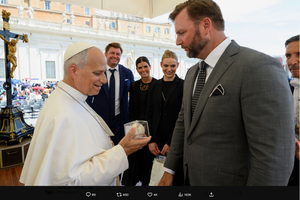
And here, I cannot resist noting what seems to me nothing less than providential. America marks her 250th anniversary at precisely the moment the Catholic Church has, for the first time in her 2,000-year history, an American pope. That election carries unmistakable spiritual significance. That a son of the Church in America now shepherds the flock worldwide is a grace worth pausing to contemplate.
The American experiment is not perfect. It was never meant to be. Classical liberalism — the political tradition of human dignity, limited government, free conscience, and ordered liberty — leaves room for error, for argument and for correction. It does not impose a vision of the good life. Instead, it creates conditions in which free people, guided by faith and reason, can pursue it together.
For Catholics, that pursuit has a name. It is called evangelization. And for 250 years, improbably and providentially, America has been one of its most promising fields.
Pull out the streamers. We have much to celebrate.
- Keywords:
- america 250
- 4th of july
- catholic america