Faith and Science Are Not Enemies — and Young People Need to Hear It
COMMENTARY: If young Catholics believe science and faith are in conflict, the Church must show them why the two belong together.
When confronted with the challenge of young people leaving the Catholic faith, we might be tempted to think the problem is solely a “religious” one — one addressed by improving their experience of the liturgy or by providing better spiritual retreats.
In reality, a significant factor is the way the Church is perceived in its engagement with the wider culture — including the world of science.
For some time now, both Catholic and secular news outlets have reported the rise of the so-called “nones,” those who have disaffiliated from Catholicism or organized religion. One suspected reason for disaffiliation is the perception that faith and reason are incompatible. Young people struggle to reconcile biblical revelation, including the creation accounts in Genesis, with the hard sciences. The methods of science and theology appear so different that some suggest that a major reason for leaving the practice of the faith is that faith has nothing to offer to the world of reason, especially in an increasingly technocratic society.
The ideology of scientism, which holds that only the findings of the natural sciences count as truth, has worsened the conflict between faith and science. And with the two pitted against each other, and many young people not wanting to be perceived as “unscientific,” they choose the laboratory and leave the parish behind.
But as Pope Leo XIV recently reminded us, this binary is a false one.
In a Feb. 28 address to Spanish seminarians, the Holy Father quoted G.K. Chesterton, who wrote: “Take away the supernatural, and what remains is the unnatural.”
In other words, if the supernatural is left out of the equation, we are left out of the equation. The truth of the human person — our purpose, our worth, our destiny — cannot be found under the lens of a microscope. Truth devoid of faith is not only limited, it is distorted.
But Pope Leo also didn’t propose replacing the narrowness of scientism with a kind of fideism that treats faith as an alternative to science. As he said: “Having a supernatural view does not mean fleeing from reality but learning to recognize God’s action in the concrete reality of each day; a vision that cannot be improvised or delegated but must be learned and exercised in the ordinary course of life.”
Rather than opposing religion and science, Pope Leo’s vision suggests bringing the two into fruitful collaboration. And this is quite literally what took place at a recent conference at the University of Notre Dame, which convened several of my brother bishops with some of the top Catholic scientists in the world.
Co-sponsored by the United States Conference of Catholic Bishops’ Committee on Doctrine and Notre Dame’s McGrath Institute for Church Life, and in collaboration with the Society of Catholic Scientists, the Feb. 23-25 gathering focused on “The Relation Between Science and Faith as a Pastoral Issue in an Age of Disaffiliation.” The conference afforded bishops, educators and scientists the chance to strengthen their bonds of communion and their collaboration for the sake of the Church’s mission.
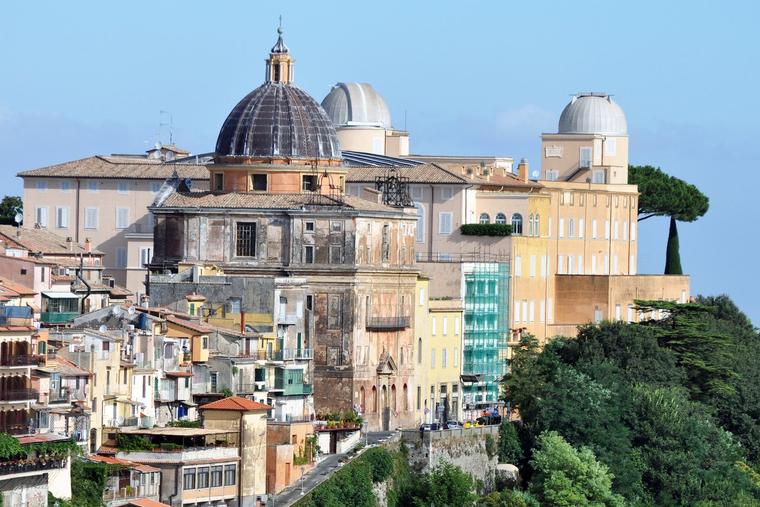
In many ways, the speakers themselves were witnesses to the harmony possible between faith and reason. For example, Jesuit Brother Guy Consolmagno, director emeritus of the Vatican Observatory, epitomizes St. Ignatius of Loyola’s charge “to find God in all things.” Stephen Barr, president of the Society of Catholic Scientists and a world-class physicist in his own right, has devoted his life to deepening this collaboration. And an opening greeting from Holy Cross Father Bob Dowd, president of Notre Dame, underscored the university’s commitment to both pro-life principles and collaboration with the bishops, witnessing to the fact that faith and inquiry are both at home in the Church.
But many of the talks also directly confronted the perceived disconnect between religion and science, and indicated ways the Church can constructively move forward.
Laura Upenieks, a Baylor University sociologist, examined the attitudes of young people toward faith and science. Her research showed that Americans are divided evenly on whether science and religion are in conflict, with those who are more religious seeing less conflict between the two. Catholic youth, in fact, affirm scientific authority.
Nevertheless, there appears to be a general decline in trust in religious leaders and institutions in general. It is not that the young lack faith or that they distrust science; rather, it is that young people have real questions about both faith and science and will not take things simply on authority. A superficial treatment of the questions that arise will simply not suffice.
Karin Öberg’s presentation provided an example of what this deep engagement can look like. The Harvard astrochemist attempted to reconcile scientific studies of the origins of the cosmos with the story of creation in the Judeo-Christian tradition. Öberg explained how the universe presupposes a cause prior to its first moment of expansion, and demonstrated how the universe is beautifully ordered toward life. The order, beauty, and creativity of the universe point not merely to a creative force but to a creative mind and a creative love.
Like the rest of the presenters, Öberg freely admitted that science does not have all the answers. Yet she also demonstrated how humanity, in a way more profound than the rest of creation, shows forth God’s goodness.
In a similar vein, Franciscan University biologist Daniel Kuebler explored the contentious topic of evolution, asking whether the theory precludes any sense of deeper meaning to life. While some would argue that evolution relies upon chance events, therefore implying that the universe has no design, purpose, or Creator, Kuebler raised the alternative — and more satisfying — theory that the universe is ordered at its most fundamental level, placing evolution within a broader framework that influences its outcomes.
Finally, Christopher Baglow and Heather Foucault-Camm, both of McGrath’s Science & Religion Initiative, reflected on George Bernanos’ observation that modernity produces an “ever-increasing number of men accustomed from their childhood to desire only what machines can give.” They emphasized that in our technological era, we are in need of wisdom, not merely intelligence gained through observable data. Catholics must be a strong voice against the reduction of man and creation to data points.
Reflecting upon the serious Catholic engagement with science offered at this conference, what wider lessons can be drawn?
If the Church is to retain young people in the practice of the faith, then the Church will need to build or rebuild her credibility in the sphere of education through an authentic synthesis of faith, the Tradition and science. She will need to create interdisciplinary spaces that allow young people to ask questions and be accompanied in their inquiries.
Moreover, the pastoral ministers of the Church will require greater formation so that they may speak with a degree of scientific literacy, but without defensiveness. Finally, Catholic clergy and laity will need to give public witness to the beauty of the faith while affirming all of reality, speaking with a tone that teaches, delights and persuades.
The challenge is pedagogical. It is not the role of the Church to simply provide predetermined answers to questions; rather, the Church must re-engage in her mission to educate. With her Tradition, and with Catholic scientists serving as a leaven in the world, the Church is uniquely positioned to assist young people to apprehend reality and to read it in the light of faith; to train the mind to ask the right questions; and to accompany young people as they discover the truth, which provokes awe and wonder in those who encounter it.
In this way, the mutual collaboration between clergy, educators, and scientists can be a great instrument in walking with our youth in their questions about faith and science, not only stemming the attrition rate of Catholics, but also serving as a tool for evangelization. It is not that bishops and educators must be experts in the hard sciences; there are Catholic scientists who are true experts in their respective fields, who can assist in showing the relevancy for science of faith and how faith can illuminate science.
The Catholic bishop, the Catholic scientist and the Catholic educator must help young people explore the mystery of creation, which helps them encounter the Creator who reveals himself in nature, in history, and through his Beloved Son. This is what many of us took away from the Notre Dame conference, along with an urgency to reform the way the Church engages the sciences, education, and young people for the sake of evangelization.
Father Luigi Giussani, the founder of Communion and Liberation, once said, “Reality has never betrayed me.” It is this kind of fidelity to Providence, in all its dimensions, that must guide the Church’s engagement with science going forward. In this way, we can give our young people the confidence that being Catholic is not opposed to the truth, but is a privileged way to pursue it.
- Keywords:
- bishop earl fernandes
- faith and science
- science
- university of notre dame
- McGrath Institute for Church Life
- catholic scientists
- society of catholic scientists
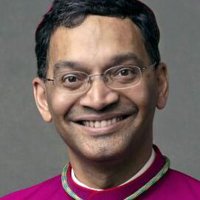
Bishop Earl Fernandes Bishop Earl K. Fernandes is the 13th bishop of Columbus, Ohio.