Remembering Cardinal Ruini, a Giant of the John Paul II Era
COMMENTARY: Pope Leo’s funeral tribute highlighted the immense influence Cardinal Ruini wielded in the Church and Italian public life.
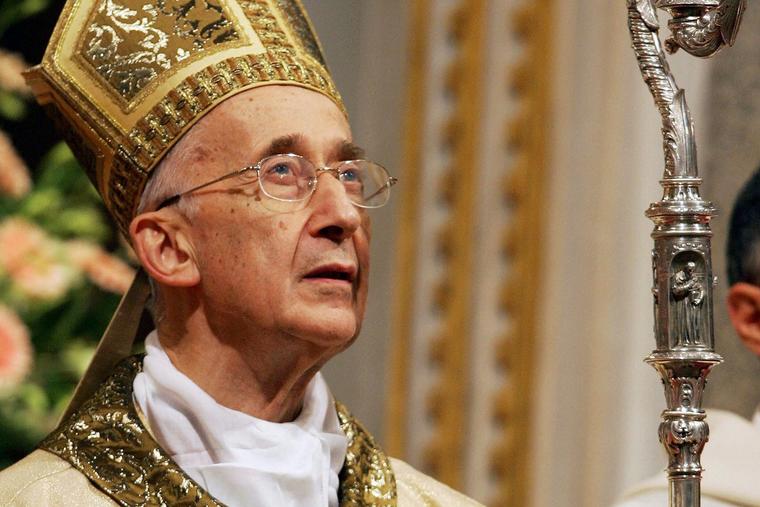
Thursday’s funeral for Cardinal Camillo Ruini was an exceptional tribute to a singular figure in the recent history of Italy.
“The Church in Italy, which he served for almost 17 years as president of the Episcopal Conference [1991-2008], owes him a great deal; as well as the Diocese of Rome, in which for as long he carried out the ministry of Vicar of the Holy Father,” Pope Leo XIV said in his homily. “He was able to guide the People of God and his brothers in the episcopate in important and delicate moments, facing many challenges with enthusiasm, discernment and courage.”
There being a goodly number of elderly cardinals in Rome, their funerals are fairly common. Within a few days of their deaths, a funeral Mass is celebrated in St. Peter’s Basilica, at the Altar of the Chair in the apse. The dean of the College of Cardinals is usually the principal celebrant, a dozen or two cardinals and bishops concelebrate and, if available, the Holy Father comes at the end for the final commendation. It is not perfunctory, but it is routine.
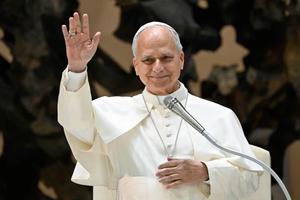
That was not the case for Cardinal Ruini, who died on Tuesday at age 95, and whose funeral was held on Thursday. Pope Leo XIV celebrated it personally, preached at unusual length, generously praising the late prelate. There was also a considerably larger number of concelebrating cardinals and bishops. Cardinal Ruini was a giant, and his funeral rites reflected that.
When Pope St. John Paul II was elected in 1978, the first non-Italian in 455 years, it was largely due to the cardinals already glimpsing in him something of a world-historic figure. But it was also because the remaining Italian candidates were underwhelming. Albino Luciani had just been elected as Pope John Paul I, and there was no other Italian cardinal who seemed suitable. The deep well of great Italian churchmen from whose number popes had long been chosen seemed to be running a bit dry.
John Paul attempted to remedy that with one of his earliest and most imaginative appointments, naming the priest-rector of the Gregorian University, Carlo Maria Martini, the new archbishop of Milan at age 52. Cardinal Martini would occupy a prominent position in Italian cultural life for nearly three decades, while also being widely published and respected abroad. Yet he would emerge as something of the leader of the loyal opposition in John Paul’s pontificate, the champion of Catholic progressives.
John Paul tried again in 1986, appointing Ruini secretary-general of the Italian Episcopal Conference (CEI). Ruini was then an auxiliary bishop in his home diocese, but had played a key role in the landmark 1985 Loreto conference, which sought to provide a new vision for Church-state relations in Italy after some years of turmoil. That work brought him to John Paul’s attention.
Vicar for Rome
After five years as the CEI’s secretary-general, John Paul knew he had his man for Italy. In 1991, Archbishop Ruini was named Vicar for Rome and president of the CEI and was created a cardinal. He would remain John Paul’s chief Italian lieutenant until his death in 2005, and would continue to serve Pope Benedict XVI in the same roles until Cardinal Ruini retired in 2008. For 17 years, Cardinal Ruini was the dominant Italian prelate, a novelty given that the pope was no longer Italian.
Among the dozens of capable but ordinary curial cardinals who served in John Paul’s long pontificate, Cardinal Ruini was one of the giants who amplified the impact of that historic pontificate, alongside Cardinal Joseph Ratzinger at doctrine, Cardinal Bernardin Gantin at bishops, Cardinal Josef Tomko at Propaganda Fide, and Cardinal Francis Arinze at interfaith relations and liturgy.
With Cardinal Ruini’s death, only Arinze is left from that era. It is a mark of his singularity that few people can even remember the names of Cardinal Ruini’s predecessors and successors as Vicar for Rome, the cardinal charged with running the Diocese of Rome on a day-to-day basis for the Holy Father.
World War II Aftermath
In the aftermath of World War II, Italian society had to recover from its physical destruction and, even more so, the spiritual corruption of the fascist period. It fell to the Christian Democratic parties in Italy and elsewhere to channel Catholic energies toward European reconstruction and resistance to communism. That model lasted well into the 1970s and 1980s, but began to weaken under gathering secularism.
For example, Italy passed a liberalizing abortion law in 1978; the Christian Democrats, backed by the Catholic Church, staged a referendum in 1981 to restrict the law in a pro-life direction. It went down to emphatic defeat, signaling a new moment in Italian society, namely the diminution of Catholic influence in politics.
The pope from Poland knew something about a Catholic society in which Catholic influence was limited in politics; under communism, Catholicism was actively persecuted in Poland. The Polish Church had developed a response of cultural resistance, rooted not in Catholic political parties, but in the lived faith of the people. In his 1979 visit to Poland, John Paul made this culture-first approach explicit.
Could something similar work in a democracy like Italy? It would be Cardinal Ruini’s mission to try to influence Italian public life not with partisan alliances, but through Catholic evangelization of the broader culture. It became known to Italian Catholics as the “Cultural Project.”
“To Cardinal Ruini, we owe intuitions and initiatives that have left a profound mark on the journey of the ecclesial community and also of the civil community,” preached Pope Leo at the funeral. “We think of the ‘Cultural Project;’ his commitment to promoting the contribution of the Catholic world in the most diverse areas of Italian religious, civil and political life; to the great work of the Diocesan Synod and its application, here in Rome; to his active presence and dialogue at the various levels of the life of the Church, as well as of the secular world and society.”
Like Cardinal Martini in Milan, Cardinal Ruini developed a strong public voice, able to shape public debate, even at times entering the directly political sphere. He managed to do so despite his reserved demeanor, exquisite courtesy and cultivated manners. He was more at home in cultural encounters and academic settings than in the world of partisan politics.
When Silvio Berlusconi rose on the conservative side of Italian politics, Cardinal Ruini was sympathetic to parts of his agenda, but his refinement sat uneasily with the boorish billionaire of appalling personal morals, who conducted public affairs in a combative, corrosive and corrupt manner. It demonstrated a corollary of the culture-first approach: embracing cultural debasement for political gain is not good for Catholics as Catholics, and may not bear much fruit for them as Italian citizens either.
The lasting memories of Cardinal Ruini’s long service are not so much of official acts as of his evident friendship with John Paul. The cardinal often accompanied the Holy Father in Rome, reserved and remaining in the background, but with evident delight in John Paul’s exuberance.
An indelible scene took place at the great vigil for World Youth Day in Rome 2000, when John Paul laughed and sang and waved with a million young people, with Cardinal Ruini at his side, barely moving but manifestly moved, permitting a discreet smile to spread across his face.
He loved John Paul, and reflected on that relationship in his spiritual testament, written in 2016 and released after his death. Pope Leo quoted from it in his funeral homily.
“Of his relationship with Pope Wojtyla, to whom he was a collaborator for many years, Ruini wrote: ‘In John Paul II, I experienced your presence, Lord; I was able to touch with my own hands the union in prayer, the inseparability of prayer, life and the apostolate, the courage of faith that guides history, the capacity to love and to forgive,’” quoted Leo. “I believe that the Cardinal has been able to draw so much from the example of unity of life of the great Pontiff, because we can also find in him many of the traits with which he describes the holy Pope.”
After the funeral in Rome on Thursday, Cardinal Ruini’s mortal remains were transferred to the cathedral of his home diocese of Reggio Emilia, after which he was buried in the family plot at the Dinazzano cemetery.