What Is Synodality? Pope Leo Has a Chance to Clarify It
COMMENTARY: The Pope’s treatment of synodality suggests a shift away from vague appeals to a ‘listening Church’ and toward the Church’s traditional structures of governance.
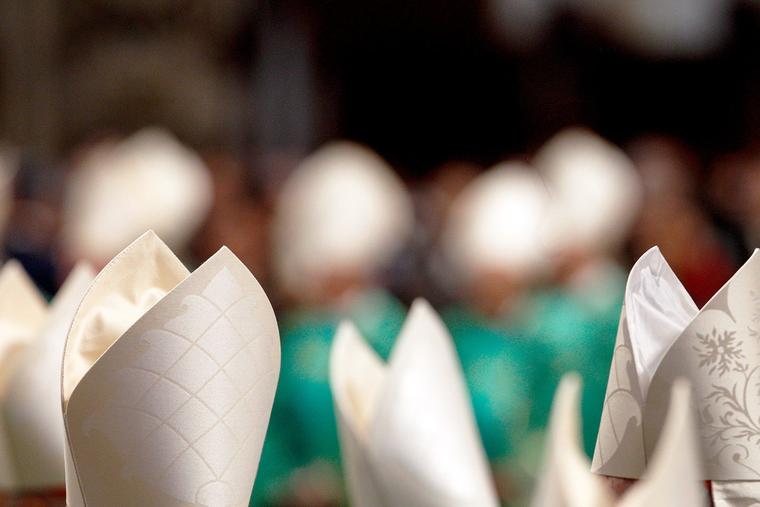
Pope Leo XIV certainly has a lot on his plate. And with his recent successful visit to Spain and the release of his first encyclical, he is establishing his own vision for the Catholic Church and the world.
Every pope faces a delicate balancing act between continuity with previous pontificates and the need, perhaps, to “correct,” or at least modify and nuance, the decisions of his predecessors.
One such issue that Pope Leo has inherited from Pope Francis that seems to stand in need of nuancing and modifying is the much-discussed but rarely defined concept of “synodality.”
Pope Leo has mentioned synodality several times, and so it would seem that he is simply carrying forward what his predecessor started. But on closer inspection, many observers have noticed that quite often, when speaking of synodality, Pope Leo links it to the concept of episcopal collegiality more than the notion of a “listening Church” grounded in the “concrete experiences” of some vaguely defined abstraction called the “people of God.”
Collegiality was, of course, one of the most important achievements of Vatican II. In a nutshell, the Council repudiated the idea that bishops were kind of like branch managers of Catholic Inc., with the pope as the CEO. It further repudiated the idea that all episcopal authority came to bishops through the pope, in a sense “sharing” his authority with them.
Rather, the Council affirmed that bishops receive their authority directly from God in virtue of their ordination. The pope is not an absolute monarch, and the bishops are not vassals of this monarch. But neither is the pope a mere figurehead of unity. This is often a tough needle to thread, but the Church has done it for centuries.
The three munera, or offices, of a bishop are teaching, sanctifying and governing. These are always to be exercised in union with the pope and under his authority as the Petrine head of the Church. Nevertheless, they are given these functions by God himself and not by delegation from the pope. The licitness of their ordination as bishops does canonically depend upon receiving a papal mandate — a mandate that is also theologically grounded in Petrine authority as the chief guarantor of ecclesial unity. But the munera are theirs by divine right once they are licitly ordained.
Therefore, by linking synodality with collegiality, Pope Leo seems to be making an important modification of synodality and changing its focus from a 1970s-style “rap session” where the Church allegedly is “finally” listening to the voice of the Holy Spirit through curated “listening sessions.”
By invoking the conciliar teaching on collegiality rather than the synodal leaders’ incessant misuse of the “people of God” metaphor, Pope Leo is reorienting synodality as a true teaching of the Council concerning shared episcopal governance, rather than the altogether incorrect idea that the “people of God” are the laity, considered now as a kind of political polity, who are often set over and against the “hierarchical Church.”
Lumen Gentium makes it abundantly clear that the “people of God” are all the members of the Church — laity, religious and clergy — who are on an eschatological pilgrimage together toward the Kingdom of God. Only after this reality is affirmed does Lumen Gentium go on to make distinctions between the laity and the hierarchy.
In fact, the word “synod” is derivative of a Greek word meaning “journeying together.” What the Council wanted to affirm was that the Church’s goal, and sole reason for existing, is a supernatural one, and that the laity and the hierarchy together have the task of orienting themselves and the Church to this supernatural end.
There was certainly no sense at the Council, therefore, that a true ecclesiology would involve a distinction between institution and spirit, such that the “subjective experience of the Spirit” is pitted against a cold and merciless emphasis on the truth of mere doctrines.
We saw far too much of this kind of rhetoric during the synodal process and, indeed, throughout the entire Francis pontificate. By invoking collegiality, however casually and obliquely, Pope Leo is signaling that true synodality is going to be grounded in the true ecclesiology of the Council and not in a return to a 1970s-era, cultural cotton-candy vibe.
But lest one think I am being unfair to the synodal process as it has unfolded so far, allow me to cite an example of this “vibe” in the recently released synodal “Study Group 9” report on homosexuality. It should be noted up front that Pope Francis put Cardinal Jean-Claude Hollerich of Luxembourg in charge of the Synod even though he is on record as dissenting from Church teaching on homosexuality, and indeed from the Church’s teaching on sexuality in general. More specifically, the Synod organizers invited the well-known activist for LGBTQ inclusion, Jesuit Father James Martin, and made him a voting member of the Synod.
Notably absent was any invitation to synodal participation for the leaders of Courage International, the largest Catholic apostolate to homosexuals that encourages fidelity to Church teaching. This is a glaring omission from a self-styled process of “listening to all voices.” Instead, it gives every indication of a process rigged from the outset, in which the “experiences” of the people of God are curated and filtered by a few synodal leaders to achieve the desired results.
This is not collegiality or true synodality. This is instead a small group of anonymous elites with their thumb on the synodal scale.
I knew Father John Harvey, the Oblate of St. Francis de Sales who founded Courage in New York City in 1980 at the urging of Franciscan Friar of the Renewal Father Benedict Groeschel. Since then, there have been other “ministries” to homosexuals (e.g. Dignity and New Ways Ministry), but they are well-known dissenters from Church teaching.
I knew Father Harvey well. He lived at DeSales University, where I was a professor of theology for 19 years. I had many conversations with him as I sought his wisdom in helping me guide my homosexual students properly.
Specifically, Father Harvey was good at threading the needle between doctrinal orthodoxy and the prudential application of those doctrines to young people who were often in the midst of a crisis. He was a sweet, kind and gentle man who nevertheless had an iron will and a steadfast faith when it came to the truth of the human person and to the conviction that the Church’s teachings were not oppressive but in fact liberating.
And it was for holding these views that Father Harvey suffered rude and unfair criticism from many people in the Church, including many priests and religious sisters.
This is why I cannot allow the criticism of Courage found in Study Group 9 to go unchallenged. Not only was Courage not invited to the Synod, but now we have the added insult of a “testimony” from a “married” gay man in the report who criticizes the Courage meetings he attended for being “secretive” and “hidden.” He also makes it clear that the biggest problem with Courage is that its adherence to Church teaching places cruel burdens on homosexuals.
First, there are very good reasons for why Courage meetings are “secretive.” It is to provide a safe space for people with same-sex attraction so that they feel comfortable discussing anything whatsoever in an environment of the strictest confidence. There are good reasons why the confessional seal is sacrosanct and why the confidentiality of the psychologist’s couch is protected by law. The same reasons apply here.
Second, why has the synodal study group chosen to highlight only the testimony of “married” gay men who are critical of Church teaching? I will answer that for you, since it is obvious. The synodal study group participants are lobbying for a change in Church teaching. That is why Courage was excluded from the Synod, and that is why it is allowed to be unfairly criticized in this report.
One could just as easily have highlighted the many horror stories of young people who become trapped in the “gay lifestyle,” and how there is a subculture of drug use and promiscuity within the “LGBTQ community” that is opposed even by many people within that community. One could highlight the many stories of people who were victimized by that subculture and liberated from it by finding Christ in the Church’s teachings and in groups like Courage.
I thought of my friend Father Harvey as I read this report, and my blood boiled. I thought of my many homosexual Catholic friends and former students who found healing, love and joy by living chastely within the Church’s sacramental life, and my blood boiled.
Returning to synodality, I am very confident that Pope Leo will treat this report with the benign neglect that it deserves. I think he will abide by the decorum of papal continuity and not criticize it publicly. But by ignoring it, he will in effect expose it for the superficial piece of propaganda that it is.
Finally, as Pope Leo moves forward with plans for the culminating synodal event in a few years, I think his many references to collegiality as the key to any true synodality are going to play a determinative theological role.
My overall impression is that there are now true adults in the room and that silly season playtime is over. Therefore, we all need to pray for Pope Leo. He has a large task before him.