Fathers Don’t Need Another Tie; They Need the Tie That Binds
COMMENTARY: As far as the sweep of Western history is concerned, though, a strong link between masculinity and spirituality is the rule, not the exception.
On June 21, fathers around the world will receive another tie, mug, golf club, or grill kit.
But as nice as the typical gifts are, loved ones might want to consider investing in a more atypical gift this year: the gift of faith.
Studies show that actively religious people tend to be happier, more civically engaged, and, in key measures, physically healthier. Religion — both through a relationship to God and a relationship to other believers — has also proven to be a buffer against loneliness and social isolation.
Men are especially in need of these benefits. Women have long outlived men, but the life-expectancy gap is widening, in part due to men’s disproportionate share in “deaths of despair”: deaths from suicide, drug overdose, and alcoholic liver disease. Men also are less likely to reach out to friends for connection and support — because, as Harvard professor Arthur Brooks points out, their friendships are mostly built around shared interests like sports, not shared inner lives. And it’s not just fathers who benefit from religion: One study shows that a dad’s presence at church is the single biggest factor in determining whether his children will attend church as adults — leading, in turn, happier lives themselves.
Yet despite the clear boon it offers, men, studies show, have largely turned their backs on religion. Consider these insights from the Pew Research Center about the religious observance of men and women in the U.S.:
- Women are more religious than men, on average: They are more likely to identify with a religion, pray daily, and believe in God.
- Only 37% of men attend a religious service every month or more.
- Mothers are more likely than fathers to say they are taking the lead role in their children’s religious upbringing (39% vs. 17%).
An exchange at the end of the trailer for the new sci-fi thriller The End of Oak Street is telling: “God’s not gonna let us die here,” the father remarks — immediately eliciting a chuckle from his daughter. “Greg,” the mom responds, “you only go to church at Christmas, and now you’re telling the kids God’s looking out for us?” The indifference of most fathers toward church — if they go at all — is at punchline levels.
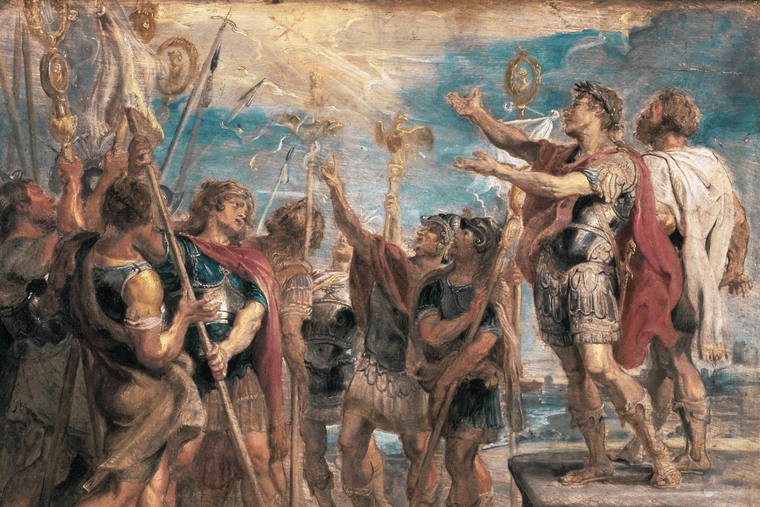
As far as the sweep of Western history is concerned, though, a strong link between masculinity and spirituality is the rule, not the exception. In the ancient and medieval worlds, men took the lead in religious institutions and theological debates (oftentimes, it has to be said, at the expense of women’s valuable contributions). A viral trend a few years ago discovered that many men think about the Roman Empire every day. But to turn toward that fascinating world would mean turning toward a male passion for religion: a world of men like Constantine, Augustine and Anthony of the Desert.
There are some indications that this turn might be starting already. The so-called “Quiet Revival” in Christian faith — most strikingly in the Catholic Church — has made headlines over the past year, and it’s being led by young men age 18 to 24, who are suddenly on par with young women in terms of religiosity. Indeed, Gallup found that, for the first time in 25 years, more young men than women are saying that religion is “very important” to them.
Of course, none of this amounts to much in the end — or even in the beginning — if Christianity is just a force for personal or social good. The real question is whether or not it’s true and thus deserving of an absolute commitment of mind and will. But men need to be given the opportunity to entertain that possibility — and Father’s Day is a perfect opportunity to do it.
Faith, of course — at least, in the Christian tradition — is ultimately a gift of God; it’s not something we can give to each other directly. But as St. Thomas Aquinas observed, we can act as secondary causes of divine grace in one another’s lives and the bearers of God’s gifts to one another’s souls. And what better way to do it than with our own gifts?
Most men, it will be argued — certainly most settled-down fathers — are Gregs on Oak Street. They’re not part of any revival, quiet or otherwise; they’re the 63% who are not going to church, not the 37% who are. They would never want a religiously themed present and wouldn’t know what to do with it if they got one. Why bother?
But there are countless gifts that, without being overly pious, can meet men where they are and open them to God. Is your husband a fiction reader? Consider a classic novel with deep religious inspiration like The Brothers Karamazov or Lord of the Rings (maybe with a helpful commentary). Is your dad a rowdy sports fan? Order him a movie about a boxing Catholic — Father Stu, Rocky, or Cinderella Man. Is your son glued to his desk? Get him a framed piece of beautiful art to invigorate him in his job, a memento mori skull to remind him of its fleetingness, or even a day trip or pilgrimage to get him away from it for a while. And just about anything useful — from pocket knives to travel mugs — can be engraved with something meaningful. (You might even get that necktie after all — but one with the ancient Chi-Rho Christogram that Constantine carried into battle.)
If the father in your life already has some interest in spiritual things, some bud of faith his buddies make sport of, then take it to the next level: Look into good study Bibles and journal subscriptions, faith-based institutes and streaming services — some momentous, even challenging opportunity to put off “the old man” and put on the new. (Even volunteer to set up the EWTN+ app for Dad.)
Sure, you might get a fake smile, or even a good old-fashioned roasting. And your present might get consigned to his closet to gather dust with the other duds. But who knows? You might save the man’s life — “both the present life and the life to come” (1 Timothy 4:8).
- Keywords:
- fatherhood
- catholic dads
- father's day
- faith