5 Ways Leo XIV Might Advance Catholic Social Teaching
COMMENTARY: The new Pope seems to want to continue the tradition of developing Catholic social teaching in a way that breaks new ground on important global matters.
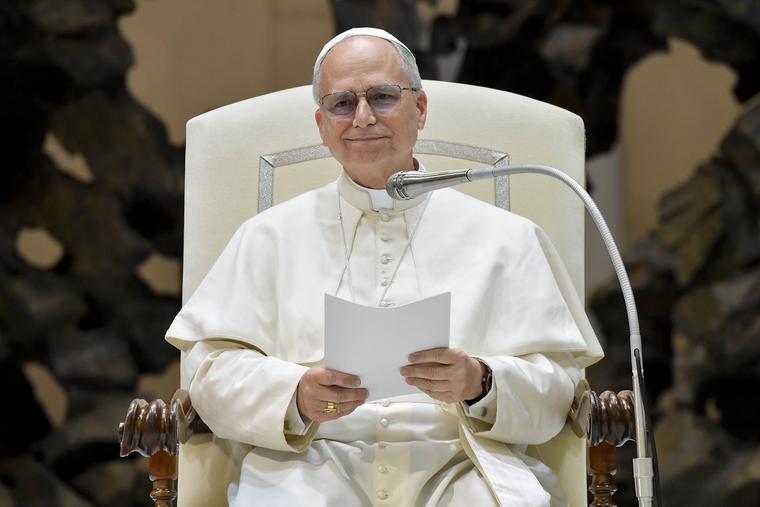
With the May 8 election of Pope Leo XIV, many commentators noted that the last Leonine pontificate gave us Catholic social teaching, that branch of moral theology that rose out of the experience of Catholics during the Industrial Revolution.
The social teaching was also the fruit of decades of conversations among churchmen at all levels — cardinals, bishops and lay business owners. Part of Pope Leo XIII’s genius was tapping into those conversations in order to provide the Church with a path forward.
His 1891 encyclical Rerum Novarum (“On Capital and Labor”) supported unions, laid the groundwork for the Church’s teaching on a just wage, and rejected socialism outright — while also challenging the accepted presumptions of Western, laissez-faire capitalism. It was Pope Pius XI (1922-1939) who taught us to see Rerum Novarum as a prophetic document that would help guide the Church into the future — a legacy deepened by Pope Pius XII in his 1941 radio address on the 50th anniversary of Rerum, and further developed in major social documents by Pope St. John XXIII, Pope St. Paul VI, Pope St. John Paul II, Pope Benedict XVI and Pope Francis.
By taking the name Leo, our new Pope seems to want to continue the tradition of developing Catholic social teaching in a way that breaks new ground on important global matters. Leo XIII began his document with the words “rerum novarum,” which literally means “of new things” and is officially translated as “of revolutions.” At the time, numerous revolutions — in economics, philosophy, politics and more — were reshaping society. So where are the revolutions today that the new Pope Leo might want to address? Here are five areas in which Leo XIV could bring the Church’s social teaching to bear on the “new things” of our own age.
The Labor Revolution
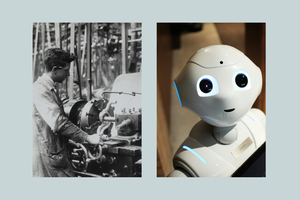
Whether it is the growing fleet of robots at work in Amazon warehouses, the advances in automated vehicles, the use of AI to create content, or just the large screens at McDonald’s that take our orders, every prediction of the future points to a replacement of human laborers with automated machines. But, to what degree is a business morally obligated to employ human beings if it can offer the same product at a lower cost by eliminating human labor?
Since the Catholic Church teaches that the laborer has a right to a just wage, then can it be immoral to eliminate a position in favor of a machine that does not agitate for greater benefits and higher wages? And in those fields of endeavor where a human touch is part of the experience for the customer, to what degree are employers morally obliged to uphold the dignity of service from human to human?
The Economic Revolution
Forget the gold standard. Welcome to a standard based on ones and zeros. The invention of cryptocurrency has upended the traditional understandings of capital, investment and finance. The principles might be the same, but trading in a digital “product” that has no essential reality makes moral assessments of economics more complicated. The fact that crypto is used by numerous illegal industries that do direct harm to human dignity as well as the scandals of the crypto market exemplified in the 2022 FTX collapse justify some attention to this burgeoning field.
The Anti-Science Revolution
There is a great deal from previous social teaching about medical ethics and human dignity. However, the ascendency of some ethical issues on the global stage ought to draw the attention of our new Holy Father. For instance, the rise of what is now called “medical aid in dying” (MAID) has been significant within the U.S. The stories out of Canada and Europe — where MAID is now offered not just to the terminally ill but to those who suffer mentally, who are depressed, or who are disabled — should stir the Church to speak out again.
In-vitro fertilization is another area in which there is great confusion among Catholics. Many, rightly thinking that the pursuit of children within a marriage is a good, have sought immoral means to achieve that good, means which then leave frozen embryonic human persons waiting in a man-made limbo. The comparatively sudden rise of the transgender movement and its rejection of biology and sex in favor of a notion of gender uncoupled from reality has done untold harm to millions of young people across the globe.
In the list of concrete areas of life to which we are all called to bring Christ, the first and most important area listed by the Gaudium et Spes is marriage and family. Human dignity and well-being are “intimately linked” to “marriage and family,” it says. The new Pope might point out, then, the birth dearth that will plague our world very soon.
But as any confessor will tell you, the largest obstacle to healthy and thriving marriages these days is the ubiquitousness of access to hard-core pornography. Leaving aside the fact that many in the industry suffer exploitation and abuse, the damage this multi-billion-dollar industry does to young minds, to sexual relationships, to the respect due to women and men is untold. The horrific rise in child pornography, even AI-generated versions, ought to be of great concern to the Church.
The Migrant Revolution
Immigration was an issue near and dear to Pope Francis’ heart, and rightly so. One could argue, then, that there is no lack of teaching on this issue.
However, the new Pope might consider providing this teaching with the prudential balance that appears in Paragraph 2241 of the Catechism. There we read that, no, not all migrants have a right to settle in another country based solely on desire. The moral obligation of wealthy nations to welcome and protect is restricted to those migrants whose lives are in danger due to a lack of resources or lack of security. Nations, when engaged in the difficult work of translating ideals into public policy, have the right, according to the Catechism, to determine who is coming in and why.
There are moral obligations on the part of migrants as well who, once accepted by the nation, ought “to respect with gratitude the material and spiritual heritage” of the receiving nation. A robust and balanced teaching on immigration that encourages maximum generosity while recognizing the dangers of open borders would be most welcome.
The Social Revolution
Pope Francis was the first pope to have to address the question of social media and the artificiality of the relationships that come from it. In Laudato Si, but especially in Fratelli Tutti, he warned against the social harm that can be caused, emphasizing the disinformation that is peddled so easily and so widely through this still-new technology. However, the new Pope has the opportunity through a new social teaching about online behavior to apply the growing number of studies that demonstrate its harm to the mental health of adolescents, harm to human relationships and intimacy, and to the silence that is necessary for prayer.
Whatever area Pope Leo XIV pursues as he seeks to advance Catholic social teaching, I pray that he will adopt the methodology of Leo XIII, who was not only a brilliant mind in his own right but who made an effort to consult with his brother bishops and most importantly with the laity who live the teaching every day.
In this way, just as Rerum Novarum made such an impact on the global conversation around capital and labor, our new Pope Leo can provide a true path forward for the many young who are seeking guidance towards the true, the good, and the beautiful.
- Keywords:
- catholic social teaching
- pope leo xiv